
Nvidia-backed Verse Raises $54M to Address AI Data Center Power Bottleneck
San Francisco-based startup Verse Enterprises has announced the closing of an oversubscribed $54 million Series B funding round. The company's stated goal is to tackle and resolve the growing issue of power availability for data centers dedicated to artificial intelligence. For years, the scarcest and most sought-after resource in the AI sector was chips, particularly high-performance GPUs. Today, however, the focus has shifted: the true challenge and primary bottleneck has become energy supply.
This paradigm shift underscores a critical transition in AI infrastructure. While computing capacity continues to evolve rapidly, the ability to power and cool these energy-intensive machines is becoming the limiting factor. Verse positions itself to unblock this constraint, enabling AI data centers to overcome current difficulties related to accessing adequate and timely power sources.
Funding Context and Participants
The Series B funding round, which allowed Verse Enterprises to raise $54 million, was led by Bessemer Venture Partners, a prominent player in the venture capital landscape. Demonstrating the strategic interest and market potential of Verse's proposed solution, other significant investors also participated in the round. These include GV (formerly Google Ventures), Norrsken VC, and notably, Nvidia.
Nvidia's participation is significant, considering the company's central role in providing essential hardware for AI, from GPUs for training and inference of Large Language Models to software platforms. The investment by a silicon giant like Nvidia in a startup aiming to solve energy infrastructure problems highlights the widespread perception that power availability is now a critical factor for the growth and expansion of the entire AI ecosystem. This strategic alignment suggests a shared vision on the need to address upstream infrastructure challenges to support downstream innovation.
The AI Energy Bottleneck
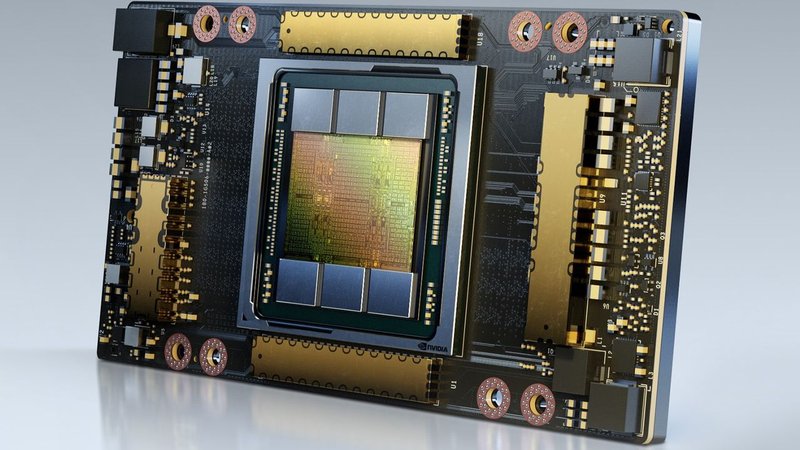
The exponential growth in demand for AI computing capacity, particularly for the training and deployment of Large Language Models, has led to unprecedented energy consumption in data centers. A single latest-generation GPU can draw hundreds of watts, and a cluster of thousands of these units can require megawatts of power, comparable to the needs of a small city. This not only concerns the availability of power from the grid but also the ability to distribute and manage it within the data center, including cooling systems, which are themselves large energy consumers.
For companies evaluating on-premise deployment of AI infrastructures, power availability becomes a decisive factor in site selection, architectural design, and Total Cost of Ownership (TCO) analysis. Local grid limitations, fluctuating energy costs, and the need for advanced cooling infrastructures can profoundly impact the feasibility and scalability of a project. The "race to AI" has transformed into a "race to power," where access to reliable and scalable sources has become a crucial competitive advantage.
Outlook and Implications for AI Infrastructure
Verse Enterprises' initiative reflects an emerging trend in the tech sector: the focus is increasingly shifting from pure computing performance to the sustainability and efficiency of the entire infrastructure. While specific details of Verse's solutions have not been disclosed, the investment suggests an innovative approach to energy management or provision that could include grid optimizations, energy storage solutions, or the integration of renewable sources directly near data centers.
Solving the energy bottleneck is not just a matter of scalability but also of data sovereignty and compliance for organizations that need to keep their AI workloads in self-hosted or air-gapped environments. The ability to control the entire value chain, from hardware to energy, offers greater resilience and security. For those evaluating on-premise deployment, AI-RADAR offers analytical frameworks on /llm-onpremise to assess the trade-offs between initial and operational costs and energy resource management, emphasizing how energy planning is now as critical as GPU selection. The success of companies like Verse will be fundamental in determining the speed and direction of the next phase of artificial intelligence expansion.







💬 Comments (0)
🔒 Log in or register to comment on articles.
No comments yet. Be the first to comment!