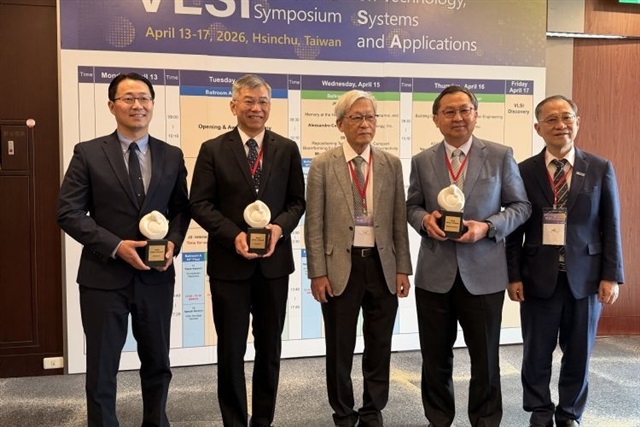
VLSI TSA 2026: A Glimpse into the Future of Semiconductors
The semiconductor industry is in constant evolution, driven by the need to process ever-increasing volumes of data and support complex computational workloads. In this context, the VLSI TSA 2026 event positions itself as a privileged observatory on the future directions of the sector, highlighting two areas of particular research and development relevance: quantum architectures and innovations related to artificial intelligence, especially in healthcare.
This biennial event traditionally serves as a forum for presenting cutting-edge research and prototypes that will define the next generation of chips and systems. Its focus on such advanced topics suggests a clear vision of the challenges and opportunities awaiting companies and IT professionals in the coming years, particularly concerning infrastructure planning and deployment strategies.
The Impact of Quantum Architectures on Computing
Quantum architectures represent one of the most promising, yet complex, frontiers of computing. Although still in a relatively embryonic stage, their potential to revolutionize fields such as cryptography, drug discovery, and process optimization is immense. The discussion of these architectures at VLSI TSA 2026 highlights the industry's commitment to laying the groundwork for future computing systems.
For enterprises, the adoption of quantum technologies, once mature, will entail extremely specific infrastructural requirements and, likely, the need for highly specialized deployments. These systems will demand controlled environments, dedicated hardware, and advanced technical skills, making self-hosted or bare metal solutions a primary consideration for those seeking maximum control and sovereignty over their data and computational processes.
AI in Healthcare: Between Innovation and Data Sovereignty
Artificial intelligence innovations in the healthcare sector are another pillar of the event. AI is transforming diagnosis, drug research, and patient management, but these applications are intrinsically linked to the management of extremely sensitive and voluminous data. Processing Large Language Models (LLM) for analyzing medical records, predicting diseases, or developing personalized therapies requires significant computing power.
In this scenario, data sovereignty and regulatory compliance (such as GDPR) become absolute priorities. Healthcare organizations must ensure that patient data is protected and managed in secure, controlled environments. This often drives the adoption of on-premise or air-gapped deployment solutions, where direct control over infrastructure and data is maximized, mitigating risks associated with the public cloud. The choice between CapEx and OpEx, and the analysis of TCO, thus become key elements in evaluating strategies.
Prospects for On-Premise and Hybrid Deployment
The convergence of quantum architectures and advanced AI, especially in critical sectors like healthcare, strengthens the argument for deployment strategies that prioritize control and security. The computational demands for AI, requiring high-performance GPUs with ample VRAM and high throughput for LLM inference and fine-tuning, clash with the need to keep sensitive data within corporate or national boundaries.
For companies evaluating self-hosted alternatives to cloud solutions, AI-RADAR offers analytical frameworks on /llm-onpremise to understand the trade-offs between initial and operational costs, performance, and security levels. The VLSI TSA 2026 event, while looking to the future, underscores how today's infrastructure decisions must already consider the implications of these emerging technologies, laying the groundwork for a future where data control and sovereignty will be increasingly central.





💬 Comments (0)
🔒 Log in or register to comment on articles.
No comments yet. Be the first to comment!