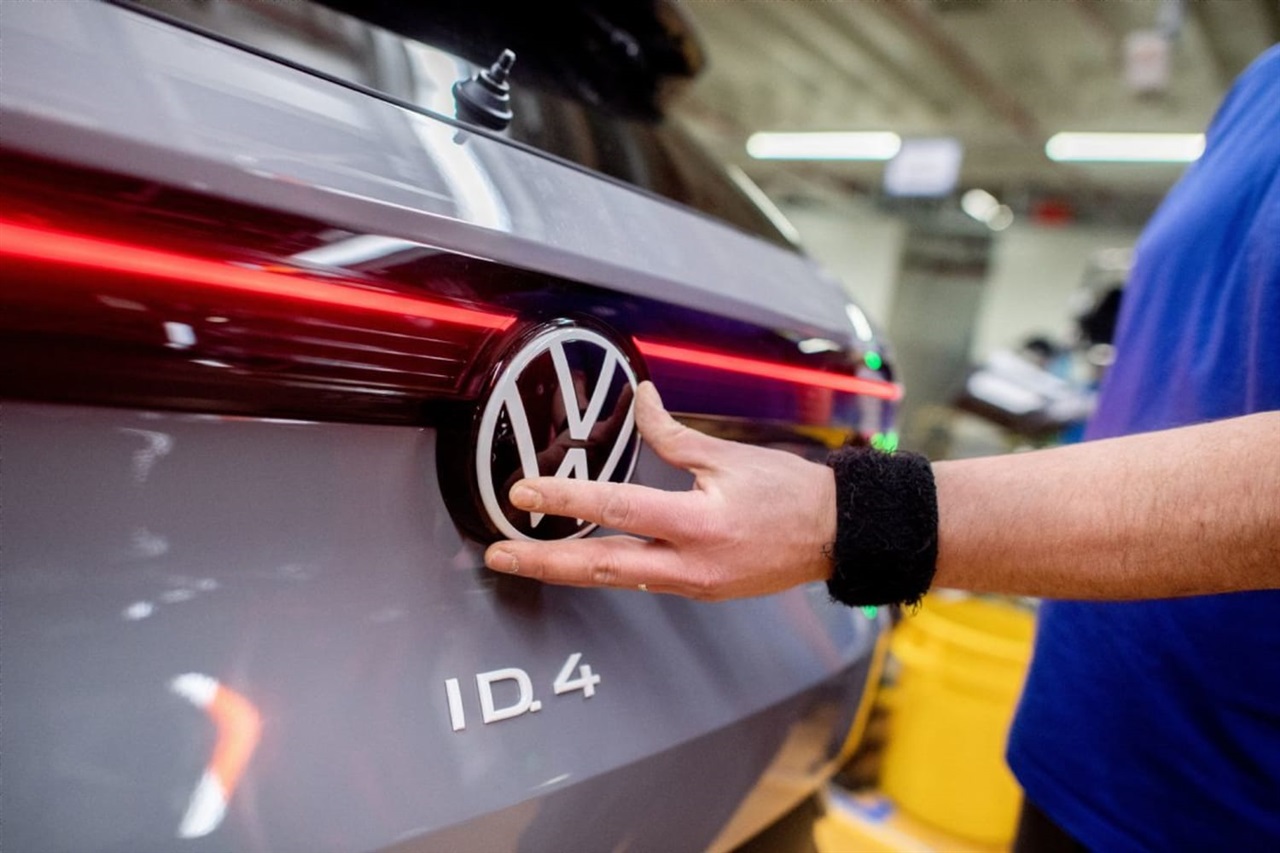
Volkswagen and the Strategy of Supply Chain Diversification
Volkswagen, one of the world's leading automotive manufacturers, has outlined a new strategy for its battery supply chain. The company intends to integrate square batteries produced by Samsung SDI, with a specific focus on manufacturing within the European continent. This decision reflects a growing trend among large enterprises: the need to ensure the stability and resilience of their production chains in an increasingly volatile economic and geopolitical landscape.
Reliance on a limited number of suppliers or specific geographical regions can expose companies to significant risks, such as production interruptions, price fluctuations, and logistical challenges. For this reason, diversification becomes a fundamental pillar for operational continuity and long-term competitiveness.
The Role of Samsung SDI and European Production
The agreement with Samsung SDI for the supply of square batteries represents a concrete step towards diversification. Although the source does not specify in-depth technical details about the batteries themselves, the "square" format indicates a precise choice among the various architectures available for cells. The selection of Samsung SDI, a global player in the battery sector, underscores Volkswagen's commitment to collaborating with established and technologically advanced partners.
A crucial aspect of this strategy is the localization of production in Europe. This move not only helps reduce transport times and costs but also strengthens the continent's manufacturing sovereignty. Local production can mitigate risks associated with international trade tensions or disruptions to shipping routes, ensuring more direct control over the quality and availability of essential components.
Implications for Supply Chain Sovereignty and Control
Volkswagen's decision to focus on European supplies and diversify its partners is not isolated. Many companies, in sectors ranging from automotive to consumer electronics, are re-evaluating their procurement strategies. The objective is twofold: on one hand, to guarantee the availability of critical components; on the other, to exercise greater control over the supply chain, from raw materials to the finished product.
This approach is particularly relevant for emerging and strategic technologies, where supply security and the ability to innovate locally can determine competitive success. Data sovereignty and infrastructure control, central themes for those evaluating on-premise deployment of AI solutions, find a parallel in manufacturing sovereignty and control over the physical component supply chain. Both scenarios highlight the need to mitigate external risks and maintain a solid internal operational base.
Future Prospects for Industrial Resilience
Volkswagen's strategy with Samsung SDI illustrates a model that could be adopted by other industries dependent on high-tech components. Investing in local production and diversifying suppliers is not just a matter of economic efficiency, but also of strategic security. This approach allows companies to build more robust supply chains, less vulnerable to external shocks, and more responsive to market needs.
In an era where operational resilience has become a critical factor, strategic sourcing decisions like Volkswagen's offer an example of how large organizations can address the challenges of globalization, while ensuring innovation and stability.








💬 Comments (0)
🔒 Log in or register to comment on articles.
No comments yet. Be the first to comment!