
The Importance of Advanced Materials in Electronics
Wah Hong Industrial Corp., a Taiwan-based company specializing in optoelectronics materials manufacturing, has announced a strategic focus on the high-end Printed Circuit Board (PCB) and chip packaging segment. This direction highlights how the quality and innovation in basic materials are fundamental for the development of modern electronics, particularly for applications requiring extreme performance and long-term reliability. The ability of a processing system to operate efficiently and stably largely depends on the quality of its most elementary physical components.
In the current context, where the demand for computing power is constantly growing, advanced materials play a crucial role. They directly influence aspects such as heat dissipation, signal integrity, and energy efficiency. For sectors like artificial intelligence, and especially for the deployment of Large Language Models (LLMs), these factors are not just desirable but often indispensable to ensure the optimal functioning of the infrastructure.
The Role of PCBs and Packaging in AI Infrastructure
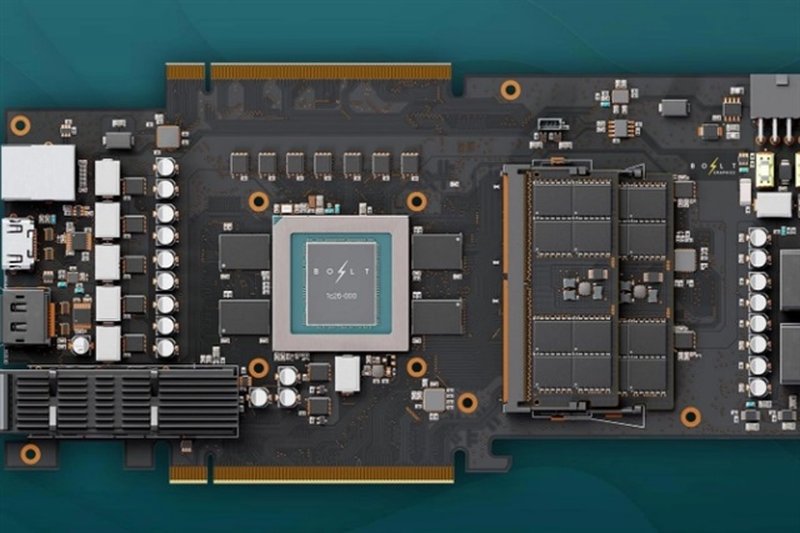
High-end PCBs and chip packaging solutions are essential building blocks for modern Graphics Processing Units (GPUs) and other hardware accelerators used in LLM training and Inference. The complexity and density of these components require materials that can handle high currents, frequencies, and temperatures without compromising performance. Effective packaging, for example, not only protects the chip but also facilitates its interconnection with the PCB and the dissipation of heat generated during intensive operations.
For companies evaluating on-premise LLM deployments, choosing hardware based on high-quality components translates into a more robust and performant infrastructure. This directly impacts crucial metrics such as Throughput, latency, and ultimately, the Total Cost of Ownership (TCO) of the entire system. Superior materials contribute to longer component lifespan and lower maintenance requirements, reducing operational costs over time.
Implications for On-Premise Deployments and Data Sovereignty
Wah Hong's focus on the high-end market reflects a broader trend in the technology industry: the pursuit of solutions that support increasingly demanding workloads. For CTOs, DevOps leads, and infrastructure architects considering self-hosted alternatives to the cloud for AI/LLM workloads, the quality of hardware components is a decisive factor. A well-designed on-premise infrastructure, including high-quality PCBs and packaging, is fundamental for ensuring data sovereignty, regulatory compliance, and security in air-gapped environments.
The availability of advanced materials and components is also crucial for supply chain resilience. Relying on a limited number of suppliers or lower-quality components can introduce significant risks. Investing in robust and reliable foundational materials is a strategy that supports not only immediate performance but also the long-term sustainability and security of critical AI operations. For those evaluating on-premise deployments, AI-RADAR offers analytical frameworks on /llm-onpremise to assess the trade-offs between different hardware configurations and deployment strategies.
Future Prospects and Material Innovation
Innovation in optoelectronics materials and PCB and packaging manufacturing processes continues to be a key driver for technological advancement. As Large Language Models become larger and more complex, and VRAM and computing power requirements increase, the pressure on basic hardware components intensifies. Companies like Wah Hong, focusing on this market segment, are therefore fundamental players in enabling the next generation of AI infrastructure.
The ability to provide solutions that improve density, thermal efficiency, and signal integrity will be crucial for overcoming current hardware limitations. This will not only enable the creation of more powerful systems but also more energy-efficient solutions, an increasingly relevant aspect for the TCO and environmental impact of large computing installations. Research and development in this field will continue to shape the future of AI deployments, both on-premise and hybrid.




💬 Comments (0)
🔒 Log in or register to comment on articles.
No comments yet. Be the first to comment!