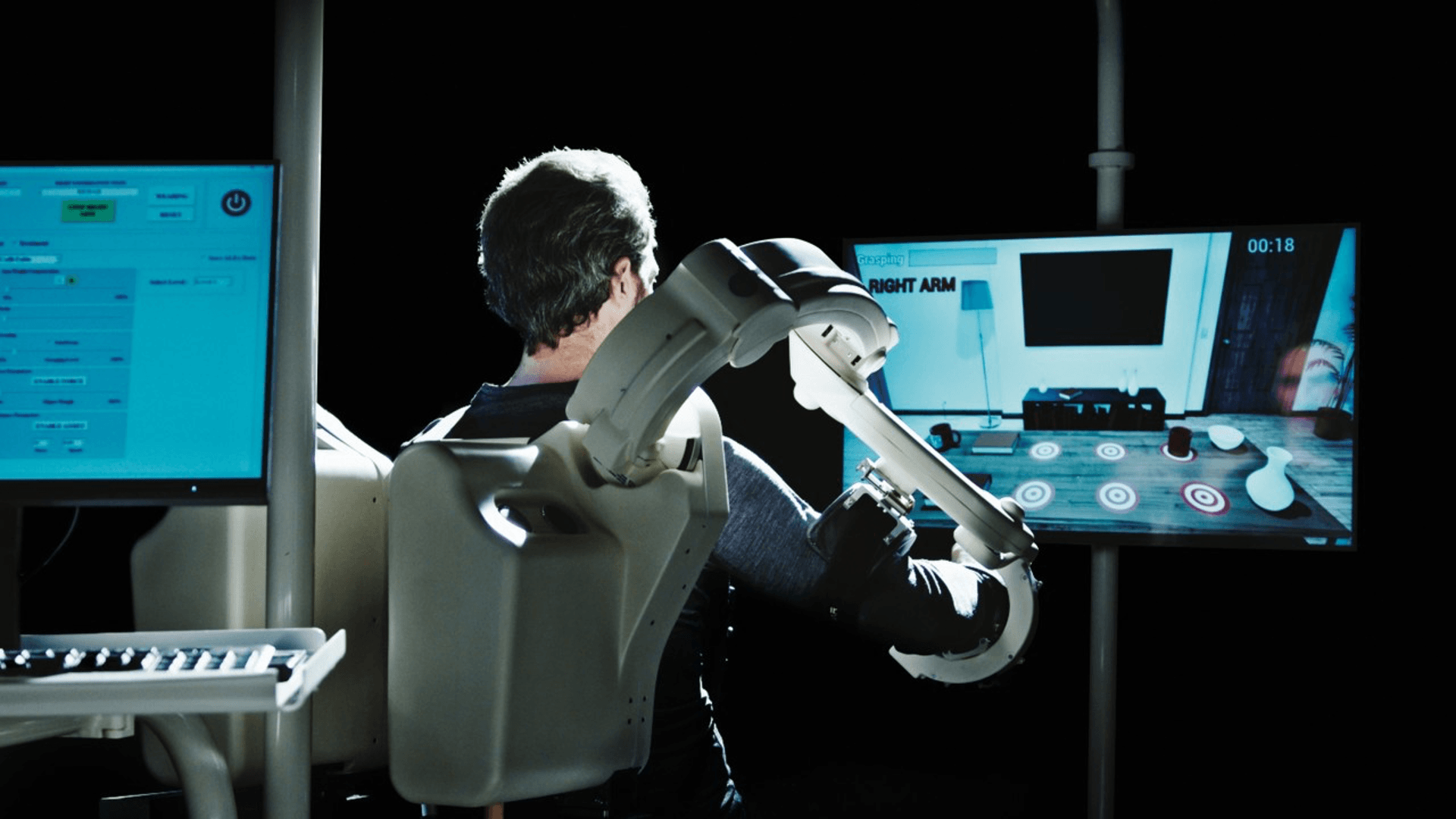
A New Impetus for Rehabilitation Robotics
Wearable Robotics, an Italian company at the forefront of developing wearable robotic solutions for neuromotor rehabilitation, has announced the closing of a €5 million Series A funding round. This significant investment is intended to support the company's international expansion and further development of its product portfolio. The round was led by CDP Venture Capital, with participation from MITO Technology, LIFTT, SIMEST, RoboIT, and Toscana Next, a co-investment fund also managed by CDP Venture Capital.
The company distinguishes itself by its ability to integrate wearable robotics with augmented and virtual reality technologies. The primary goal is to improve patients' neuromotor recovery and provide support in daily living activities. Wearable Robotics' flagship device, ALEX RS, is a bilateral upper-limb rehabilitation system, with over 50 units already deployed internationally, solidifying the company's current market position.
Portfolio Expansion and Market Strategy
With this new capital injection, Wearable Robotics intends to expand its product portfolio by introducing modular and integrable robotic solutions. These innovations aim to extend the technology's applications to additional rehabilitation areas. In parallel, the company will focus on obtaining regulatory approvals in key markets, strengthening compliance processes, and accelerating the time-to-market of its technologies.
The growth strategy also includes expanding commercial capabilities and the distribution network. The objective is to strengthen its presence in both existing and international markets, with a particular focus on entering new strategic regions, such as North America, and developing new partnerships. Lucia Lencioni, CEO of Wearable Robotics, emphasized that the funds will support the next phase of growth, focused on scaling operations, product innovation, and expanding its global footprint. "Our goal is to bring increasingly advanced and modular wearable robotics solutions, capable of generating a concrete impact along the entire rehabilitation continuum," Lencioni stated.
Implications for Innovation and Technology Deployment
The investment in Wearable Robotics highlights the growing importance of advanced technologies in the healthcare sector, particularly for rehabilitation. The development of systems combining robotics, augmented reality, and artificial intelligence (though not explicitly mentioned in the source, it is often implicit in such systems) raises crucial questions regarding deployment and data management. For organizations evaluating the adoption of such solutions, the choice between on-premise and cloud deployment becomes strategic, especially in contexts where data sovereignty and regulatory compliance, such as GDPR, are absolute priorities.
Systems like ALEX RS, which interact directly with patients and generate sensitive data, could benefit from an architecture that prioritizes local processing or edge computing. This approach can ensure reduced latency for real-time interactions and greater control over data security and residency. Evaluating the TCO, which includes not only initial costs but also operational, energy, and maintenance expenses, is fundamental to determining the long-term sustainability of a self-hosted deployment versus a cloud-based model. AI-RADAR offers analytical frameworks on /llm-onpremise to evaluate these trade-offs, providing tools for informed decisions without direct recommendations.
Future Prospects and Industry Impact
The funding will enable Wearable Robotics to complete its product portfolio, scale commercial development, and strengthen its competitive positioning in international markets. This type of investment not only accelerates the growth of individual companies but also stimulates the entire health tech innovation ecosystem. The ability to offer modular and integrable solutions is crucial for adapting to diverse clinical needs and ensuring a lasting impact on patients' quality of life.
The focus on global expansion, particularly towards North America, suggests an ambitious vision that could redefine neuromotor rehabilitation standards worldwide. The commitment to strengthening compliance and accelerating time-to-market reflects a corporate maturity aimed at transforming technological innovation into concrete and accessible benefits for an ever-wider audience.






💬 Comments (0)
🔒 Log in or register to comment on articles.
No comments yet. Be the first to comment!