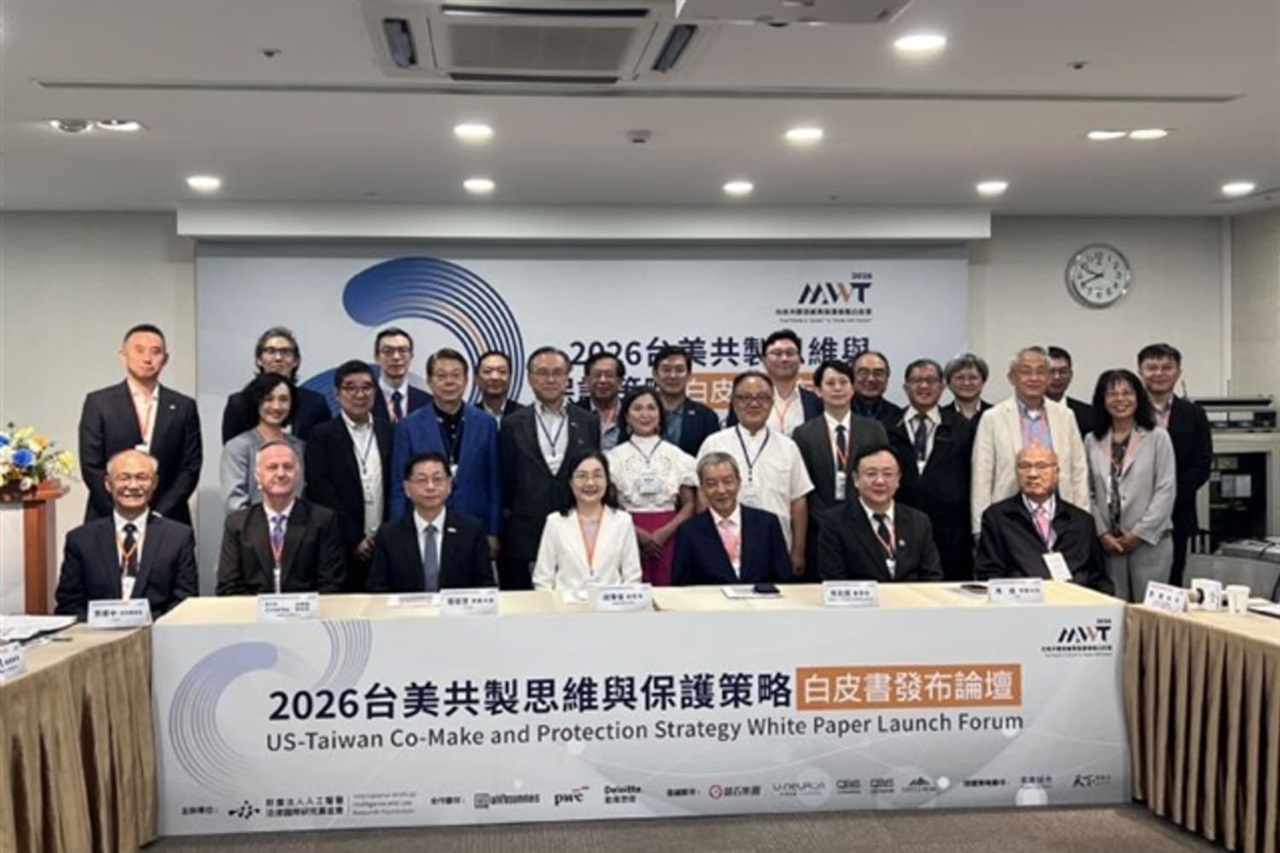
A white paper on co-manufacturing (co-make) between Taiwan and the United States has debuted just as global semiconductor investments hit feverish levels. The news, reported by DIGITIMES, comes as public and private capital pours into new advanced chip fabs — from TSMC’s Arizona projects to Intel’s ambitious foundry push — and casts a fresh light on the future of AI hardware supply.
The document offers no public operational details, but its mere appearance amid an investment explosion signals a structural shift. Co-manufacturing — a model where multiple players share production capacity and process technology — is proposed as a lever to reduce the geographic concentration of leading-edge logic chip production. For those working with Large Language Models on-premise, this is no diplomatic abstraction: the availability of training and inference hardware depends directly on the health and breadth of semiconductor supply chains.
Until now, the vast majority of the most advanced AI chips — GPUs with ample VRAM and dedicated accelerators — have been produced by a handful of fabs, with critical nodes concentrated in geopolitically sensitive areas. A formal alliance like the one hinted at by the white paper, if turned into industrial reality, could multiply the sites capable of churning out wafers at 3- or 2-nanometer nodes, which are essential for next-generation AI hardware. This would reduce supply disruption risks, ease upward price pressure, and make IT infrastructure refresh cycles more predictable — a crucial factor when calculating the TCO of an on-premise cluster compared to cloud alternatives.
The current investment boom is already a thermometer of expected demand: hyperscalers’ rush for AI accelerators has absorbed much of the available production capacity, often leaving non-cloud enterprises waiting in line. A structural expansion of production, if driven by co-make initiatives, can start to rebalance access, favoring local deployments where sensitive data stays under direct organizational control and where latency or compliance constraints make the cloud less viable.
More than a technology announcement, the white paper is thus a political-industrial signal: it tells system designers, integrators, and IT managers that advanced manufacturing will not remain the exclusive domain of a few, and that investing today in on-premise stacks for LLMs is a less risky bet than it seemed just a couple of years ago. Second-order implications concern competition among hardware vendors: with more fabs in play, we could see more accelerator variants, high-bandwidth memory configurations, and interconnect solutions, increasing choice and reducing single-vendor lock-in.
Of course, a white paper doesn’t build fabs, and the distance from strategic intent to operational silicon is measured in years and tens of billions of dollars. Yet for those tracking local model deployment dynamics, the message is clear: the AI hardware game is being played on a larger table, and today’s moves will shape tomorrow’s architectures.





💬 Comments (0)
🔒 Log in or register to comment on articles.
No comments yet. Be the first to comment!