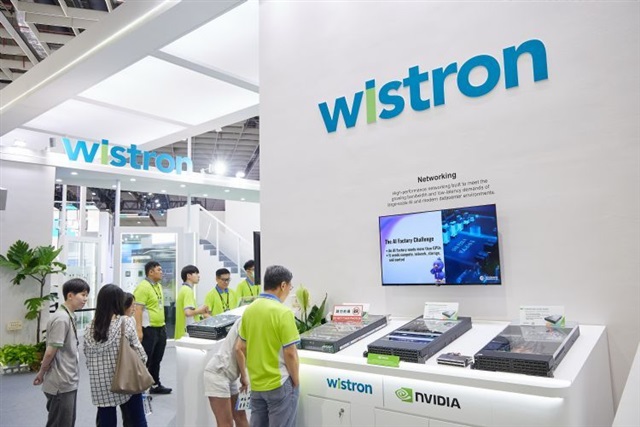
The news comes from Taipei: Wistron and Wiwynn, two electronics giants few know by name but that move much of the hardware powering the world's AI, have closed the first half of 2026 with unprecedented revenue. The reason? Demand for AI servers and networking equipment shows no sign of slowing down—in fact, it's redrawing the industry's industrial geography.
These are companies that don't sell off the shelf; they build to order for big cloud and enterprise names. Wistron, born as a division of Acer, now churns out the systems that fill hyperscale data centers; Wiwynn, its subsidiary, is squarely focused on data center infrastructure. Their financial success is a thermometer of the AI fever gripping the industry.
Behind the round numbers lies a web of supplies that also touches those who decide to keep models in-house. This boom isn't just about GPUs for training. Wiwynn's record numbers, in particular, highlight a parallel surge in networking gear shipments. That's a strong clue: we're no longer in a phase centered only on the single monstrous machine, but on the construction of interconnected clusters, where the bottleneck shifts from VRAM to bandwidth between nodes. For anyone evaluating on-premise deployment of Large Language Models, seeing networking components running at full tilt means the ecosystem is gearing up to sustain distributed inference and fine-tuning workloads at meaningful scale.
But record revenue isn't good news for everyone across the board. Production of these servers remains concentrated in few hands and a narrow geographic area, with the usual supply chain tensions we've grown accustomed to. Major cloud providers have multi-year contracts and take the lion's share of capacity. Anyone wanting to build an on-prem cluster today must factor in not only the TCO of expensive machines but also lead times that can stretch if hyperscaler demand keeps growing. In other words, overflowing order books for Wistron and Wiwynn don't automatically translate into full shelves for the average buyer.
Yet there's a flip side. A market this hot encourages ODMs to invest in additional production lines and to standardize designs. In the medium term, this could increase the availability of nodes suitable for self-hosted setups, driving down cost per compute unit. Already today, servers with enterprise-grade GPUs (capable of handling aggressive quantization and long context windows) are offered in bare-metal configurations by various integrators. If the Taiwanese mass production keeps pace, even companies that want to maintain data sovereignty without going through the public cloud may find more favorable conditions.
The structural message is that the AI hardware supply chain is definitively decoupling from the traditional server cycle. Wistron and Wiwynn aren't growing because someone buys more email servers, but because artificial intelligence has become the primary workload for new data centers. This shifts the balance: manufacturers that bet early on liquid-cooled systems, high-density power supplies, and backplanes optimized for NVLink are now reaping the rewards. For the IT manager weighing a move to local infrastructure for LLMs, the signal is twofold: the technology is maturing rapidly, but the market remains skewed toward buyers who purchase at hyperscale volumes. The open question is how quickly supply can bridge the gap.







💬 Comments (0)
🔒 Log in or register to comment on articles.
No comments yet. Be the first to comment!