
Taiwanese passive component giant Yageo has announced a price increase for capacitors to its customers, as reported by DIGITIMES. The move, led by chairman Pierre Chen, broadens the cost pressure already triggered by the race to build artificial intelligence infrastructure, impacting both electronics manufacturing services (EMS) providers and original equipment manufacturers (OEMs).
The capacitor: a critical link in the AI chain
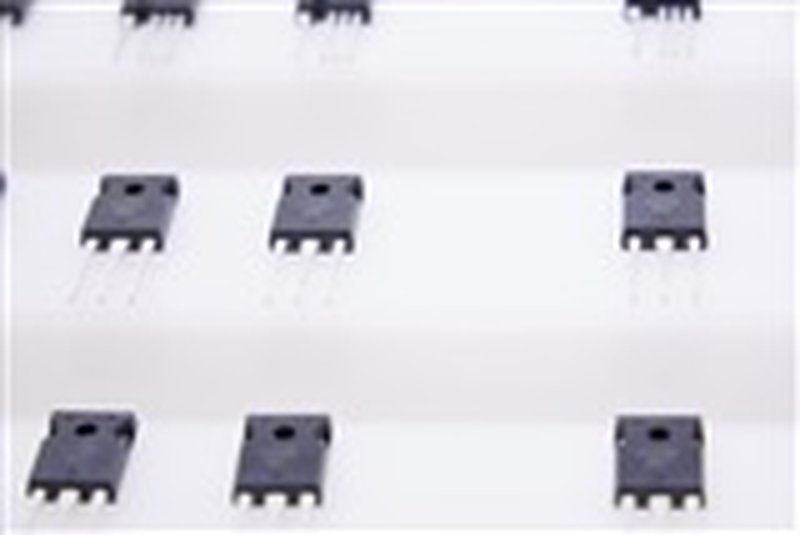
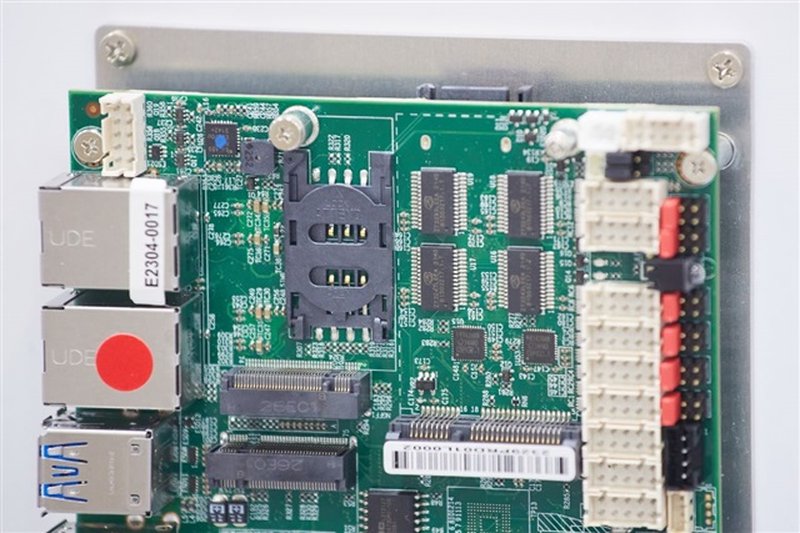
Capacitors are ubiquitous in the power electronics that feed servers, GPUs, and networking gear. Inside a cluster for Large Language Model inference or training, every accelerator board and power supply contains dozens of these components, often in multi-level configurations to stabilize voltages and filter noise. A price hike on the base component thus ripples through the supply chain, eventually affecting quotes for complete machines, from bare metal nodes to entire racks.
Beyond silicon: when passive components dictate TCO
Those evaluating on-premise deployments of AI infrastructure normally track processor and memory costs, but real hardware is also made of thousands of passive parts. Yageo’s announcement is a reminder that the bill for a self-hosted cluster can swell for reasons outside the most discussed semiconductors. In a Total Cost of Ownership perspective, even relatively small percentage increases on capacitors add up to already strained GPU and CPU price lists, introducing yet another element of uncertainty in multi-year budget planning.
Upstream pressure, downstream choices
The signal from Yageo is not isolated: AI demand is pushing up the entire supply chain, from wafers to interposers to raw materials used in passive components. For companies building or upgrading on-premise labs, this scenario adds an incentive to explore more efficient setups, such as reusing existing hardware, adopting quantization techniques to reduce the compute footprint, or evaluating edge architectures that distribute the load. Every percentage point saved on infrastructure can offset unavoidable price hikes.
Data sovereignty and supply chain: an unavoidable tangle
The capacitor pricing issue is also a reminder of the link between technological sovereignty and supply chain. Deploying LLMs on-premise means maintaining control over data and latency, but it exposes to the risk of depending on component suppliers concentrated in a few geographic areas. Yageo’s move highlights how events seemingly distant from software can shape architectural decisions. AI-RADAR tracks these intersections to provide analytical tools that help weigh trade-offs between control, cost, and resilience.






💬 Comments (0)
🔒 Log in or register to comment on articles.
No comments yet. Be the first to comment!