
When leaked video shows the state governor whispering to a billionaire CEO, 'We’re used to people saying no, and doing it anyway,' the resistance of Ypsilanti Township ceases to be merely local and becomes the symbol of a deeper rift: that between communities and the hyperscale artificial intelligence industry.
A nuclear data center in the fields
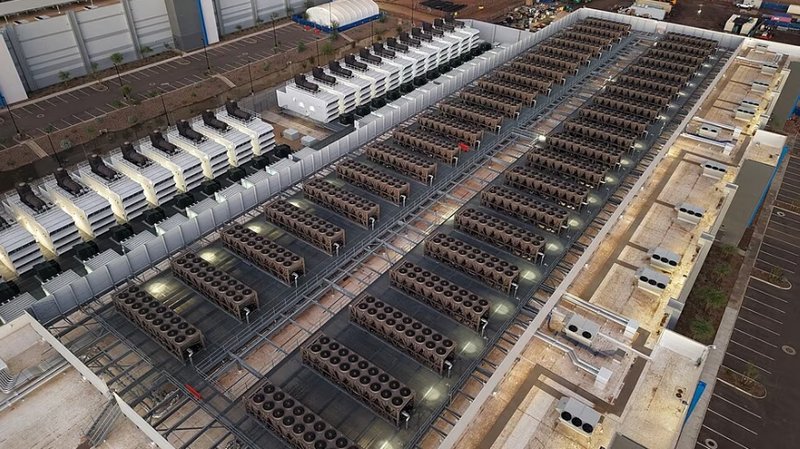
The University of Michigan and Los Alamos National Laboratory plan to build a massive data center in tiny Ypsilanti Township. Among other purposes, the facility will run simulations to aid nuclear weapons design. During a heated three-hour public meeting, residents voiced near-unanimous opposition. Looming behind the board was a photograph of Governor Gretchen Whitmer grinning beside Oracle’s CEO, taken at the groundbreaking of another data center in nearby Saline Township.
The water moratorium as an act of sovereignty
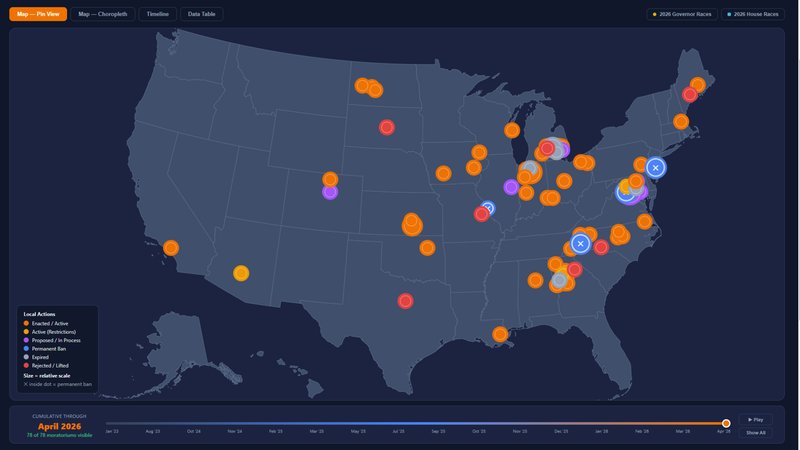
The board has already acted: in April it voted a 365-day moratorium on supplying water to data centers, in order to conduct a scientific study on how hyperscale facilities affect the local aquifer. The university responded with a threat of legal action, arguing that denying water to a data center meant for nuclear research constitutes 'unlawful discrimination.' It’s a paradox that exposes the stakes: national security on one side, the right of a community to protect its primary resources on the other.
The opposition front and the sabotage manual
During the meeting, a township lawyer noted that 'the people in that photo are worth billions, soon trillions, yet the state has granted unprecedented tax breaks to the world’s richest corporations.' Residents called for creativity: blocking roads, slowing down procedures, even revisiting the OSS Simple Sabotage Field Manual. One citizen read from John Hersey’s Hiroshima: 'We don’t need simulations to know what a nuclear strike looks like.'
What Ypsilanti teaches those choosing on-premise
The fight over water is also a fight for digital sovereignty. While large hyperscalers consume land, energy, and water, organizations evaluating on-premise deployment of LLMs can find in this story a further argument for retaining control. Local infrastructure reduces reliance on mega-facilities that often ignore community consent and conceal geopolitical risks. It’s not just a matter of latency or TCO: it’s the ability to decide where and how to run one’s workloads, without becoming complicit in an extractive model.
Beyond the single case
The board vowed to 'fight to our very last breath.' The water moratorium is only the first step in a strategy blending legal action, civil disobedience, and political pressure. For those working with on-premise AI, Ypsilanti Township is a reminder that the right to one’s own resources — data, water, electricity — is the foundation of any project aspiring to be truly sustainable and respectful of the land.









💬 Comments (0)
🔒 Log in or register to comment on articles.
No comments yet. Be the first to comment!