
The signal is not the theorem: it is the endurance of an anomalous workload
A researcher let a Qwen 3.8 model with 27 billion parameters, in 4-bit quantization and with a 100,000 token context window, run on a single RTX 3090 for 63 hours. The system produced over 50 million tokens without closing the Riemann hypothesis. That is not the point. For AI-Radar, the relevant finding is the endurance of a prolonged agentic pipeline on consumer hardware: a configuration that until recently was associated with short sessions, targeted benchmarks, or disposable prototypes.
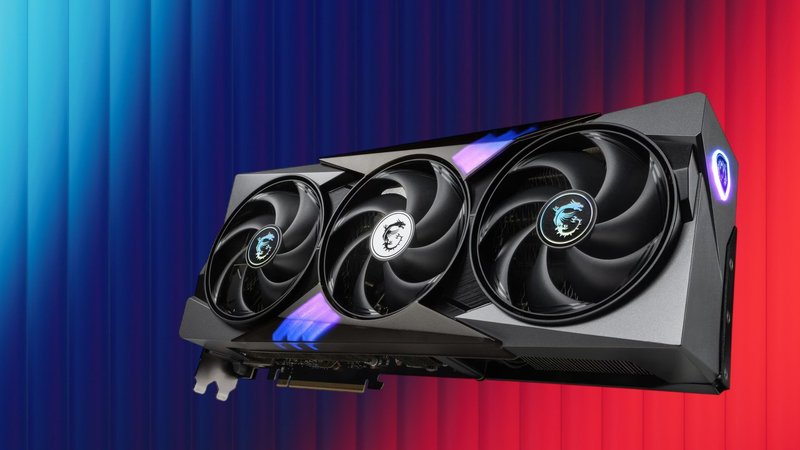
The card is not a data center accelerator. It has the constraints of a consumer GPU: limited VRAM, cooling not designed for multi-day workloads, no enterprise-class redundancy. Yet the model held up over a session far longer than typical LLM tests. This shifts attention from a single score to the system's ability not to degrade over time. It is not just raw compute: memory management, context reorganization, and the ability to abandon false leads become design variables.
For self-hosted stack builders, the signal is twofold. First, technical feasibility of long experiments without cloud cluster access. Second, the emergence of a new class of problems: endurance, not throughput. A 63-hour session is not evaluated by a generation-per-second metric. It is evaluated by observing whether the agent maintains coherence, whether the context window is managed without silent collapse, and whether the reasoning process remains inspectable.
The experiment does not enter mathematical history. It does enter an infrastructure conversation: long agentic workloads are becoming feasible outside data centers. Ignoring this shift means looking for the next bottleneck in the wrong place.
Process stability versus mathematical validity: the evaluation gap
The source reports that the model never delivered a hallucinated answer and corrected its own errors multiple times. That should be taken with caution. On an open mathematical problem there is no known answer to compare against. Verifying the absence of hallucinations is harder than on a closed-answer test: the system could produce formally plausible but dead-end strategies without an automatic evaluator recognizing them as false steps.
The interesting finding is not mathematical validity but process stability. The agent did not collapse onto a repeated fictional solution; it kept generating new strategies. This behavior is a signal of endurance, not proof of approaching truth. For local pipelines, however, the line is thin: a system that looks creative may also be a system diverging without control. Verification tools must distinguish useful drift from sterile exploration.
Traditional LLM evaluation is built on known-answer questions or synthetic reasoning benchmarks. Open-ended agentic workloads require different metrics: conceptual repetition rate, number of abandoned false leads, stability of internal memory, coherence between checkpoints. The published dataset includes internal memories, code, and strategies. It is useful precisely because it enables tracing state evolution, not just final output.
This changes the role of control infrastructure. It is not enough to log generated tokens. A pipeline must capture decision steps, context compressions, and moments when the agent corrects course. In a self-hosted environment, this instrumentation can be lightweight and local. But it has to be designed: observability of a 63-hour process is not an automatic byproduct.
Consumer GPU as a testbed for orchestration, not scale
An RTX 3090 is not the natural place to seek a mathematical proof. It is, however, an interesting environment for testing orchestration, memory management, and long-run robustness. 4-bit quantization is used to contain VRAM footprint for a 27 billion parameter model. It introduces a trade-off: it reduces memory footprint and can affect internal representation precision. This experiment does not provide a general answer on that trade-off, but it shows that a long session is technically feasible.
From a Total Cost of Ownership perspective, the marginal cost of the experiment is tied to hardware already owned. There is no per-token cloud bill. This makes exploration cycles feasible that would be economically irrational on consumption-based infrastructure. But TCO does not disappear: it includes board wear, electricity, supervision time, and the risk of undetected stalls. In an independent lab, these costs are often absorbed by time availability rather than a dedicated budget.
The hardest constraint is not compute power but context management. A 100,000-token window over a multi-day session forces decisions about what to keep, what to summarize, and what to discard. The quality of those decisions is the real endurance factor. A model can generate quickly, but if the memory pipeline degrades context, the agent gets lost in false leads. The consumer GPU thus becomes a laboratory for testing orchestration frameworks and systems before any move to larger infrastructure.
This shifts competition from hardware to orchestration software. It is not about more parameters or more teraflops. It is about designing pipelines that survive days of exploration, resume from coherent checkpoints, and do not accumulate corrupted state. Local stack designers know these properties emerge only when memory is treated as a system component, not as a model detail.
Dataset on Hugging Face and local ownership: a signal of operational sovereignty
Publishing the dataset on Hugging Face, rather than inside a closed cloud service, is consistent with an on-prem approach. The experiment's data remains local until the researcher decides to share it. This reverses the default of many cloud platforms, where telemetry and intermediate logs pass through managed services. For teams with sovereignty constraints, the difference is not symbolic: it concerns control over prompts, internal memory, and generated strategies.
Sharing the dataset openly does not eliminate governance problems. On the contrary, it moves them upstream: the researcher decides what to publish, how to version material, and which sensitive information stays out. In a self-hosted context, ownership is not an accessory: it is a design choice. The dataset includes internal memories, code, and strategies, material that in a cloud system would often be mixed with proprietary logs.
For AI-Radar, this is a signal to monitor. Data sovereignty is not only about training data or model weights. It also concerns an agent's operational flow: intermediate states, formulated hypotheses, corrected errors. If these remain under local control, revision and audit costs decrease. If they are externalized, a difficult-to-estimate dependency is created.
The approach is not frictionless. Managing a local dataset requires storage, versioning, and documentation. There is no automatic backup button. But for self-hosted LLM practitioners, these frictions are the price of controllability. Open publication after the experiment allows the community to verify the process without ceding operational control during execution.
From agent swarms to research equilibria: what to watch
The stated next objective is to use a more capable agent, such as GLM 5.3 Flash, or a swarm of agents to attack an open mathematical problem. The direction is not increasing parameter scale but increasing duration and orchestration complexity. An agent swarm moves the critical point from a single model to coordination: how hypotheses are divided, how memories are merged, how conflicts between strategies are resolved.
This has second-order implications for local infrastructure. Coordinating multiple agents on one or more consumer GPUs requires frameworks capable of managing queues, distributed checkpoints, and VRAM allocation. The complexity is not in training but in prolonged execution. Self-hosted pipeline developers will need to observe not one process but many interacting processes.
Evaluation also becomes harder. A swarm of agents on an open problem produces even more state: crossed hypotheses, local experiments, information exchanges. Without a reproducible decision trace, the scientific value reduces to an anecdote. Standard log formats and checkpoint practices will be needed to replay the system's evolution. Ignoring this aspect risks obtaining an incomprehensible result, even if the problem is formally attacked.
The structural signal is clear: competition is shifting from parameter scale to duration and orchestration quality. A single researcher with a consumer GPU can today test hypotheses that until recently required cluster access. If this trend consolidates, the balance among academic research, cloud providers, and independent labs changes. The bottleneck is no longer just compute power. It is the quality of the framework, memory, and verification.




💬 Comments (0)
🔒 Log in or register to comment on articles.
No comments yet. Be the first to comment!