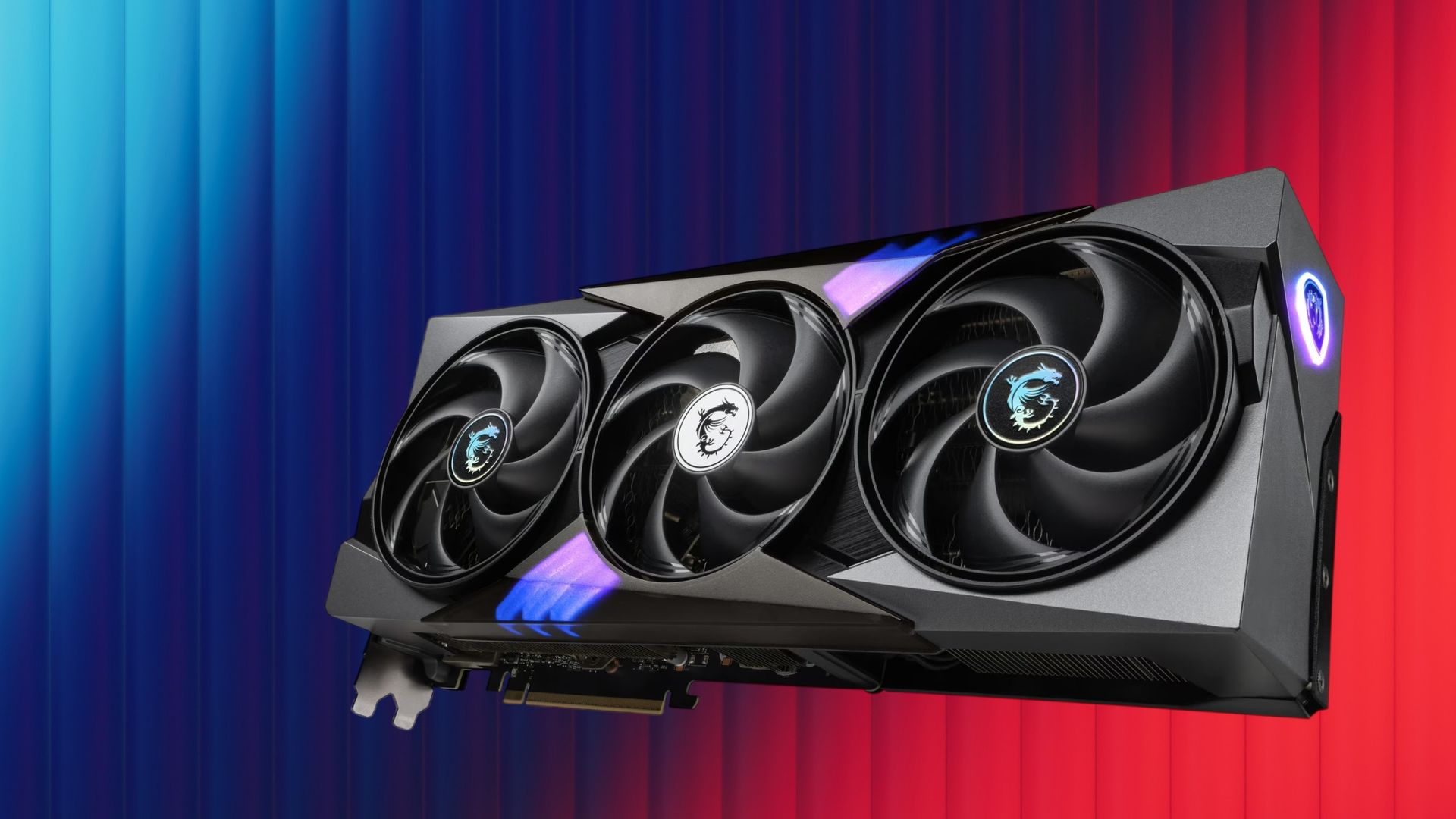
The news lands as a shock for the consumer market. According to reports, Nvidia has suspended production of the GeForce RTX 5090 to redirect manufacturing capacity toward GPUs for AI data centers and professional workstations. If confirmed, this is not a simple product lineup adjustment: it shows a company shifting its center of gravity toward high-margin accelerated computing.
The economic driver is hard to ignore. Data center GPUs generate far higher per-unit revenue than consumer cards. With demand for AI accelerators still growing, every processed wafer is worth more when destined for an enterprise product than for a GeForce. You don't need to see Nvidia's internal numbers to understand that, in a phase of constrained production capacity, priority goes to the segments that pay the most.
The first visible effect is on RTX 5090 availability. Retail channels could see reduced stock and rising prices. For gamers and content creators who use GeForce cards for rendering or post-production, this means longer wait times or higher costs. But there is a less visible and more relevant effect for those building local stacks.
High-end GeForce cards have long been an affordable entry point for self-hosted LLM inference. They offer considerable VRAM at a price much lower than professional or data center GPUs. If production concentrates on enterprise parts, that segment loses one of its most accessible options. This is not just about gaming: it narrows the supply of consumer hardware with enough VRAM for large models under aggressive quantization or light fine-tuning.
This phenomenon signals a sharper separation between two markets. On one side are consumer cards, designed for gaming and limited in drivers and warranties for long continuous workloads. On the other are professional and data center GPUs, built to run 24/7, with ECC memory and support for virtualized workloads. The separation is not new, but AI demand pressure makes it structural. Anyone evaluating on-premise deployment must consider that the market pushes the entry cost upward: consumer GPUs become less reliable as an economical alternative, while enterprise GPUs remain allocated in significant volumes to large cloud providers.
For those evaluating on-premise deployment, the trade-offs between consumer, professional, and data center GPUs go beyond list price. They include TCO, operational lifetime, licensing constraints, and actual availability. AI-RADAR's /llm-onpremise section collects analytical frameworks to evaluate these aspects without reducing them to a spec comparison.
The move attributed to Nvidia, if confirmed, consolidates a trend in which AI hardware is the company's center of gravity, while the GeForce lineup becomes a satellite segment. This is not an isolated story: it is an indicator of how AI compute demand is reshaping manufacturing priorities across the semiconductor supply chain.






💬 Comments (0)
🔒 Log in or register to comment on articles.
No comments yet. Be the first to comment!