
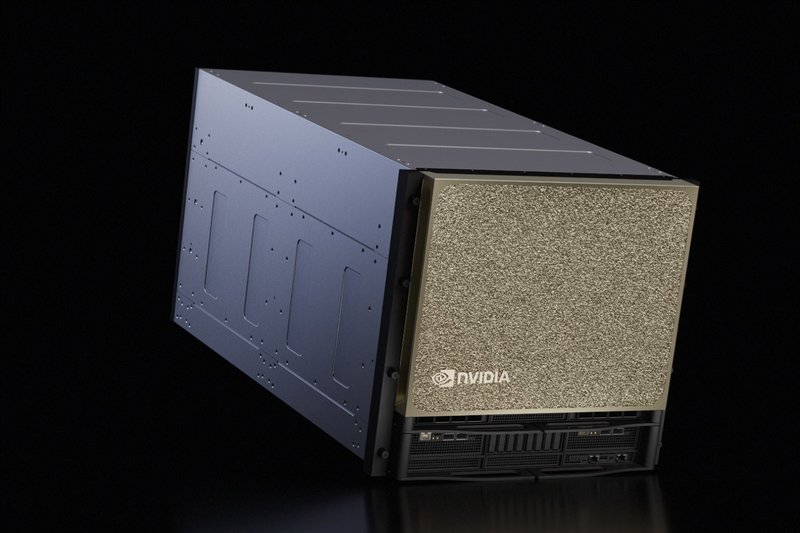
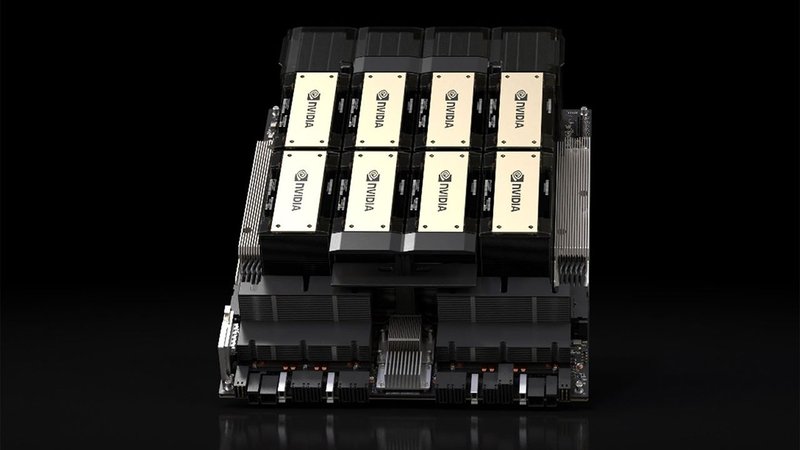
The Chinese gray market for NVIDIA GPUs has just registered a spike reminiscent of the worst days of the semiconductor crunch. Dozens of unofficial resellers are reporting that servers equipped with the aging A100 – cards launched in 2020 and already out of production – have tripled in price in just a few weeks, reaching as high as $82,000 per machine. The trigger is a combination of a customs crackdown and a freeze on shipments, which choked off the flow of hardware destined for local labs, startups, and data centers.
Why the A100 Server Architecture Still Matters
Even after five years, the Ampere architecture at the core of the A100 holds a front-line role in workloads tied to Large Language Models. The combination of up to 80 GB of HBM2e memory and multi-instance GPU support allows inference and fine-tuning with levels of parallelism most consumer cards can’t touch. Those running on-premise deployments know that VRAM density and memory bandwidth remain the primary bottlenecks, and the A100 remains a reference platform for putting FP16 or INT8 models into production without fragmenting the workload across too many nodes.
The Chinese black market magnifies this value because US export restrictions have progressively excluded the most capable GPUs from official channels. As a result, the A100 – despite being a mid-generation-old product – has become an irreplaceable asset for anyone who lacks access to newer H100 or B200 chips but still needs to maintain data sovereignty without relying on foreign cloud regions.
Smuggling Plugged and Customs Enforced: Why Rules Are Biting Now
Beijing tolerated a lively informal trade in accelerators for years, but the attitude shift in recent months is stark. Tighter border inspections and the temporary halt of some shipments have hit precisely the intermediaries that supplied China’s AI “gray zone”. This is no isolated incident: the operation is part of a broader strategy to curb technological dependency and push the local ecosystem toward domestic solutions such as GPUs from Biren Technology or Huawei’s Ascend series.
The transition, however, is far from smooth. Development frameworks and inference pipelines are still predominantly optimized for the CUDA ecosystem, making local alternatives a path full of friction. The leap to $82,000 for a single A100 machine – a multiple of 3 to 4 times the price of just a year ago – is a symptom of a system that hasn’t yet found an equilibrium between self-sufficiency ambitions and operational reality.
What This Episodes Means for On-Premise Deployment Decisions
The gray market price explosion underscores an uncomfortable truth: when LLM hardware becomes scarce, the TCO of self-hosted installations can undergo dramatic swings. For organizations evaluating whether to bring training and inference inside their own four walls – driven by privacy, GDPR compliance, or simple control – the Chinese episode shows how the supply chain remains the Achilles’ heel of any “on-premise first” strategy.
This isn’t just a Chinese problem. The same dynamics, albeit in a milder form, affect any entity planning to purchase AI infrastructure while steering clear of the public cloud. The lesson is that the economic viability of a local cluster depends not only on model choice or the serving framework, but also on the predictability of procurement costs – a parameter that geopolitical tensions are making increasingly volatile.
Those who closely follow deployment decisions know that solid analytical frameworks are needed to weigh these trade-offs. The point isn’t to abandon self-hosted setups, but to incorporate hardware unavailability scenarios and gradual migration plans toward alternative architectures – including non-CUDA chips that are starting to gain ground in some regulated sectors.
Perspective: The Black Market as a Geopolitical Thermometer
The A100 soaring to $82,000 is far more than a news item: it acts as a thermometer of the technological tension between the United States and China. On one side, Washington tightens export controls further; on the other, Beijing shows it can raise the level of internal enforcement when it decides that smuggling becomes counterproductive for industrial development.
For the AI ecosystem, the message is twofold: the parallel market reacts with a speed that official supply chains lack, but its volatility makes it a precarious foundation on which to build long-term plans. While second-hand prices skyrocket, labs in Shenzhen and Shanghai are grappling with how to run Llama 3 or Qwen without NVIDIA’s green safety net. And the answer, absent a real alternative, translates into a – literally – steep cost.






💬 Comments (0)
🔒 Log in or register to comment on articles.
No comments yet. Be the first to comment!