The new hot spot in AI component supply isn’t cores or memory, but power electronics. DIGITIMES reports that rapid shifts in voltage regulator modules (VRMs) for AI servers are triggering shortages and pushing lead times past the six-month mark – news that forces anyone building on-premise clusters to rethink their supply chain.
The weak link in power delivery
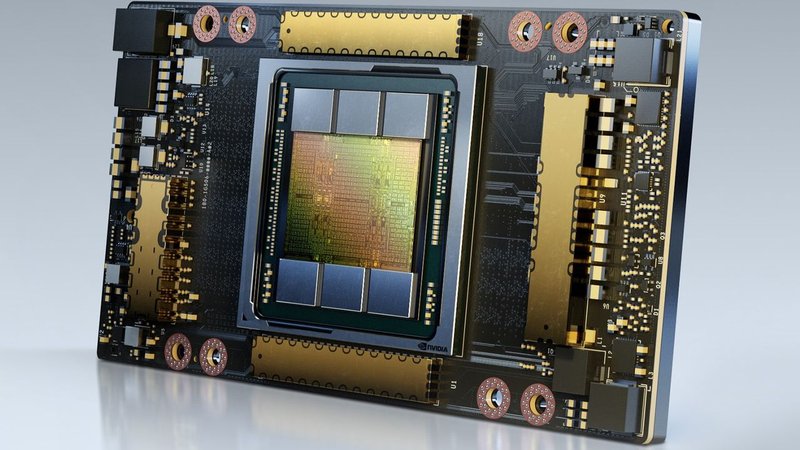
Voltage regulators may seem like ancillary components, but in AI nodes they become as critical as the GPUs themselves. A card like the H100 or the upcoming B200 draws hundreds of watts and needs power stages capable of handling extreme currents with minimal ripple. Multiphase VRMs must switch at ever-higher frequencies to maintain efficiency, all within tight spaces and aggressive thermal envelopes.
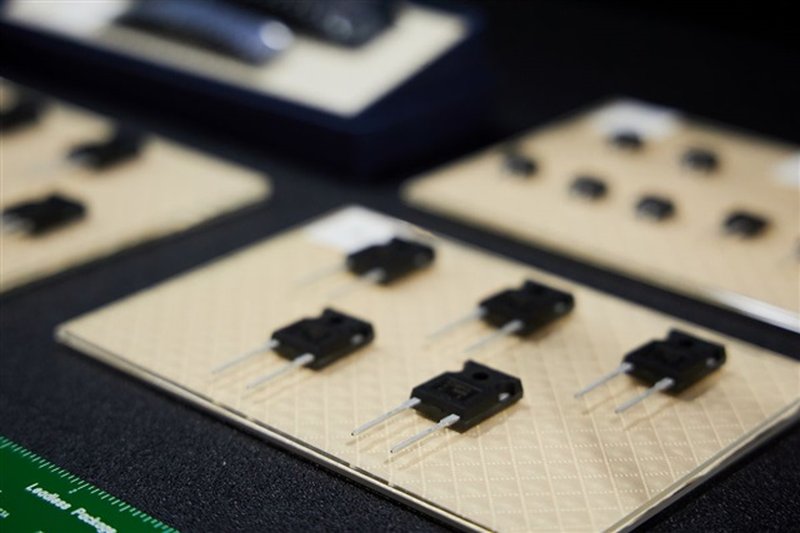
The ongoing generational leap – from traditional modules to solutions with integrated power stages and new materials such as gallium nitride – is straining suppliers. Production lines can’t keep up with the volumes demanded by server builders, and re-tooling fabs for more advanced processes takes months. The bottleneck hits every system integrator: without the right VRMs, motherboards remain incomplete.
Impact on on-premise deployment
For teams evaluating self-hosted architectures, extended lead times are not a minor footnote. Planning an inference cluster or a fine-tuning environment turns into a complex forecasting exercise. If the wait for a full node exceeds six months, the Total Cost of Ownership must account for financial and operational variables beyond hardware list prices.
In many enterprise scenarios, delays can push organizations toward temporary hybrid solutions: cloud for testing phases, on-premise pushed further down the road. But this adds data governance complexity and potential friction with sovereignty requirements. Companies that absolutely need to keep data on-site – regulated sectors, defense, healthcare – face a physical constraint that no software license can circumvent.
The bigger picture: signals for AI infrastructure
The VRM shortage is not an isolated incident; it’s a symptom of an accelerated industrialization phase for AI. While mainstream debate focuses on GPUs and VRAM, power delivery components become the new discriminating factor. It’s a wake-up call for infrastructure planners: supply chains must be mapped with greater granularity, including less visible but equally essential building blocks.
We’re already seeing knock-on effects. Power supply and cooling system manufacturers are revising roadmaps to align with AI server requirements. Moreover, pressure on the VRM front could speed up research into more energy-efficient architectures or quantization techniques that reduce compute load – and thus power demand – without sacrificing model quality.
Outlook and room for maneuver
In the short term, organizations with existing server stock or flexible framework contracts will manage the transition more smoothly. In the medium term, VRM makers are likely to diversify production capacity, perhaps using less advanced but more abundant nodes. For ops teams, the message is clear: every on-premise deployment assessment must now include a mapping of power delivery risks, which can no longer be taken for granted.
AI-RADAR will keep tracking this niche hardware story, because the choices about where to run Large Language Models are often determined by tensions in something as unglamorous as a voltage regulator module.






💬 Comments (0)
🔒 Log in or register to comment on articles.
No comments yet. Be the first to comment!