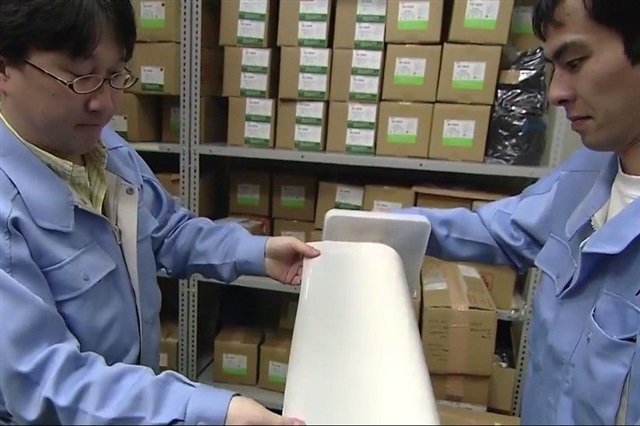
Surging AI Demand Puts Pressure on Ajinomoto's 'Chip Film'
The artificial intelligence sector is experiencing exponential growth, driven by the widespread adoption of Large Language Models (LLM) and other computationally intensive applications. This expansion, however, extends beyond software and algorithms, deeply impacting the hardware supply chain. A clear example emerges from the situation involving Ajinomoto, the Japanese giant also known for its food products, but which plays a crucial role in the semiconductor industry with its “Build-up Film” (ABF), a fundamental insulating material for advanced chip packaging.
The increasing demand for high-performance processors, particularly GPUs and CPUs optimized for AI workloads, is severely testing Ajinomoto's capacity to meet the demand for ABF. This scenario raises questions about the resilience of the global supply chain and its implications for companies planning or expanding their AI infrastructures, whether in the cloud or on-premise.
The Strategic Role of Build-up Film (ABF) in the AI Era
Ajinomoto's Build-up Film is a less visible but extremely critical component in modern semiconductor manufacturing. It is an insulating material used to create the multi-layer substrates on which complex chips are mounted. These substrates are essential for the latest generation of CPUs and GPUs, as they allow for the integration of a high number of transistors and ensure high-speed connections, while also dissipating generated heat. Without superior quality ABF, the creation of chips with the densities and performance required by modern AI would be extremely difficult, if not impossible.
The architecture of chips like NVIDIA H100 or A100 GPUs, which are fundamental for large-scale LLM training and inference, heavily relies on advanced packaging technologies that utilize materials like ABF. Its scarcity or an increase in lead times can therefore have a cascading effect on the entire industry, slowing down the production of vital hardware for AI innovation. This underscores how even seemingly minor components can become strategic bottlenecks in an interconnected technological ecosystem.
Implications for On-Premise AI Infrastructure and TCO
For organizations evaluating or already pursuing self-hosted AI deployments, the situation with Ajinomoto's “chip film” has direct and significant implications. A disruption or slowdown in ABF supply translates into longer lead times for GPUs and other AI accelerators, complicating infrastructure expansion planning. Furthermore, scarcity can lead to increased hardware costs, directly impacting the Total Cost of Ownership (TCO) of on-premise systems.
The reliance on a limited number of suppliers for critical components like ABF highlights the inherent risks of global supply chains. For CTOs, DevOps leads, and infrastructure architects, this means that data sovereignty and control over their AI workloads depend not only on choosing an on-premise deployment but also on the ability to reliably procure the necessary hardware. Evaluating these trade-offs is crucial, and AI-RADAR offers analytical frameworks on /llm-onpremise to support these strategic decisions.
Future Outlook and Mitigation Strategies
Pressure on the ABF supply chain is a wake-up call for the entire tech industry. Chip manufacturers are likely exploring options to diversify suppliers or invest in additional production capacity to mitigate future risks. However, building new factories and optimizing processes require significant time and investment.
For enterprises implementing AI solutions, a long-term strategy might include more robust hardware acquisition planning, evaluating alternative architectures, or optimizing models (e.g., through quantization techniques) to reduce VRAM and computational requirements, thereby extending the lifespan of existing hardware. Ajinomoto's situation is a reminder that the race for AI is not just a technological challenge but also a logistical and strategic one, requiring careful risk management across the entire value chain.








💬 Comments (0)
🔒 Log in or register to comment on articles.
No comments yet. Be the first to comment!