AMD Pushes AI to the Edge with New Ryzen AI Platforms
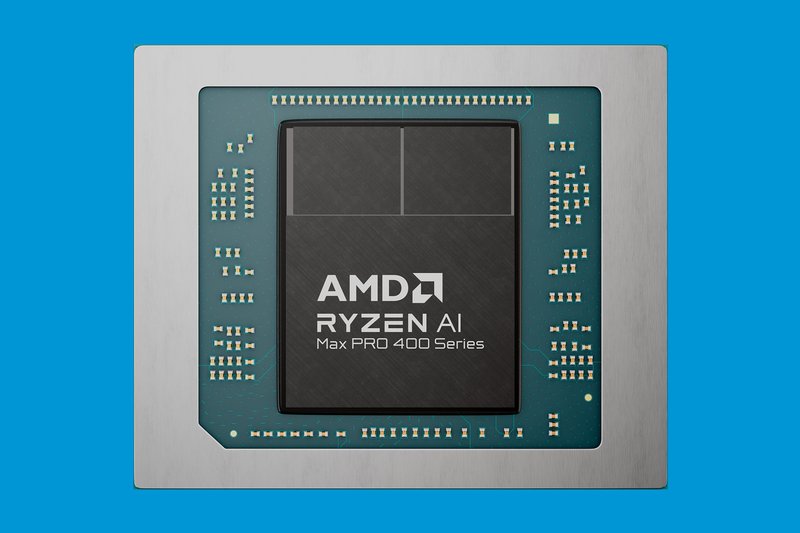
AMD has announced the availability of its new Ryzen AI Halo Developer Platforms and Ryzen AI Max PRO 400 Series Processors. These solutions are designed to power next-generation "agent computers," marking a significant step towards artificial intelligence processing directly at the edge. AMD's initiative aligns with the growing demand for distributed AI computing capabilities, which are crucial for scenarios requiring low latency, high security, and data sovereignty.
For organizations exploring alternatives to cloud-based deployment models, the introduction of dedicated hardware for local inference offers new opportunities. The Ryzen AI Halo Developer Platform and Ryzen AI Max PRO 400 Series Processors are positioned as key components for self-hosted architectures, where direct control over infrastructure and data is a priority.
Technical Details and Implications for Edge AI
While specific performance details and hardware configurations were not provided in the source, the emphasis on "agent computers" suggests a focus on executing complex AI workloads directly on end devices. This includes the inference of Large Language Models (LLM) and other machine learning models in contexts where cloud connectivity is limited or undesirable.
Ryzen AI architecture, with its integrated neural processing unit (NPU), is designed to accelerate AI operations with greater energy efficiency compared to CPU-only or discrete GPU solutions in certain scenarios. This is particularly relevant for edge deployments, where power consumption and Total Cost of Ownership (TCO) are critical factors. The ability to run LLMs locally can reduce dependence on cloud services, improving privacy and compliance.
The Context of On-Premise Deployments
AMD's announcement fits into a broader trend where companies are carefully evaluating the trade-offs between cloud-based AI solutions and self-hosted deployments. The ability to keep data and models within one's own infrastructure perimeter is a decisive factor for sectors such as finance, healthcare, and public administration, where data sovereignty and stringent regulations (like GDPR) impose rigorous requirements.
Platforms like Ryzen AI Halo and the PRO 400 series processors can enable the creation of robust local stacks, allowing companies to develop and deploy AI applications without exposing sensitive information to third parties. This approach also fosters greater control over model customization through fine-tuning and the optimization of inference pipelines for specific business needs.
Future Prospects and Trade-offs
The expansion of AMD's hardware offering for edge AI highlights the market's maturation towards more distributed and specialized solutions. While cloud deployments offer immediate scalability and flexibility, on-premise and edge solutions, supported by platforms like AMD's, present distinct advantages in terms of security, latency, and long-term TCO for predictable workloads.
The choice between a cloud or self-hosted AI infrastructure depends on a complex evaluation of factors such as performance requirements, budget constraints, security policies, and compliance strategies. The introduction of new hardware options like those from AMD enriches the landscape for technical decision-makers, offering additional tools to build resilient and compliant AI architectures.




💬 Comments (0)
🔒 Log in or register to comment on articles.
No comments yet. Be the first to comment!