
The Debut of the Ryzen 9 9950X3D2: A New Player for High-End Desktops
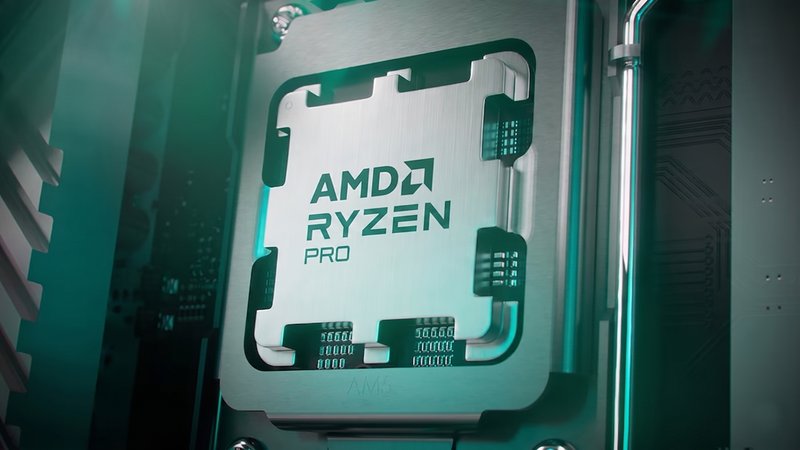
AMD is set to introduce a new flagship processor to the market, the Ryzen 9 9950X3D2 Dual Edition. This desktop chip, characterized by a dual-cache architecture, has been spotted in listings from various retailers in Canada and the UK, with an indicative price hovering around $1,000. The arrival of such a high-caliber component signals AMD's commitment to the high-performance CPU segment, a sector increasingly relevant for computational needs related to artificial intelligence.
For companies and professionals managing intensive workloads, processor choice is a critical factor. A chip like the Ryzen 9 9950X3D2, with its promise of high processing capabilities, could find application not only in gaming or content creation but also in more specifically technical contexts, such as the development and deployment of machine learning models at a local scale.
Dual-Cache Architecture and its Technical Implications
The distinguishing feature of the Ryzen 9 9950X3D2 is its "dual-cache" architecture. Although specific details have not yet been fully disclosed, this designation suggests an advanced cache configuration, likely with an emphasis on AMD's 3D V-Cache technology. A large and well-optimized cache is fundamental for reducing data access latency, a crucial aspect for overall system performance.
In areas such as Large Language Model (LLM) inference on on-premise infrastructures, data access speed and the ability to handle complex instruction sets are key parameters. A processor with an extended cache can significantly improve throughput and reduce response times, especially when working with models that require frequent access to large amounts of data or embeddings. This makes the Ryzen 9 9950X3D2 an interesting candidate for workstations and compact servers dedicated to local AI workloads.
TCO and On-Premise Deployment Choices
The price of approximately $1,000 for the Ryzen 9 9950X3D2 positions it in the high-end desktop market. For organizations evaluating the deployment of self-hosted AI solutions, Total Cost of Ownership (TCO) is a fundamental metric. While the initial cost of a single chip might seem high, its integration into a local stack offers advantages in terms of data sovereignty, direct control over infrastructure, and potential reduction of long-term operational costs compared to cloud-based models.
Adopting high-performance hardware like this processor allows for the construction of air-gapped or hybrid environments, where compliance and data security are priorities. The ability to perform LLM inference directly on one's own servers, without relying on external services, is a decisive factor for many companies. For those evaluating on-premise deployment, AI-RADAR offers analytical frameworks on /llm-onpremise to assess the trade-offs between initial costs, performance, and security requirements.
Market Outlook and the Local AI Ecosystem
The indication of a "hefty premium" for the Ryzen 9 9950X3D2 suggests that AMD will position this chip as a niche solution, aimed at users and businesses requiring maximum performance. This approach reflects a broader trend in the hardware market, where the most significant innovations often translate into higher initial costs.
Within the AI ecosystem context, the evolution of high-performance CPUs is complementary to that of GPUs. While GPUs remain dominant for large-scale training and inference, advanced CPUs play a crucial role in scenarios where flexibility, TCO, and the management of mixed workloads are priorities. The Ryzen 9 9950X3D2 could therefore solidify AMD's position as a provider of key components for a robust and locally controlled AI infrastructure.




💬 Comments (0)
🔒 Log in or register to comment on articles.
No comments yet. Be the first to comment!