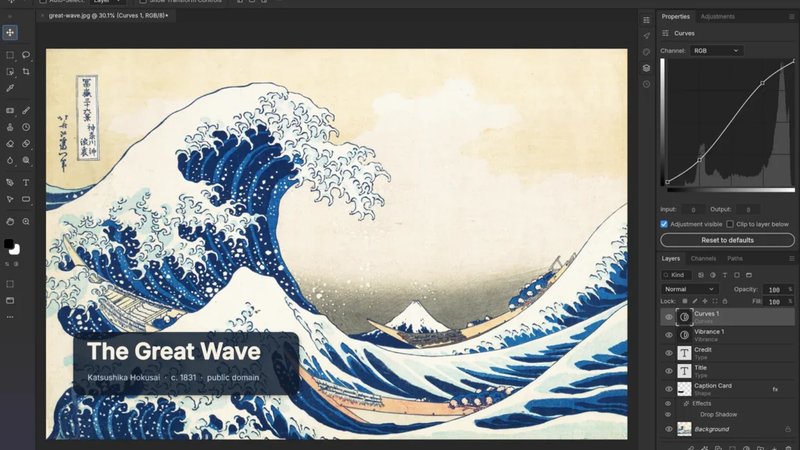
A Word clone running on an Arm-based Surface and working well enough to catch attention: a first look at WordCraft doesn't prove Office has a replacement, but it shows something more interesting. ArtCraft has added alternatives to Word, Excel, and PowerPoint to its growing collection of Rust applications, describing them as clean-room reimplementations of proprietary software. Its GitHub repositories also include projects modeled on Photoshop, Illustrator, and Premiere Pro. The company says development leans heavily on Claude. WordCraft resembles Microsoft's application, though buttons, icons, and other imagery differ. For spelling and hyphenation it uses Grady Ward's public-domain Moby Hyphenator II word list. The dual MIT or Apache 2.0 license is another signal: the code is meant to be inspected, copied, and adapted.
ArtCraft is careful to repeat that WordCraft is pre-alpha. It estimates 62 percent real feature parity and says an alpha for everyday writing is close. The roadmap is explicit: DOCX compatibility testing against real-world files has not begun; charts, SmartArt, and embedded OLE objects are dropped. For now, keeping it away from production workloads is the reasonable call.
The legal question is the real filter. Neil Brown of decoded.legal points out that the position depends on the jurisdiction. Clean-room proponents have an argument: if the functionality was implemented independently, without access to the original source code, the overall reimplementation is non-infringing. But, Brown adds, the situation is likely to be interesting and possibly litigated, especially when the aggrieved party has deep pockets, lots of lawyers, and a lot to lose. ArtCraft says it built WordCraft from public specifications and observation, using original or openly licensed assets. The Document Foundation, which develops LibreOffice, declined to comment. Microsoft acknowledged the inquiry but offered no further response. Adobe also declined to comment on the projects targeting its creative applications.
This is where the structural short circuit appears. Claude is an LLM from Anthropic; Microsoft integrated Copilot into GitHub. Using an LLM heavily to build alternatives to Word, Excel, and PowerPoint reverses the narrative that AI coding primarily benefits the big vendors. It lowers the cost of decoding formats, generating Rust code, and producing functionally compatible—if incomplete—clones. Adobe, which declined to comment on the creative app projects, faces the same dynamic with Photoshop and Premiere Pro. For startups and small teams, the advantage isn't the model itself but access to a development companion that can accelerate the most expensive part: reconstructing interfaces and interchange formats.
On a local level, WordCraft runs on Arm, which matters for lightweight devices and resource-constrained environments. But the gap with Office remains in compatibility with existing files: without DOCX testing against real documents, moving a suite is out of the question. TCO at this stage is not measurable. The only certainty is that the project signals a direction: generative AI used to produce native, permissively licensed software can erode incumbent territory not through a patent battle, but by lowering the cost of the alternative. The Rust code and dual licensing are consistent with that position: local performance, control, and no cloud subscription.
In the years ahead, it would be richly ironic if AI programming tools took revenue from the company that brought Copilot to GitHub.






💬 Comments (0)
🔒 Log in or register to comment on articles.
No comments yet. Be the first to comment!