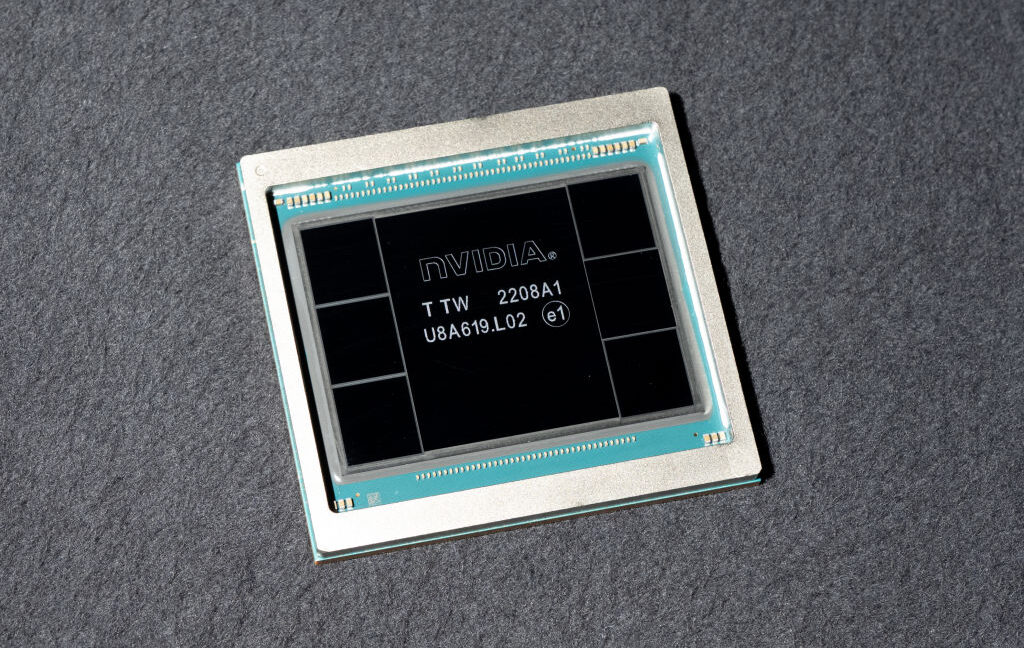
The US Department of Justice has arrested Greg Lui, 38, CEO of Earthmade Computer, accusing him of using false documents to mask shipments of servers containing export-controlled Nvidia chips. According to the FBI indictment, the equipment was worth more than $300 million and was ultimately destined for China. Lui allegedly orchestrated transit through freight-forwarding firms in Malaysia and Singapore, illegally diverting Nvidia A100 and H100 GPUs.
The point is not that these are Nvidia's most advanced chips. The A100 and H100 do not represent the latest generation, but they remain components capable of processing large amounts of data and training Large Language Models: a capability that Washington considers strategic and wants to deny Beijing.
The arrest reveals a structural dynamic: export controls do not eliminate demand, they push it into opaque logistics chains. Malaysia and Singapore act as high-volume transit nodes, where a shipment can be consolidated, split, and redirected without the original supplier or authorities easily identifying the final recipient. In this parallel market, intermediaries who sell anonymity and Chinese recipients who accumulate computing capacity by circumventing restrictions benefit. Who loses? Nvidia, which sees its products end up in sanctioned circuits despite initially legitimate-looking sales, with the risk of stricter regulatory enforcement. Companies that want to build on-premise LLM infrastructure in areas subject to controls or at risk of diversion also lose: for them, supply-chain due diligence becomes expensive and hardware availability can shrink for geopolitical rather than technical reasons.
The underlying signal is that compute for artificial intelligence is now a geopolitical asset: having budget and skills is no longer enough; you also need a verifiable supply chain. The A100 and H100 GPUs become controlled goods, with end-use documents and certifications. For teams evaluating self-hosted LLM deployments, this case makes concrete an often underestimated trade-off: hardware is not neutral with respect to geography. AI-RADAR publishes analytical frameworks at /llm-onpremise to map these constraints, from TCO to real component availability.
Greg Lui's case is not an anomaly: it is a snapshot of a transition in which the machines used to train models have become a resource as contested as data.








💬 Comments (0)
🔒 Log in or register to comment on articles.
No comments yet. Be the first to comment!