
The overtake that shifts the playing field
The news does not come from a vendor demo but from an independent index that ranks models on a cybersecurity test. Two open-weights systems, GLM 5.3 Flash and Mistral Large 4, lead the Artificial Analysis Cyber Index and outperform every single Anthropic model. The post reporting the result is blunt: what was recently described as a structural open-source lag has turned into a competitive advantage. This is not about percentage points but about hierarchy: the frontier is no longer a one-way race toward closed APIs.
The formula attributed to Dario Amodei — 'too powerful for you users' — encapsulated a strategy of cautious release and control. The overtake does not invalidate it entirely, but it forces a different comparison. Anthropic can still claim robustness, alignment, and safety; but when an independent index rewards two open-weights models, the maturity argument for closed models loses part of its main strength. Enterprise buyers look not only at absolute quality but also at installation freedom and cost predictability.
For AI-RADAR this is the turning point. If an open model reaches the top of a recognized ranking, the choice between API and self-hosted no longer hinges on a performance gap. It hinges on cost structure, data control, and the ability to integrate the model within a corporate perimeter. The ranking thus becomes a market signal: open weights are no longer the fallback but an option that conditions architecture decisions.
Why a ranking becomes a systemic incentive
The result has second-order effects. Companies paying for closed model APIs must now ask whether provider dependency is still justified by a performance advantage. This is not abstract: every token sent to an API is a variable cost and an external observation point on data. If an open model offers comparable or superior performance, the marginal cost of inference can shift to internal infrastructure that is amortized or shared across teams.
The incentive shift also affects cloud vendors. Those reselling closed models face double pressure: they must explain the premium and compete with rapidly improving open ecosystems. The post's mention of 'Open source prevails' is not neutral; it signals a preference shift among developers and system integrators toward self-hosted solutions where lock-in is lower and customization is direct.
This does not mean closed models will disappear. There are scenarios where latency, commercial support, and managed integration carry real value. But the comparison no longer works the same way. Previously the starting point was an API and the question was whether migrating was worth it; now the starting point is an open weight and the question is whether there are reasons not to use it. That inversion of defaults changes the negotiating power of buyers.
The TCO of inference changes formula
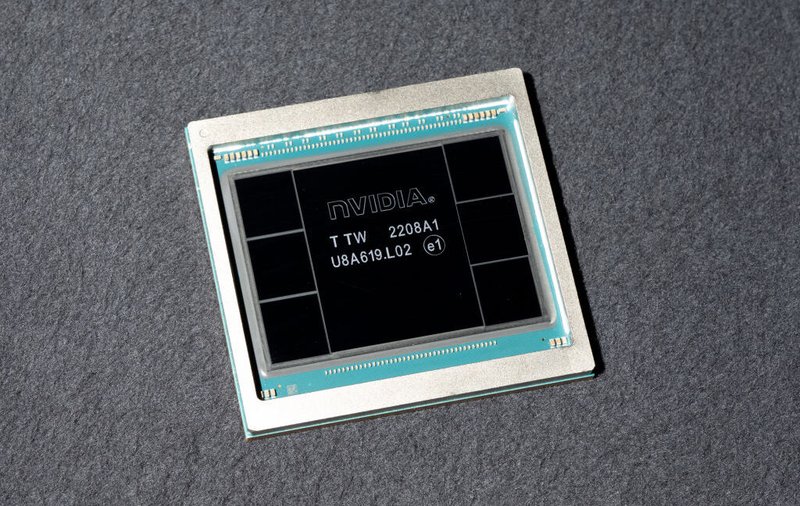
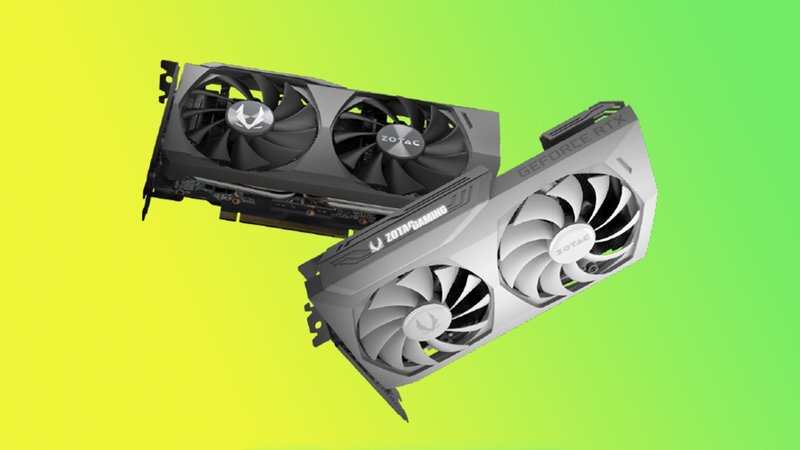
The source touches a central node: the constraint for open source models is no longer, in many cases, absolute quality, but hardware management. They require GPUs with adequate VRAM, an efficient serving pipeline, and a quantization strategy to reduce model footprint without excessive degradation. These are known problems, but they change the Total Cost of Ownership calculation. If the open model is competitive, the marginal cost of inference shifts from API fees to infrastructure.
For many organizations, infrastructure is already partly amortized or shareable: internal clusters, colocation agreements, active development environments. The variable cost per token does not disappear entirely, because energy consumption, maintenance, and upgrades remain, but its trajectory is different. An API scales linearly with usage; a GPU fleet, once sized, can absorb variable loads without multiplying spending proportionally. This difference underpins every on-premise TCO evaluation.
However, simplifications should be avoided. Bringing an open model into production is not free. It requires orchestration skills, failover policies, latency monitoring, and a checkpoint update strategy. Quantization reduces required VRAM but introduces trade-offs on quality and result stability. Those approaching migration must reason in terms of total cost per served request, not just price per token.
Another element to consider is latency and batch size. A self-hosted open model can be optimized for specific workloads, reducing required VRAM through lower-precision quantization and partial offloading to system memory. These choices are not neutral: they affect response quality and stability under request spikes. TCO evaluation must therefore include the ability to handle traffic variability without degrading user experience.
Sovereignty, fine-tuning, and the return of the perimeter
The overtake has a less visible but more lasting consequence: it brings sensitive data back inside the corporate perimeter. With an open model, a company can run inference locally without sending prompts and context to an external provider. This is not only privacy protection: it is regulatory compliance, audit control, and the ability to document where and how data is processed. For regulated sectors, this is often a requirement, not an option.
Fine-tuning on an open base model adds a layer of adaptation that closed APIs do not always allow. A team can specialize the model on its domain, keep derived weights in its own archives, and update capabilities without negotiating with a vendor. This reduces lock-in and increases technological sovereignty. It does not remove complexity: training pipelines, curated datasets, and validation processes are needed. But it shifts the decision from 'which API to buy' to 'which stack to build'.
There is also an organizational impact. When the model is self-hosted, the platform team becomes the reference point rather than a vendor's sales team. Skills in GPUs, orchestration, and fine-tuning become internal assets. This should not be idealized: it introduces operational responsibility and cost drift risks. But for many companies the structural advantage is precisely the ability to govern their own inference infrastructure without depending on someone else's roadmap.
Who gains and who loses in the new equilibrium
The immediate beneficiaries are platform teams and system integrators that have already invested in local stacks. For them, the news reduces the need to justify a self-hosted choice. Hardware vendors and providers of quantization and serving solutions see rising demand for mature tooling. Open source labs also gain visibility, but they must demonstrate the ability to accompany models with maintenance, documentation, and updates.
Under pressure are cloud vendors reselling closed models and API providers. They do not lose overnight, but their sales argument shifts from pure performance to management, support, and integration. Anthropic, in particular, built a narrative of caution and safety; the ranking forces it to confront open competition that can be installed locally and adapted. It is not a defeat, but a change of terrain.
A neutral reading is essential. Leadership on an index does not guarantee superiority in production. Open models can have weaknesses in robustness, latency under load, and compatibility with enterprise frameworks. Closed models can offer managed ecosystems that reduce time to production. The point is not to declare a winner, but to recognize that open weights have changed the terms of comparison for a growing share of deployments.
What to watch from here
The first signal to monitor is the translation of ranking into real enterprise adoption. Evidence on production deployments is needed, not just benchmarks. Companies rarely talk, but case studies on self-hosted models in regulated sectors, on-premise appliance offers, and download statistics for serving tooling are indirect indicators. If the leadership of GLM 5.3 Flash and Mistral Large 4 becomes visible in these traces, the signal strengthens.
The second front is hardware and efficiency. The direction is clear: competitive open models push toward VRAM optimizations, more aggressive quantization, and serving pipelines enabled on multiple GPUs. AI-RADAR readers know that inference cost is not only about tokens but about the ability to serve variable loads with controlled latency. Progress in these areas will make self-hosted more accessible even to organizations without dedicated research teams.
The third signal is the maturity of tooling for fine-tuning and orchestration. An open model is useful only if a framework exists to adapt it, version it, and monitor it. The availability of standardized pipelines, support in major orchestrators, and integration with governance systems will determine whether the overtake remains ranking news or becomes a default choice. The direction seems set: open models are no longer a fallback, but a starting point for those seeking control and independence.
Finally, watch the behavior of major orchestrators and governance platforms. If leading deployment frameworks begin to treat open models as first-class citizens, with native support for quantization, versioning, and monitoring, adoption costs will fall further. This signal is often more telling than rankings: it shows that the ecosystem is building the tools to make self-hosted an operational option, not just a statement of principle.






💬 Comments (0)
🔒 Log in or register to comment on articles.
No comments yet. Be the first to comment!