
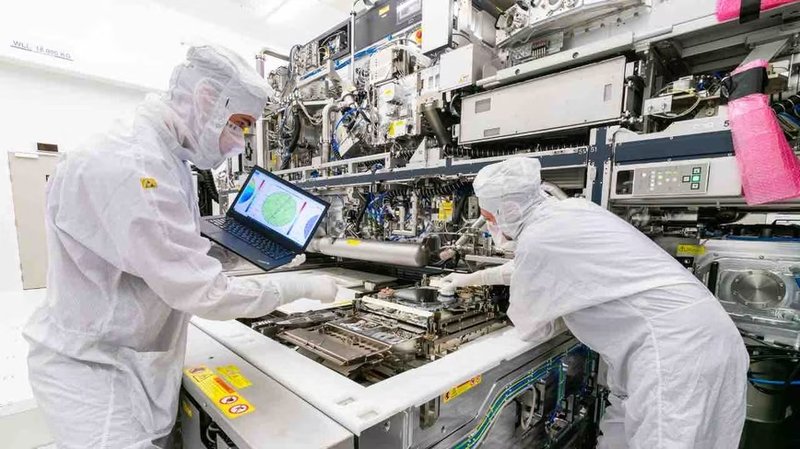
ASML is rewriting the pricing playbook for its Low-NA EUV lithography tools. The Dutch company, effectively a monopolist in extreme ultraviolet lithography machines, has signaled its intent to raise prices beyond the traditional model tied solely to wafer productivity. The stated goal: capture the full value of all the benefits its systems deliver to chipmakers, not just the throughput gains.
This move marks a shift in the relationship between ASML and its customers. Until now, EUV scanner prices were primarily anchored to the number of wafers processed per hour—an objective metric reflecting manufacturing efficiency improvements. Now, the company wants to charge for factors like etch quality, uniformity, yield, and the ability to print ever-smaller geometries—advantages that go far beyond speed and translate into more powerful, less defect-prone chips.
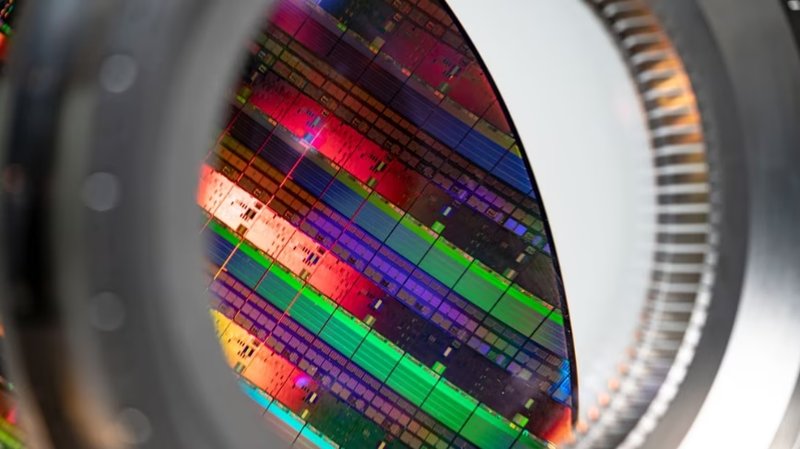
To grasp the significance, recall that EUV tools are essential for manufacturing chips at advanced nodes below 7 nanometers, the kind found in smartphones, servers, AI accelerators, and data centers. Without ASML's machines, companies like TSMC, Samsung, and Intel couldn't compete on performance and energy efficiency. The uniqueness of ASML's market position gives it enormous bargaining power, and this pricing shift is a clear demonstration.
The immediate impact falls on semiconductor manufacturers' bottom lines. Already squeezed margins, burdened by rising R&D costs, will now face even more expensive equipment. That pressure will cascade through the hardware supply chain, likely inflating the price of components for AI infrastructure. GPUs and accelerators deployed in on-premise clusters for training and inference of large language models (LLMs) rely on chips fabricated with EUV. If wafer costs climb, board prices follow, directly affecting the Total Cost of Ownership (TCO) for organizations designing local infrastructure.
In a landscape where data sovereignty and latency concerns push many toward self-hosted solutions, hardware cost dynamics become pivotal. On-premise deployment projects, often initiated to avoid recurring cloud fees, could see their cost advantage erode if accelerator prices keep rising. Moreover, the upfront capital expenditure (CapEx) required to set up an inference cluster increases, making it harder for midsize enterprises to justify the investment.
ASML, for its part, is simply applying market logic: if its machines generate value far beyond a throughput metric, why not charge for that? However, this move may accelerate the search for alternatives, such as nanoimprint lithography or advanced packaging techniques to reduce dependence on cutting-edge nodes. In the short term, though, chipmakers have no choice, and that reality will be reflected in AI hardware price tags.
The issue strikes at a raw nerve in the ecosystem: the cost of producing advanced chips is becoming prohibitive. For those developing and running LLMs locally, this means infrastructure design must now account for a structural rise in hardware costs, pushing toward more aggressive software optimizations, extreme quantization, and more efficient models. In short, the industry will have to do more with less—or accept that access to EUV capability will come at an increasingly steep premium.






💬 Comments (0)
🔒 Log in or register to comment on articles.
No comments yet. Be the first to comment!