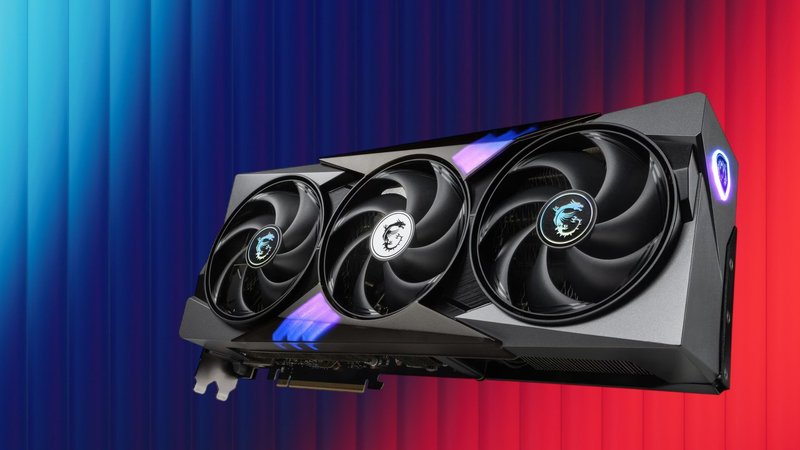
Openspline is not a new LLM or an orchestration framework. It is an open source avatar layer that attaches to existing voice agents and, from a single image, generates a talking face with synchronized lips. The detail that shifts attention is where generation happens: on the user's local GPU, not in a remote data center. The lite model exceeds 90 FPS on an NVIDIA RTX 4090, challenging the assumption that realistic realtime avatars require server-class hardware or specialized cloud services.
The technical promise is twofold. On one side, integration with an existing voice agent reduces to a few lines of code, lowering the barrier for those who already have a voice AI pipeline and do not want to rebuild the entire stack. On the other, local execution removes the need to transmit video and audio streams to external services to obtain an animated avatar. That is not a minor detail: when avatars represent real people or are used in regulated environments, data control remains a requirement, not an option.
Structurally, Openspline signals that talking avatar generation is moving toward self-hosting on consumer hardware. Until recently, such an experience was associated with proprietary services or dedicated GPU infrastructure. An open source project reaching high frame rates on a consumer card changes incentives: for a company managing virtual assistants or conversational interfaces, it becomes more plausible to evaluate a fully local deployment without giving up an animated face. Hardware cost becomes a CapEx item comparable to the recurring operating cost of a cloud avatar service.
There is also a second- and third-order market effect. Cloud-based avatar providers lose part of their technical advantage if an open source layer can run on consumer GPUs. At the same time, the burden shifts to model quality, inference latency, and VRAM management. Generating at 90 FPS is not enough: the system must sustain realtime audio streams, expression changes, and variable lighting conditions. That is the real competitive ground, and it is a ground where local control can become a decisive factor.
The project is at a very early stage, as the author admits in the presentation. There are no independent benchmarks, nor indications of VRAM requirements for the lite model beyond the cited RTX 4090. But the direction is clear: the avatar frontier is no longer necessarily in the cloud. For those evaluating on-premise deployment, AI-RADAR offers analytical frameworks on /llm-onpremise to assess trade-offs between local control and infrastructure complexity. The open question is whether this approach will scale beyond the demo, when voice agents need to handle long conversations and more complex visual contexts.







💬 Comments (0)
🔒 Log in or register to comment on articles.
No comments yet. Be the first to comment!