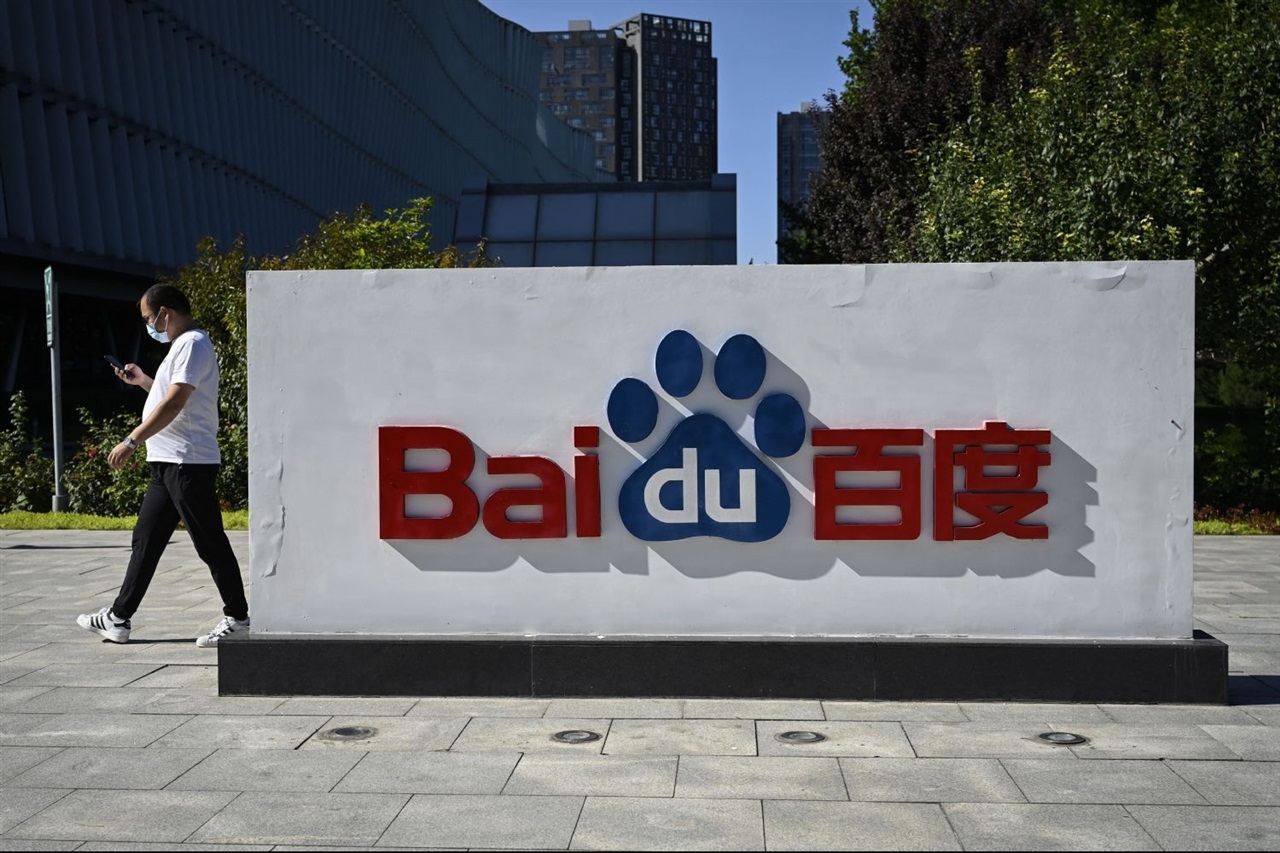
Baidu: The AI Monetization Debate Amid Cloud Growth and Advertising Challenges
Chinese tech giant Baidu finds itself at the center of a heated debate among financial analysts regarding its ability to monetize massive investments in artificial intelligence. While robust growth in the company's cloud sector is providing a significant counterbalance, persistent weakness in the traditional advertising market raises questions about the long-term sustainability of its business model. This dynamic highlights the inherent challenges major tech companies face in transforming AI research and development into concrete, scalable revenue streams.
The Role of Cloud in the AI Ecosystem
Baidu's cloud segment growth is not an isolated phenomenon but reflects a broader trend in the technology sector: cloud computing has become the foundational infrastructure for AI development and deployment. Cloud platforms offer access to specialized computational resources, such as high-performance GPUs, essential for training and inference of Large Language Models (LLM) and other AI models. This approach allows companies to avoid significant upfront CapEx investments in on-premise hardware and infrastructure, opting instead for a more flexible OpEx model.
However, the choice between cloud and on-premise deployment presents significant trade-offs. Self-hosted or bare metal solutions can offer greater control over data sovereignty, reduced latency, and, in some scenarios, a lower Total Cost of Ownership (TCO) in the long run, especially for intensive and predictable AI workloads. For those evaluating on-premise deployment, AI-RADAR offers analytical frameworks on /llm-onpremise to assess these trade-offs, considering factors such as GPU VRAM, throughput, and compliance requirements for air-gapped environments. A provider like Baidu's ability to attract and retain cloud customers for AI workloads is therefore a key indicator of its infrastructural and market strategy.
AI Monetization and Its Challenges
Monetizing artificial intelligence, particularly LLMs, remains one of the industry's most complex challenges. While AI can improve operational efficiency and create new product features, direct conversion into significant revenue is not always immediate. Companies are exploring various models, from selling APIs for access to proprietary models, to creating vertical AI-based solutions for specific sectors, to integrating AI into existing products to increase their value.
Baidu's case highlights how reliance on traditional sectors, such as online advertising, can be mitigated by diversification into higher-value-added services like cloud and AI. However, success in these new areas requires not only technological excellence but also an effective commercial strategy and the ability to scale infrastructure efficiently. Managing the often-high costs of training and inference is a critical factor influencing the overall profitability of AI services.
Future Outlook and Implications
Baidu's future, and more generally that of many tech companies with AI ambitions, will depend on their ability to balance innovation with financial sustainability. Cloud growth is a positive sign, indicating that the company is building a solid infrastructural foundation for the AI era. However, the market is constantly evolving, with a growing emphasis on optimized solutions for inference, model quantization, and energy efficiency.
Analysts will continue to closely monitor how Baidu manages to translate its AI advancements into a lasting competitive advantage and effective monetization. Strategic decisions regarding infrastructure, whether cloud, hybrid, or on-premise, will play a crucial role in determining the company's ability to serve customer needs, maintain data sovereignty, and optimize TCO—fundamental elements for any player operating in today's artificial intelligence landscape.








💬 Comments (0)
🔒 Log in or register to comment on articles.
No comments yet. Be the first to comment!