
Introduction: Bandera's Rejection of AI Surveillance
In the heart of Texas, the small town of Bandera, with approximately 900 residents, has become the stage for a heated debate on privacy and technological surveillance. After months of discussions and vibrant protests from residents, the city council voted by a 3-2 margin to immediately terminate its contract with Flock Safety, a company specializing in AI-based surveillance systems. This decision marks a significant turning point for the community, which has unequivocally expressed its dissent against the presence of license plate reader cameras within its territory.
The reaction to this vote was swift. Jeff Flowers, one of the council members who had strongly supported maintaining the Flock system, responded provocatively. He announced his intention to introduce measures aimed at banning cell phones, the internet, cameras, and nearly all forms of technology within city limits. His proposal, dubbed the "Bandera Declaration of Digital Independence," seeks to return the city to an 1880-like lifestyle, challenging residents to demonstrate complete consistency in their demand for privacy.
Technical Details: Flock Safety Cameras and the Cost of Controversy
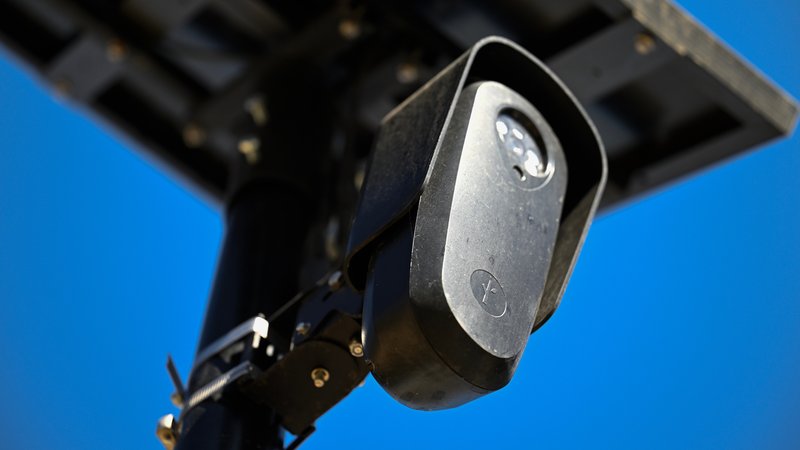
The system at the center of the controversy consisted of eight Flock Safety AI license plate reader cameras, installed with state funding. This technology, designed to enhance public safety, proved to be incredibly divisive. Bandera residents turned out en masse to city council meetings, expressing their strong opposition to government surveillance. The tension culminated in repeated acts of vandalism, with the poles on which the cameras were mounted destroyed in protest, forcing the city to incur expenses for their replacement.
The decision to abandon the contract with Flock was not without cost. Although the initial installation was covered by a state grant, the termination resulted in Bandera spending $15,000 directly from local city funds. This episode highlights how technology deployment decisions, even if initially externally funded, can generate unforeseen and significant costs, including those related to managing public consent and maintaining infrastructure in hostile environments. For organizations evaluating self-hosted or on-premise solutions, the TCO (Total Cost of Ownership) must consider not only hardware and software but also potential costs related to social acceptance and infrastructure resilience.
Context and Implications: Data Sovereignty and the National Debate
The Bandera case is not isolated but reflects a broader debate unfolding in numerous communities across the United States, from small towns to large cities. The implementation of AI-based surveillance systems raises fundamental questions about data sovereignty, citizen privacy, and local control over technological infrastructure. Local politicians often promote such solutions with the aim of increasing security, even when the will of their constituents is clearly contrary.
Similar examples have occurred in Troy, New York, where the city council voted to terminate its Flock contract, but the mayor declared a state of emergency to continue using the cameras. In Dunwoody, Georgia, residents protested Flock's use of cameras for sales demos, leading to a contract modification but not its complete termination. These scenarios highlight the complexity of AI technology deployment decisions, where trade-offs between perceived security, costs, privacy, and local control are constantly in flux. For companies considering the adoption of Large Language Models (LLM) or other AI solutions in self-hosted or air-gapped environments, the lesson from Bandera is clear: managing consent and understanding the implications for data sovereignty are as crucial as the technical specifications of the hardware or software.
Final Perspective: The Provocation of a "Return to 1880"
Councilmember Flowers' proposal for a "return to 1880" is a provocation aimed at highlighting what he perceives as hypocrisy on the part of residents: demanding privacy from the government while daily using devices and services that collect data. Flowers stated that if privacy is the absolute priority, then the city should be "courageous enough to go all the way," banning all forms of modern technology, from cell phones to internet services, and returning to paper ledgers and cash payments.
This extreme position, though rhetorical, highlights the deep divide between different views on privacy in the digital age. While some see technology as an essential tool for security and progress, others perceive it as an inherent threat to individual freedom and personal sovereignty. The Bandera case, with its decision to remove AI cameras and the subsequent radical proposal, offers a vivid snapshot of these tensions, emphasizing how technological choices are never purely technical but intrinsically linked to the values and expectations of a community.








💬 Comments (0)
🔒 Log in or register to comment on articles.
No comments yet. Be the first to comment!