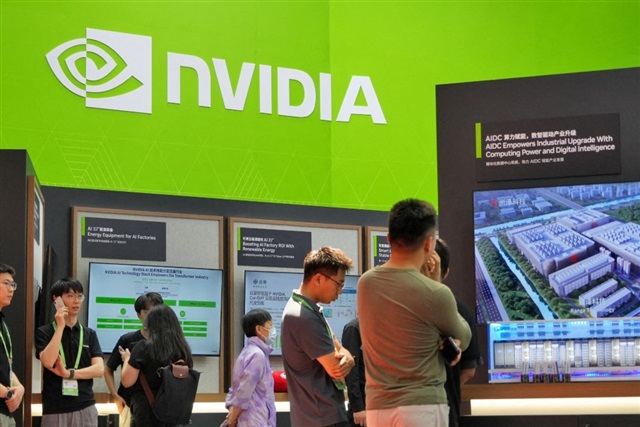
The AFP news wire has reported a shift with the blunt force of a trade war bulletin: Chinese AI chip buyers are turning away from Nvidia toward local suppliers, squeezed by the H20 crunch. The GPU specifically designed to slip through US export controls — a cut-down version of the Hopper architecture, with throttled bandwidth and choked interconnects — is turning into a bottleneck. Shipments fall short, priority given to Western customers creates friction, and the fear of further restrictions pushes Chinese firms to look inward.
What's driving the exodus isn't price or a sudden technical leap by domestic chips. It's the urgency of decoupling from a supply chain subject to geopolitical whims. The immediate effect is a surge in orders for national producers — Biren, Cambricon, HiSilicon among them — that until yesterday were weighed down by an immature software ecosystem hard to close in the short term. But the calculus has changed: a less performant but available GPU beats a training or inference project frozen for months.
The hidden cost of sovereignty
Saving time, however, means paying in complexity. Chinese silicon suffers from a development ecosystem that is still raw compared to CUDA, Nvidia's true moat. Moving an LLM onto non-Nvidia hardware means rewriting preprocessing pipelines, adapting compute kernels, and often giving up on libraries optimized for quantization or distributed fine-tuning. It's not just about raw power: the entire software stack drives TCO, and the gap from CUDA translates into longer integration and maintenance cycles.
For those evaluating on-premise deployment, the scenario is emblematic. On one hand, opting for domestic hardware lets companies keep data within their own walls, in line with Chinese data residency rules and strict audit requirements. On the other, they forgo the eased path that Nvidia's ecosystem offers for inference on quantized models or custom fine-tuning. AI-RADAR has long tracked analytical frameworks that help weigh such trade-offs, and the Chinese case is a litmus test: when sovereignty becomes a non-negotiable requirement, a technical choice turns into a political one.
A market that polarizes
The short circuit has second-order consequences beyond China's borders. Nvidia loses one of its most receptive markets just as it is ramping production to meet Western demand. Chinese chipmakers, for their part, can exploit the void to fund the maturation of their SDKs and gradually close the performance gap — not so much in raw TFLOPS, but in the developer experience.
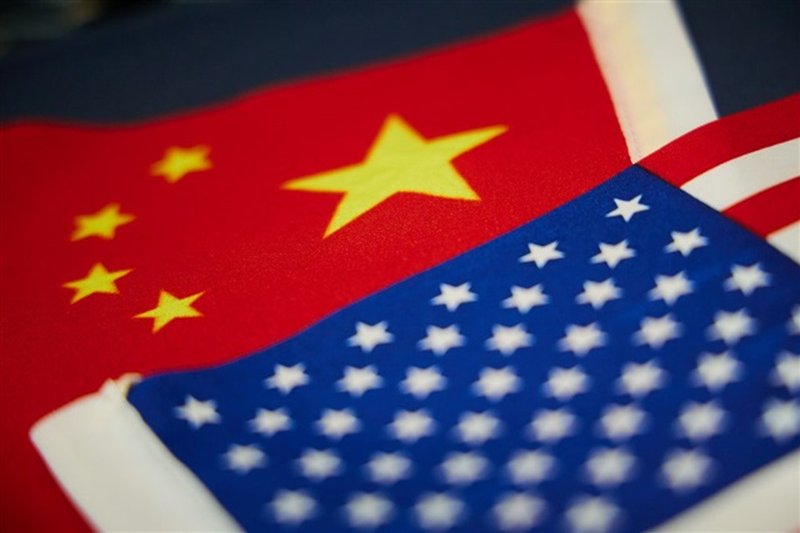
Structurally, the H20 crisis signals that export restrictions do not slow Chinese AI development; they redirect its technological path. The local industry is forced to invest in alternative architectures, fostering innovation in areas like advanced packaging or systolic array logic that bypass US-controlled channels. It's a paradoxical effect: sanctions create the conditions for a more fragmented but also more resilient hardware ecosystem, with fewer exogenous bottlenecks.
In the long run, the outcome could be a bifurcation of the global AI market: a Western sphere anchored to Nvidia and a Chinese sphere organized around a mix of domestic production and partnerships with non-aligned players. For anyone deploying LLMs on-premise, the lesson is clear: dependence on a single silicon supplier is not just a cost risk, but a strategic fragility factor. And the signals from Beijing confirm that hardware diversification, when driven by geopolitics, can turn into an unexpected competitive advantage.






💬 Comments (0)
🔒 Log in or register to comment on articles.
No comments yet. Be the first to comment!