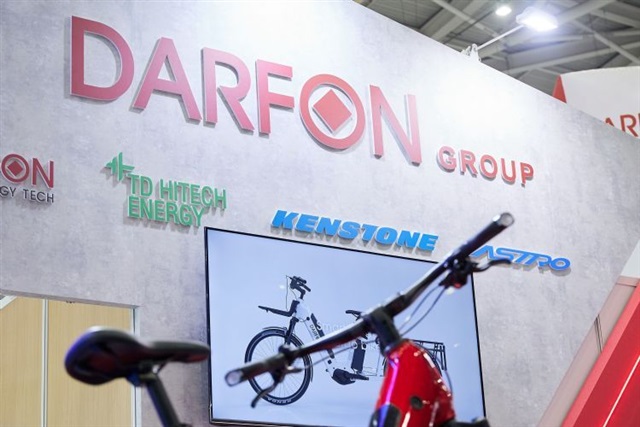
Darfon's AI-Driven Rebound
Darfon, a player in the electronic components industry, has announced a notable recovery in its profit margins for the first quarter of the year. This improvement is directly attributable to a surge in demand for Multi-Layer Ceramic Capacitors (MLCCs) specifically designed for artificial intelligence servers. The company's financial results reflect a broader trend in the technology market, where investment in AI infrastructure is generating cascading effects throughout the entire supply chain.
The increased demand for MLCCs in AI servers underscores the importance of reliable, high-performance components to support growing computing needs. These servers, critical for training and Inference of Large Language Models (LLMs) and other AI applications, require power stability and power density that only high-quality components can provide.
The Critical Role of MLCCs in AI Infrastructure
Multi-Layer Ceramic Capacitors (MLCCs) are essential passive components in almost all modern electronic devices, but they gain even greater importance in high-performance systems like AI servers. Their primary function is to stabilize power supply, filter noise, and store small amounts of energy, ensuring that processors, GPUs, and memory modules receive a clean and constant current flow.
In AI servers, where GPUs consume high power and demand rapid current peaks, the quality and density of MLCCs are crucial. Poor quality or insufficient components can lead to system instability, reduced performance, and even hardware failures. The demand for advanced MLCCs therefore reflects the need to build robust and reliable AI infrastructures capable of sustaining intensive workloads for extended periods.
Implications for On-Premise LLM Deployments
The rising demand for AI server MLCCs has direct implications for organizations evaluating or implementing on-premise artificial intelligence solutions. Building a self-hosted AI infrastructure requires careful selection of every component, from silicon chips to motherboards, down to the smallest capacitors. The availability and quality of these elements directly influence a company's ability to Deploy and manage LLMs and other AI workloads efficiently and reliably.
For those considering on-premise Deployments, hardware stability and longevity are key factors in calculating the Total Cost of Ownership (TCO). High-quality components, such as advanced MLCCs, help reduce downtime and maintenance costs, which are fundamental aspects for ensuring data sovereignty and compliance in air-gapped environments or those with stringent requirements. AI-RADAR offers analytical frameworks on /llm-onpremise to evaluate these trade-offs, helping companies make informed decisions about their AI infrastructure architecture.
Market Outlook and the AI Supply Chain
Darfon's margin rebound, driven by demand for AI server MLCCs, is an indicator of the continued expansion of the artificial intelligence market. As more companies adopt AI to enhance their operations, the demand for underlying hardware, including passive components, is set to grow. This trend highlights the resilience of the global supply chain and manufacturers' ability to meet rapidly evolving demand.
Reliance on a diverse and robust component ecosystem is crucial to avoid bottlenecks and ensure continuity in the development and Deployment of AI solutions. Companies investing in AI must consider not only the availability of the latest GPUs but also the reliability and supply of all auxiliary components that enable these complex systems to function.






💬 Comments (0)
🔒 Log in or register to comment on articles.
No comments yet. Be the first to comment!