
The Indiana Controversy and AI Expansion
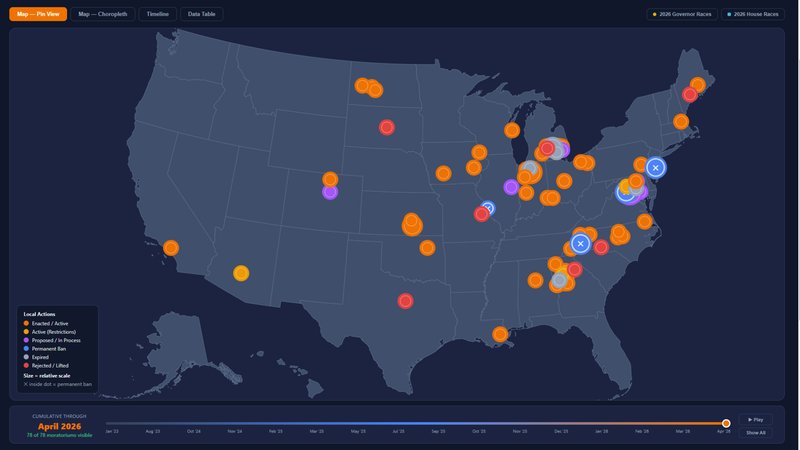
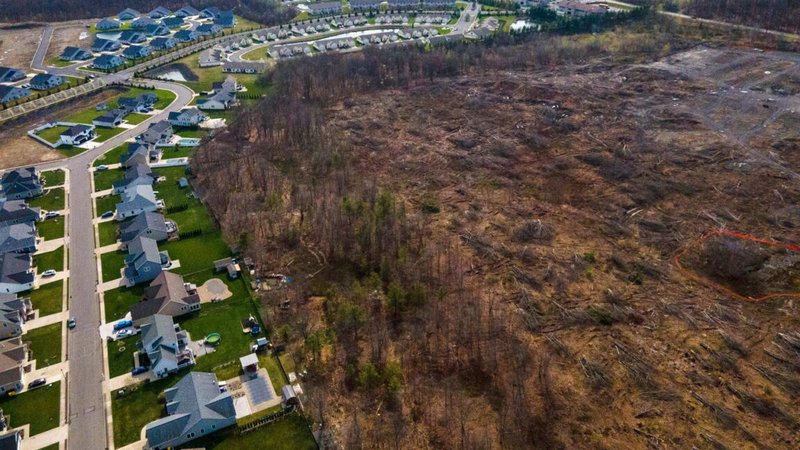
News of an Indiana mayor, secretly recorded disparaging residents protesting an AI data center, has cast a spotlight on growing tensions between technological development and local communities. The statements, for which the mayor's office later issued a clarification, highlight an increasingly common conflict: the demand for advanced artificial intelligence infrastructure clashing with citizens' concerns about environmental, landscape, and economic impact. The presence of "No data center" signs in the area is a clear indicator of this opposition.
This episode, though specific, reflects a broader challenge that companies and administrations must face in the age of AI. The demand for computing capacity for Large Language Models (LLM) and other artificial intelligence workloads is growing exponentially, making AI data centers critical infrastructure. However, their implementation is not without complexities, extending beyond mere land availability or capital.
The Specific Needs of AI Data Centers
A data center dedicated to artificial intelligence presents significantly different infrastructural requirements compared to a traditional data center. To support the training and inference of complex LLMs, these facilities require a massive amount of electrical power, not only to energize servers but also for advanced cooling systems. Latest-generation GPUs, such as NVIDIA H100 or A100, with their high amounts of VRAM (e.g., 80GB for A100s), are the heart of these systems but generate considerable heat.
The compute density and power demand per rack are orders of magnitude higher, posing unique challenges in terms of design, construction, and management. High-speed, low-latency network connectivity is equally crucial to ensure the necessary throughput between the thousands of GPUs often working in parallel. These factors make the choice of location for an AI data center a complex strategic decision, influenced not only by land and power availability but also by the ability to integrate the infrastructure into the local social and economic fabric.
On-Premise Deployment: Control vs. Complexity
For many organizations, particularly those handling sensitive data or operating in regulated sectors, the on-premise deployment of AI infrastructure represents a strategic choice to ensure data sovereignty, compliance, and granular control over security. Air-gapped or self-hosted environments offer a level of isolation and customization that public cloud struggles to replicate. However, as the situation in Indiana demonstrates, this choice also entails directly assuming responsibility for the physical and social impact of the infrastructure.
The Total Cost of Ownership (TCO) of an on-premise deployment is not limited to hardware and software acquisition. It also includes construction costs, energy management, cooling, physical security, and, not least, managing relations with the local community. Protests and controversies can delay projects, increase legal and reputational costs, and even halt development entirely. This highlights the need for a holistic approach that considers not only technical specifications and budget constraints but also the socio-political context.
Future Outlook and Decision Trade-offs
The increasing adoption of AI and LLMs will continue to drive demand for specialized data centers. Companies evaluating their deployment strategies – between cloud, on-premise, or hybrid solutions – must carefully weigh the trade-offs. While cloud offers scalability and flexibility, self-hosted solutions provide greater control, data sovereignty, and potentially a more advantageous TCO in the long term for stable and predictable workloads.
However, the Indiana case underscores that the success of an on-premise deployment also depends on the ability to navigate local complexities. Transparency, dialogue with communities, and the mitigation of environmental and social impacts become essential components of infrastructure planning. AI-RADAR offers analytical frameworks on /llm-onpremise to evaluate these trade-offs, helping decision-makers balance technical needs with operational and social realities. The choice of "where" and "how" to implement AI infrastructure is now as critical as the choice of "what" to implement.







💬 Comments (0)
🔒 Log in or register to comment on articles.
No comments yet. Be the first to comment!