
Space Data Centers: Musk and Bezos' Ambition Under Scientific Scrutiny
The exponential growth of artificial intelligence is posing significant challenges in terms of energy demand. Terrestrial power grids, in many regions, are already struggling to meet current demand, and projections for AI workloads suggest a further, drastic escalation. In this scenario, a bold and, for some, seductively simple proposal emerges: moving data centers into Earth's orbit.
The basic idea is to leverage an environment where the sun never sets, ensuring a constant and, theoretically, "free" power supply through solar energy. This vision promises to free AI computing infrastructure from the limitations of terrestrial energy resources, opening new frontiers for the deployment of Large Language Models and other computationally intensive applications.
The Orbital Vision and its Protagonists
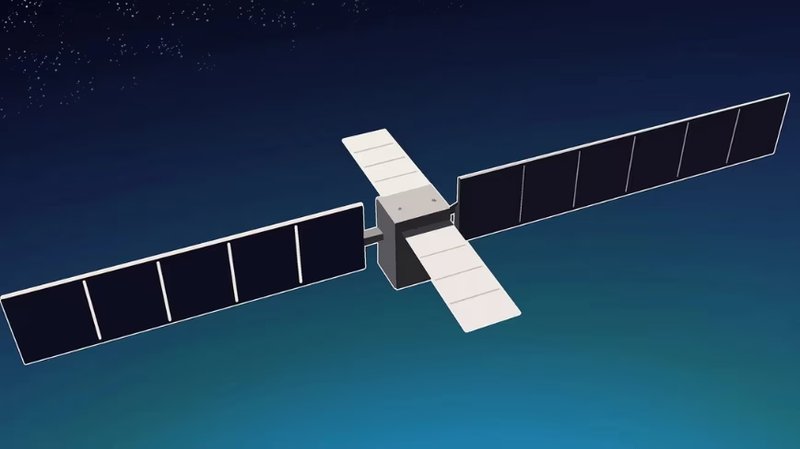
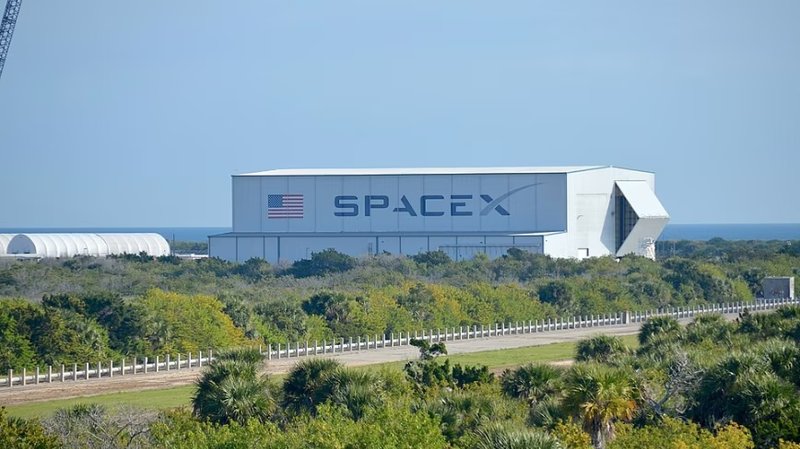
This perspective is no longer confined to science fiction but has become a concrete objective for some of the biggest innovators in the space and technology sectors. Among the main proponents of this ambition are figures like Elon Musk, with his SpaceX, who has reportedly expressed the intention to launch a million satellites destined to host data centers. A deployment scale that would radically redefine global infrastructure.
Jeff Bezos, through his Blue Origin, also pursues a similar vision, albeit with different numbers, aiming for a constellation of 51,600 satellites. Alongside these giants, a growing number of startups are entering this race, exploring the technical and economic possibilities of space-based computing infrastructure. The competition is open, and the implications for the future of computing are potentially immense.
Implications and Scientific Doubts
Despite the appeal of the proposal, the scientific community and industry experts raise crucial questions. The "why" behind this race for space data centers is subject to careful analysis. While solar energy in orbit is abundant, the initial costs for launching, maintaining, and managing a satellite constellation of such magnitude would be astronomical, challenging the concept of "free electricity."
Furthermore, the technical challenges are immense: from heat dissipation in the absence of an atmosphere, to communication latency with Earth, and protection from radiation and space debris. Data sovereignty and regulatory compliance would represent additional complexities, especially for sensitive workloads requiring air-gapped environments or specific data residency requirements. These factors make the deployment of LLMs and other critical applications in orbit a distant and complex prospect.
Future Prospects and Trade-offs for AI
The vision of orbital data centers represents an extreme frontier in the evolution of AI infrastructure. While it offers a theoretical solution to the energy problem, it introduces a series of new constraints and trade-offs that go far beyond current ones. For companies currently evaluating the deployment of AI workloads, decisions focus on more immediate and concrete alternatives: adopting self-hosted solutions, utilizing cloud infrastructure, or a hybrid approach.
These choices involve detailed TCO analyses, the availability of specific hardware like GPUs with adequate VRAM, and the ability to manage inference and training pipelines with stringent throughput and latency requirements. While the dream of space data centers continues to inspire, the operational reality for most organizations remains firmly anchored to the challenges and opportunities of terrestrial infrastructure, where data sovereignty and direct control over hardware are often priorities.







💬 Comments (0)
🔒 Log in or register to comment on articles.
No comments yet. Be the first to comment!