
US Data Centers: The Debate Extends Beyond Chinese Influence
Introduction
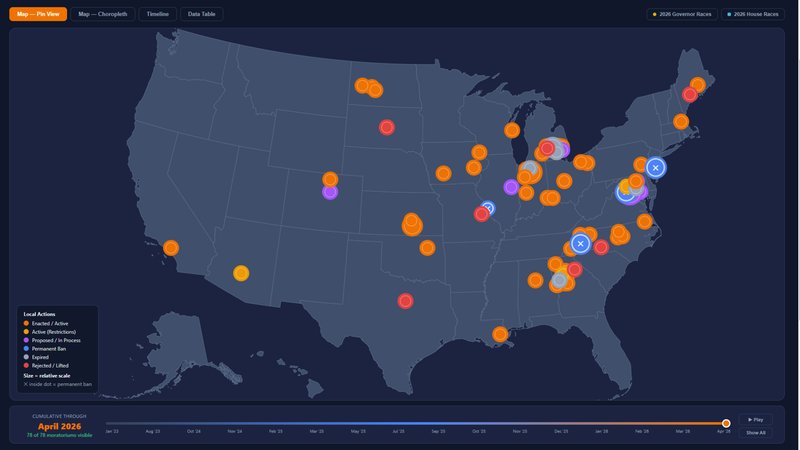
In the United States, the growing opposition movement against the construction of new data centers has become an increasingly heated topic of discussion. Some Republican lawmakers, tech investors, and even leading companies like OpenAI have publicly linked this resistance to Chinese interference. However, industry experts offer a more nuanced perspective, suggesting that the roots of such opposition are far more complex and multifaceted.
The Context of the Debate
The narrative that attributes opposition to data centers solely to external influences oversimplifies a reality shaped by local concerns and tangible environmental impacts. The construction and operation of a data center, especially those designed to host intensive workloads like Large Language Models (LLMs), entail significant resource consumption. This includes vast land areas, substantial amounts of electricity to power servers and cooling systems, and often considerable volumes of water for cooling. These factors generate a direct impact on local communities, manifesting as noise, landscape alteration, and pressure on existing infrastructure. It is precisely from these concerns that dissent often arises, regardless of any alleged geopolitical influence.
Implications for On-Premise Deployment
For companies evaluating the deployment of self-hosted or on-premise AI infrastructures, the data center debate in the US highlights a series of critical constraints and trade-offs. The choice of a location for a new data center or for expanding an existing one must include a careful analysis of the local context. Factors such as the availability of competitively priced energy, access to sufficient water resources, and the ability to obtain building and operational permits in a timely manner become decisive. Local opposition can result in significant delays, additional costs for environmental or legal mitigations, and even the need to completely revise deployment plans. This directly impacts the Total Cost of Ownership (TCO) of the infrastructure and can compromise an organization's ability to maintain data sovereignty and control over its AI workloads, especially in air-gapped environments or those with stringent compliance requirements.
Future Prospects and Strategic Decisions
The complexity of the current landscape requires CTOs, DevOps leads, and infrastructure architects to adopt a holistic approach in planning their AI stacks. Decisions regarding the deployment of LLMs and other artificial intelligence applications must consider not only hardware specifications (such as GPU VRAM or network throughput) and software architectures, but also the socio-environmental context in which the infrastructure will be placed. Ignoring local concerns or political dynamics can lead to unforeseen obstacles. For those evaluating self-hosted versus cloud alternatives, AI-RADAR offers analytical frameworks on /llm-onpremise to assess these trade-offs, emphasizing how an effective deployment strategy must balance performance, costs, and sustainability, taking into account all variables involved.








💬 Comments (0)
🔒 Log in or register to comment on articles.
No comments yet. Be the first to comment!