
Google has outlined an expansion of its AI compute capacity and shortened the development cycle of its TPUs to six months. It is a detail that might seem technical at first glance, but it says a lot about how large cloud providers are turning AI hardware into an internal resource updated at a cadence closer to software.
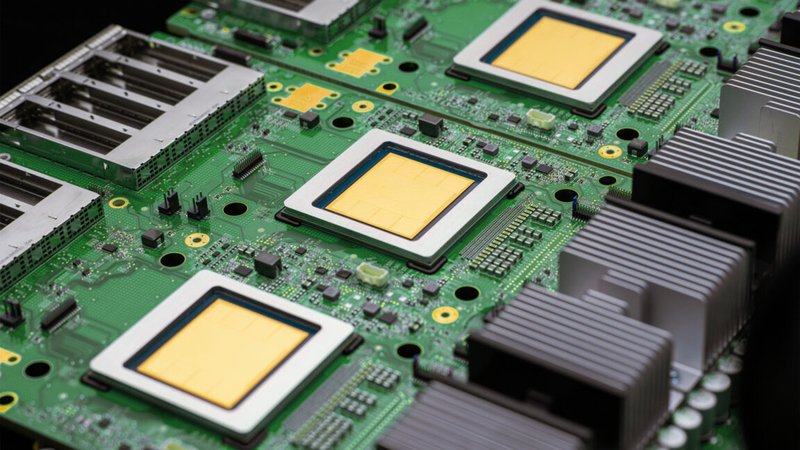
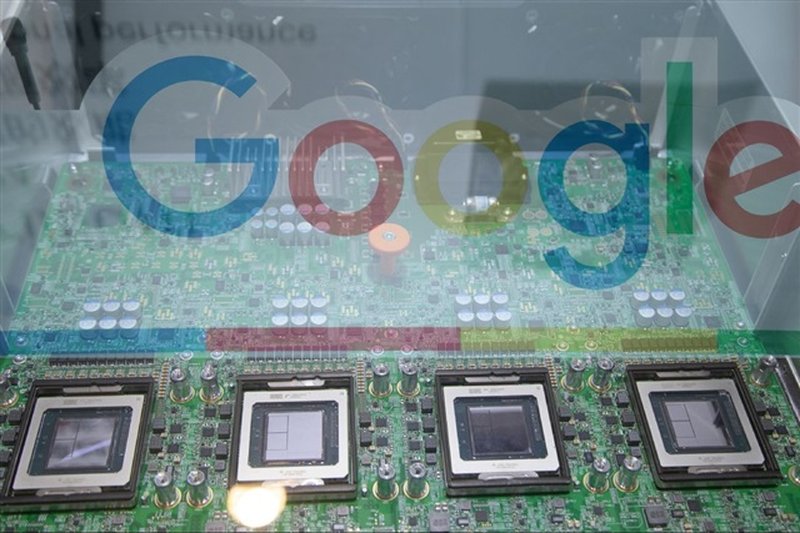
TPUs are tensor processors designed by Google to accelerate the matrix operations that dominate training and inference of models. Unlike GPUs, they are not sold as standalone components: they are consumed through Google Cloud, inside data centers controlled by the provider. This vertical model allows Google to push the pace of iteration without having to convince an enterprise buyer market to replace hardware every few months. A six-month cycle is aggressive: historically, data center accelerators followed longer timelines tied to validation, production and support cycles. Shortening that cycle signals that Google is treating TPUs as an internal product with high revision frequency, able to introduce architectural and process improvements much faster.
For those following deployment decisions, this news has second-order implications. If the six-month cadence becomes structural, the performance gap between specialized silicon accessible only in the cloud and general-purpose hardware purchasable for on-premises infrastructure could widen. Companies that choose to keep AI workloads in their own data centers, for data sovereignty or operational control, would find themselves competing against an innovation curve driven by a provider that can amortize research over massive volumes of internal workloads. This is not a question of absolute speed: it is a question of incentives. Google can afford to iterate because it does not need to guarantee long-term compatibility to a third-party ecosystem, nor does it need every new generation to be adopted by a market. Its customer is its own cloud infrastructure.
This does not make TPUs automatically superior in every scenario. Many organizations still prefer GPUs for flexibility, consolidated framework availability and the ability to move workloads across environments. But a six-month cycle puts pressure on the entire ecosystem: GPU makers, server vendors and competing cloud platforms must respond with faster roadmaps or risk losing relevance in compute-intensive segments. At the same time, the logic of cloud-only custom silicon reinforces a broader trend: the separation between those who develop models and infrastructure and those who consume them via APIs. For AI-RADAR, which follows on-premises strategies, the signal is clear: TCO evaluation can no longer be limited to hardware purchase cost; it must include obsolescence cadence and access to innovation. Those who want self-hosted deployments must accept a trade-off: greater control, but an update curve that could lag behind that of large cloud providers.
In short, the six-month TPU cycle is a structural indicator: AI hardware is becoming an internal competitive advantage of large clouds, not an open market. The implications for sovereignty and local strategies are profound, even though the source does not provide details on technical specifications or expansion volumes.




💬 Comments (0)
🔒 Log in or register to comment on articles.
No comments yet. Be the first to comment!