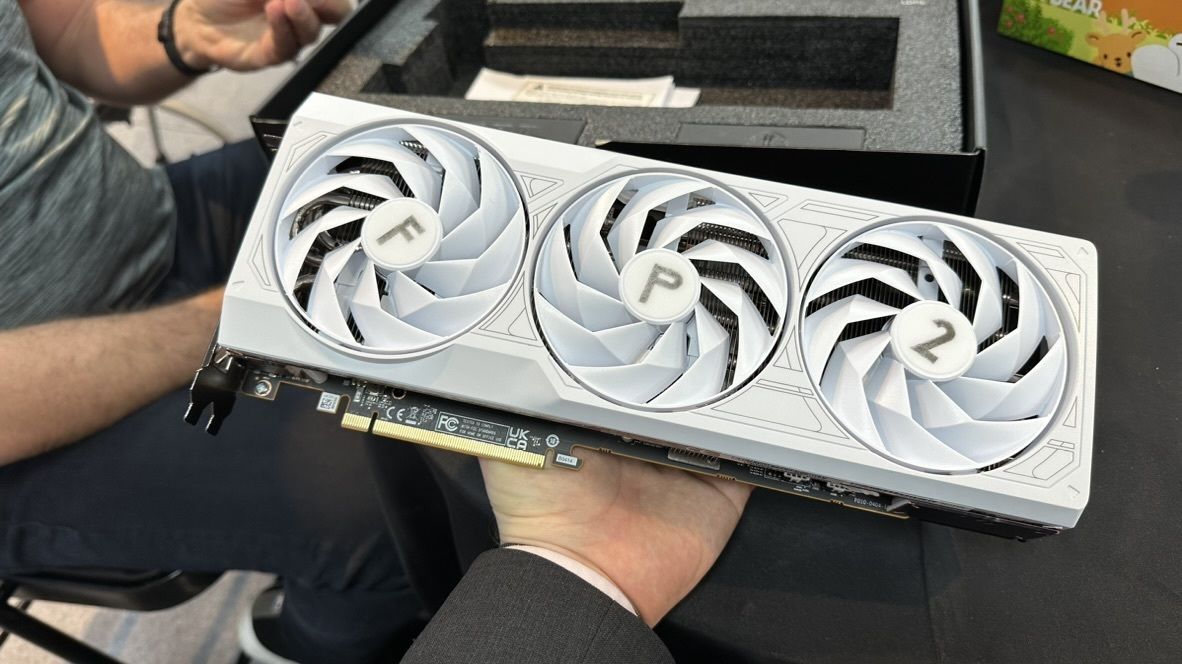
PC Partner, one of the main graphics card manufacturers, warns that GPU prices will continue to rise and that budget cards will become harder to find. According to an analyst cited in the news, manufacturers are increasing list prices beyond what would be needed to cover higher memory costs. It is a signal that deserves attention well beyond the consumer market.
For those building local infrastructure for LLMs, the warning touches on two sensitive points. The first is entry cost: many self-hosted configurations for small models start precisely from consumer or mid-range GPUs, where available VRAM is already a bottleneck. If prices rise faster than component costs, the budget for a single inference node grows without any increase in compute capacity. This changes the TCO calculation, especially for organizations that want to keep data on premises and avoid dependence on cloud APIs.
The second point is availability. A shortage of budget cards does not only hit gamers: it reduces the supply of first-price or used hardware that often powers prototypes, quantization tests, and small local clusters. When manufacturers prioritize higher-margin segments, the options for those experimenting with compressed models narrow. Quantization remains a useful lever for fitting an LLM into limited VRAM, but if the cost per gigabyte of video memory rises beyond expectations, this strategy loses part of its economic advantage.
Structurally, the fact that list prices are growing more than memory costs suggests that the GPU market is experiencing a phase of pricing power: demand for AI, data center, and workstation workloads absorbs production capacity and allows vendors to push prices upward. Those planning on-premise deployments must therefore treat hardware cost as a less predictable variable, not only tied to spot memory prices. Purchasing decisions need to be made with availability scenarios, not just benchmarks.
For those evaluating on-premise deployments, there are trade-offs between initial cost, VRAM availability, and TCO: AI-RADAR dedicates a series of analytical frameworks on /llm-onpremise to these topics.









💬 Comments (0)
🔒 Log in or register to comment on articles.
No comments yet. Be the first to comment!