GPUs for On-Premise LLMs: Beyond Bandwidth, Real Hardware Value
Selecting hardware for Large Language Model (LLM) deployment in on-premise environments is a complex decision that extends far beyond simply comparing peak specifications. For CTOs, DevOps leads, and infrastructure architects, evaluation must consider Total Cost of Ownership (TCO), data sovereignty, and operational efficiency, factors that often lead to favoring self-hosted solutions. In this context, an analysis of available GPUs reveals that metrics like memory bandwidth, while important, do not tell the whole story. A holistic approach that accounts for the actual needs of AI workloads is essential.
A detailed investigation into the most commonly used GPUs for LLM inference and training highlights how some seemingly less prominent options can offer exceptional value. This is particularly true for those looking to optimize costs without compromising the capabilities required to manage complex models in a controlled and secure environment.
GPU Analysis: Value and Market Niches
In the landscape of GPUs for LLM, several practical considerations emerge. NVIDIA Tesla P100s, for instance, are often underrated as entry-level options. A dual-GPU configuration can offer 32GB of VRAM with 700GB/s memory bandwidth, providing approximately 70% of an M3 Ultra's compute capability, all at a cost around $200. This makes them a surprisingly competitive choice for those approaching on-premise LLM deployments with a limited budget.
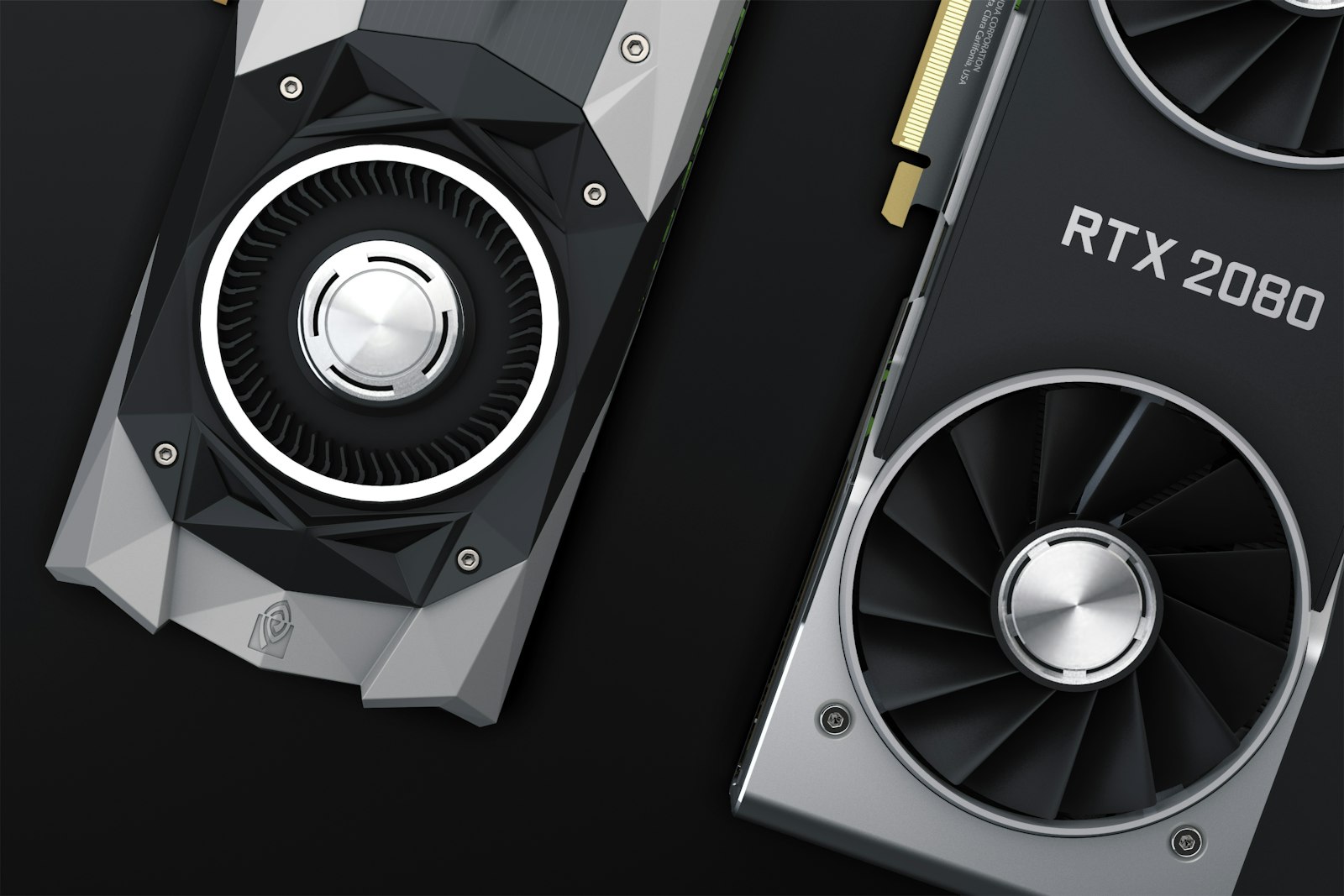
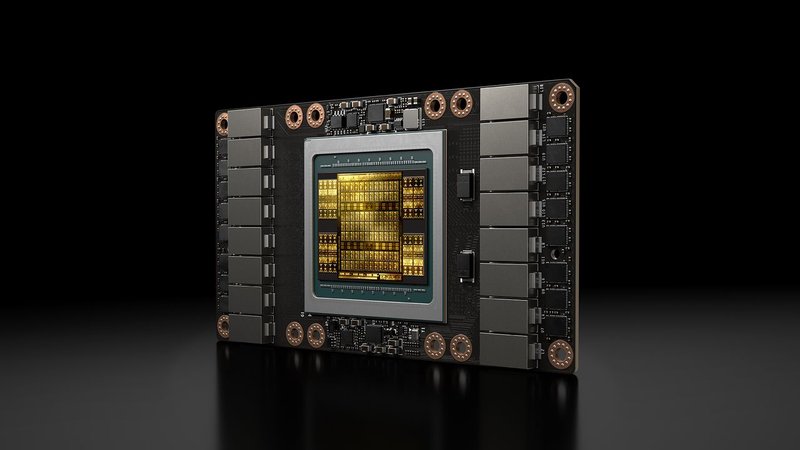
For single-stream workloads, NVIDIA Tesla V100s are considered a superior value alternative to the more recent NVIDIA GeForce RTX 3090s, especially if V100s can be sourced at advantageous prices. The 3090s, while powerful, are often deemed overkill for this specific type of usage. Niche solutions also exist, such as the NVIDIA Tesla P40s, which, with their 48GB of VRAM, prove suitable for Mixture of Experts (MoE) models when more expensive alternatives like Mi50s or other V100s are not accessible. On the other hand, Mac systems, including Mac Studio and M5 MacBook Pro (despite integrating "tensor" matrix MMA), are generally considered less efficient and more costly for intensive LLM workloads.
Beyond Superficial Benchmarks: The Importance of Prefill
A crucial aspect often overlooked in public benchmarks, which tend to focus on long text generation (e.g., "generate a 1000-word story"), is "prefill" performance. Prefill refers to the speed at which the model processes the input context provided by the user. This metric is of vital importance for productive applications and, in particular, for multimodal models, which consume context significantly.
The ability to rapidly process large input contexts directly impacts the user's perceived latency and the overall efficiency of the system. Ignoring prefill means having an incomplete view of a GPU's real-world performance in concrete usage scenarios, where responsiveness and efficient context management are fundamental for user experience and deployment efficiency.
Implications for On-Premise Deployments
Hardware considerations and real-world benchmarks have direct implications for on-premise deployment strategies. Choosing GPUs with a good cost-performance ratio, such as P100s or V100s, can significantly reduce TCO, a key factor for companies seeking to maintain control over their data and infrastructure. The ability to manage LLMs in self-hosted or air-gapped environments ensures data sovereignty and regulatory compliance, indispensable aspects for many sectors.
For those evaluating on-premise deployments, it is essential to consider not only peak specifications but also how hardware performs in real-world scenarios, such as prefill, and how it fits into an infrastructural strategy that prioritizes control, security, and costs. AI-RADAR offers analytical frameworks on /llm-onpremise to evaluate these trade-offs, providing tools for informed decisions without recommending specific solutions, but highlighting the constraints and opportunities of each approach.







💬 Comments (0)
🔒 Log in or register to comment on articles.
No comments yet. Be the first to comment!