
HexemBio Secures Funding for Stem Cell Innovation
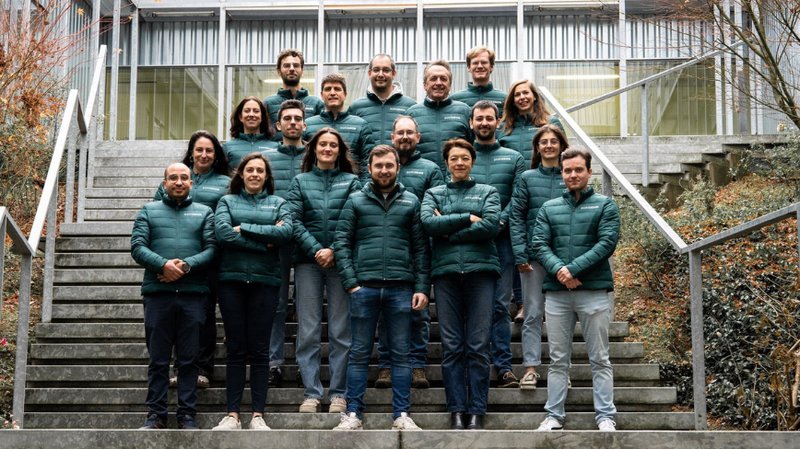
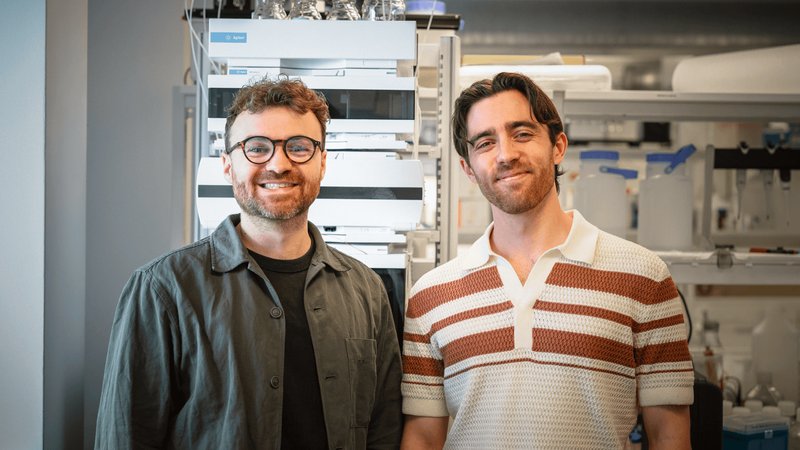
HexemBio, a promising biotech company based in Berkeley, has announced the completion of a $10.4 million seed funding round. This capital is earmarked to support the development of a groundbreaking therapy in blood stem cell regeneration. The announcement marks a significant step for the company, which aims to address complex pathologies through an innovative biological approach.
The life sciences sector is constantly evolving, with new discoveries pushing the boundaries of medicine. However, behind every scientific advancement lies a growing need for technological infrastructure capable of supporting data-intensive research and computational simulations. This is particularly true for companies operating in complex fields like biotechnology, where the analysis of large volumes of biological data is crucial.
A Nature-Published Scientific Approach
HexemBio's innovation is based on a scientific approach already published in the prestigious journal Nature. The company's methodology stands out for its ability to recreate the embryonic environment where blood stem cells initially form. This mechanism differs from more common techniques involving the chemical or genetic reprogramming of aged cells, offering a potentially more natural and less invasive path for cellular regeneration.
HexemBio's lead program focuses on bone marrow transplant for blood cancers, an area with a high unmet medical need. The importance of this research has been recognized by the U.S. Food and Drug Administration (FDA), which granted the program Orphan Drug Designation. This status is given to drugs intended for the treatment of rare diseases, providing incentives to accelerate their development and commercialization.
The Computational Demands of Biotech Research
The biotech sector, like many other scientific fields, is witnessing a growing integration of artificial intelligence and machine learning methodologies. New drug discovery, personalized medicine, genomic analysis, and molecular modeling are just some of the areas where AI algorithms can significantly accelerate research and development processes. These AI/ML workloads require substantial computational infrastructure, often relying on high-performance GPUs for inference and training of complex models.
Managing large biological datasets and the need to run complex simulations impose stringent requirements in terms of VRAM, computational throughput, and storage capacity. For biotech companies, the choice of infrastructure is not just a matter of computing power, but also of efficiency and scalability—crucial elements for maintaining the pace of innovation and optimizing the Total Cost of Ownership (TCO) in the long term.
On-Premise Deployment and Data Sovereignty in Life Sciences
For companies operating in the life sciences sector, data sovereignty and regulatory compliance are absolute priorities. The management of sensitive information, such as patient data or proprietary research results, often makes on-premise or air-gapped deployments a preferred choice over public cloud solutions. This allows for more rigorous control over data access, security, and compliance with regulations like GDPR or equivalent health privacy laws.
Self-hosted or bare metal infrastructure offers the flexibility to configure specific hardware, such as GPU arrays with high VRAM or high-speed storage systems, optimized for intensive AI/ML workloads. While the cloud offers immediate scalability, long-term operational costs and concerns about data residency can drive biotech companies to invest in local solutions, balancing CapEx and OpEx according to their strategic needs. For those evaluating on-premise deployment for AI/LLM workloads, AI-RADAR offers analytical frameworks on /llm-onpremise to assess the trade-offs between control, cost, and performance.
Future Prospects and Infrastructural Considerations
HexemBio's funding underscores the vitality of the biotech sector and the ongoing commitment to innovative therapies. Simultaneously, it highlights the critical importance of robust and well-planned technological infrastructure. As scientific research becomes increasingly dependent on advanced computational analysis and artificial intelligence, infrastructure deployment decisions will become even more strategic.
Biotech companies will need to continue balancing the need for computing power with security, compliance, and cost control requirements. The ability to manage and process large volumes of data efficiently and securely, whether on-premise or in hybrid models, will be a decisive factor for success and the speed with which scientific discoveries can translate into life-saving therapies. The choice between cloud and self-hosted solutions is never trivial and requires an in-depth analysis of the specific constraints and trade-offs of each research context.







💬 Comments (0)
🔒 Log in or register to comment on articles.
No comments yet. Be the first to comment!