
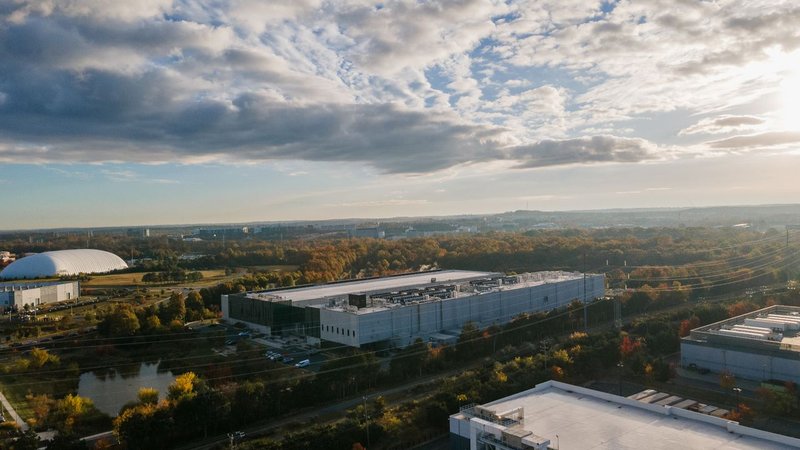
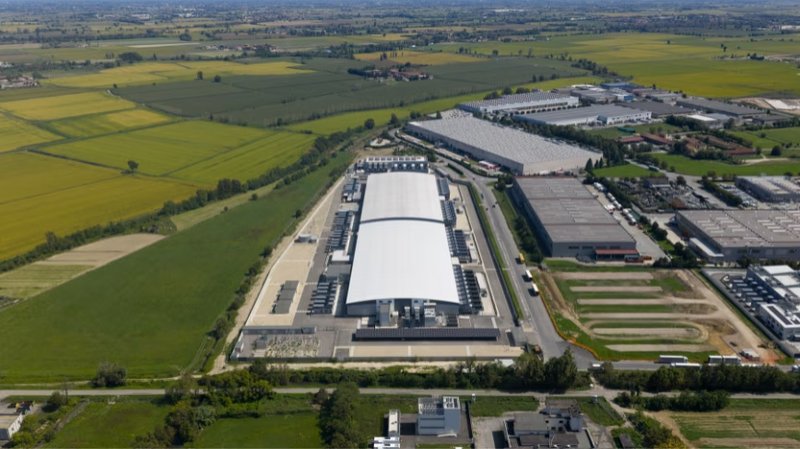
Meta's latest AI bet isn't a language model — it's a concrete-and-silicon complex deep in rural Louisiana. The Hyperion data centre, initially announced with a $10 billion investment, has surged past $50 billion in under two years, becoming the most tangible — and controversial — symbol of how major tech companies are redrawing the line between cloud and proprietary infrastructure.
In a parish of 20,000 people, this financial escalation isn't a footnote: it has turned some locals into millionaires through land sales, while pricing others out of their homes amidst soaring costs. The social fracture is the local mirror of a global dynamic: the hunger for on-premise compute to train and serve LLMs is becoming a real-estate and political affair, not just a technological one.
Hyperscalers' on-premise is a declaration of independence
When Meta decides to multiply a single data centre's budget fivefold, it isn't just buying more GPUs. It's choosing a deployment model that zeroes out dependency on cloud providers. Hyperion, like the mega-campuses of Google, Microsoft, and Amazon, is entirely self-hosted infrastructure: full control over hardware, network connections, and data residency. For training ever-larger models, this architecture isn't a luxury but a necessity — latency and data transfer costs would make relying on third parties prohibitive.
The leap from $10 billion to $50 billion, however, signals something deeper. The bar for the bare minimum to compete in AI at planetary scale has risen so fast that even Meta, with all its capital, had to revise spending forecasts upward once the project was underway. This isn't a budget overrun: it's the acknowledgment that next-generation model training and inference demand compute clusters with density and cooling capacities that only purpose-built data centres can provide.
Winners and losers of a land-consuming race
In Hyperion, the immediate winners are those who owned farmland in the right place at the right time. The losers are renters and low-income families watching living costs soar due to the influx of technicians, specialised workers, and ancillary businesses. This is not a temporary side effect: a tens-of-billions-dollar infrastructure isn't built and then ghost-managed. It attracts a workforce that permanently alters the local economic fabric.
This scenario raises questions beyond the news cycle. Who decides how much a region should sacrifice for AI progress? And how do you calculate the real Total Cost of Ownership of such a project when social and environmental costs are externalised? As companies compare deployment options — cloud, hybrid, on-premise — stories like Hyperion show that on-premise, taken to the extreme, is not just a technical choice: it's an act of power that reshapes geographies and communities.
What it means for those who aren't Meta
For enterprises weighing AI strategies that demand data control and cost predictability, Hyperion's escalation contains an implicit warning. The gap between those who can build proprietary infrastructure and those who must rely on managed solutions is widening. Not every organisation can invest billions, but many are discovering that a middle spectrum exists: more modest on-premise deployments, based on commodity hardware or preconfigured systems, that offer data sovereignty without the immense costs of a hyperscale campus.
AI-RADAR dedicates space to precisely these alternatives, analysing frameworks and architectures for those looking to assess the trade-off between control and complexity. The lesson from Louisiana, however, is that when the stakes reach certain heights, the boundary between technical choice and social impact dissolves — and every deployment decision becomes a stance on who bears the bill.





💬 Comments (0)
🔒 Log in or register to comment on articles.
No comments yet. Be the first to comment!