L'investimento record di Meta nell'AI
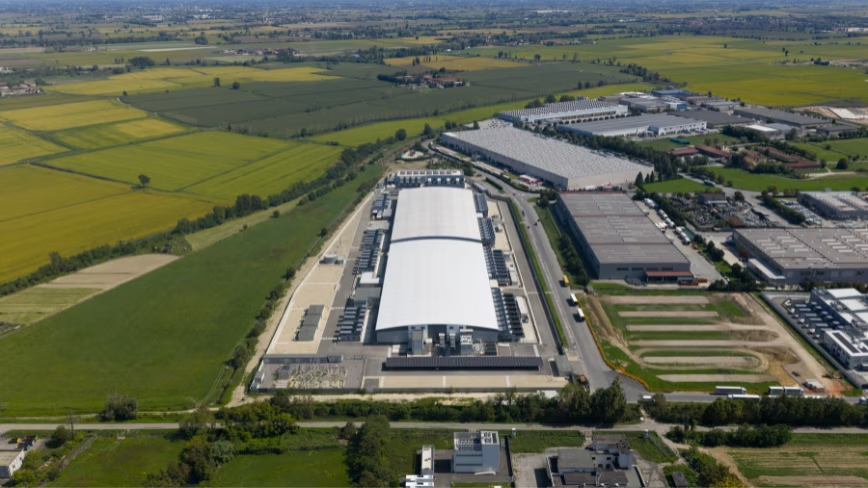
Meta sta realizzando un'infrastruttura senza precedenti negli Stati Uniti, destinata a ridefinire il panorama dei data center dedicati all'intelligenza artificiale. Il progetto, denominato Hyperion, è un vasto campus di data center situato a Richland Parish, in Louisiana, e rappresenta un investimento colossale. Il costo stimato per la sua realizzazione ha superato i 200 miliardi di dollari, una cifra che lo posiziona come il più costoso progetto infrastrutturale privato nella storia americana.
Questo investimento è cresciuto in modo significativo rispetto all'annuncio iniziale. A dicembre 2024, il costo previsto per Hyperion era di 10 miliardi di dollari, ma da allora la stima è aumentata costantemente, raggiungendo l'attuale cifra astronomica. La portata di questo impegno finanziario sottolinea l'importanza strategica che Meta attribuisce allo sviluppo e al deployment delle proprie capacità di intelligenza artificiale, richiedendo risorse computazionali e infrastrutturali di scala inaudita.
Implicazioni per l'infrastruttura AI on-premise
La costruzione di un campus come Hyperion da parte di Meta evidenzia la crescente necessità di infrastrutture dedicate e su larga scala per supportare i carichi di lavoro intensivi dell'AI, in particolare per il training e l'Inference di Large Language Models (LLM). Per le aziende che valutano alternative self-hosted o deployment on-premise per i propri carichi di lavoro AI, il caso di Hyperion offre una prospettiva sulla complessità e sui costi associati alla creazione di ambienti proprietari.
Sebbene la maggior parte delle organizzazioni non necessiti di una scala paragonabile a quella di Meta, i principi di base rimangono validi. La scelta tra soluzioni cloud e on-premise implica un'attenta analisi del TCO (Total Cost of Ownership), che include non solo i costi iniziali di capitale (CapEx) per hardware e costruzione, ma anche le spese operative (OpEx) legate a energia, raffreddamento, manutenzione e personale specializzato. La sovranità dei dati e la compliance normativa, specialmente in settori regolamentati, sono spesso fattori determinanti che spingono verso soluzioni self-hosted e air-gapped, nonostante gli investimenti iniziali elevati.
La sfida dei costi e la scalabilità
L'escalation del costo di Hyperion, da 10 a oltre 200 miliardi di dollari in un lasso di tempo relativamente breve, riflette le sfide intrinseche nella pianificazione e realizzazione di infrastrutture AI all'avanguardia. I costi possono aumentare a causa di molteplici fattori, tra cui l'evoluzione rapida delle tecnicie GPU, la scarsità di componenti, l'inflazione e la complessità ingegneristica di integrare sistemi di raffreddamento avanzati e alimentazione elettrica massiva.
La scalabilità è un altro aspetto cruciale. Un campus di data center AI deve essere progettato per espandersi rapidamente, accogliendo nuove generazioni di hardware e supportando un numero crescente di modelli e utenti. Questo richiede una pipeline di sviluppo e deployment robusta, capace di gestire l'allocazione delle risorse, l'ottimizzazione delle performance e la gestione del ciclo di vita dei modelli, dal fine-tuning all'Inference. Per chi valuta deployment on-premise, AI-RADAR offre framework analitici su /llm-onpremise per valutare i trade-off tra costi, performance e controllo.
Prospettive future per i data center AI
L'investimento di Meta in Hyperion non è solo un record finanziario, ma anche un indicatore della direzione futura per l'infrastruttura AI. Man mano che gli LLM e altri modelli di intelligenza artificiale diventano più complessi e pervasivi, la domanda di capacità computazionale continuerà a crescere esponenzialmente. Questo spingerà le aziende leader a investire massicciamente in data center proprietari, ottimizzati per le specifiche esigenze dei carichi di lavoro AI.
Questi mega-data center non saranno solo contenitori di server, ma veri e propri ecosistemi tecnicici, con sistemi di alimentazione e raffreddamento innovativi, connettività ad alta velocità e architetture hardware specializzate. La loro progettazione e gestione richiederanno competenze tecniche avanzate e una visione a lungo termine per affrontare le sfide legate al TCO, all'efficienza energetica e alla sostenibilità. L'esperienza di Meta con Hyperion servirà da benchmark per l'intero settore, mostrando sia le opportunità che le immense sfide legate alla costruzione del futuro dell'AI.







💬 Commenti (0)
🔒 Accedi o registrati per commentare gli articoli.
Nessun commento ancora. Sii il primo a commentare!