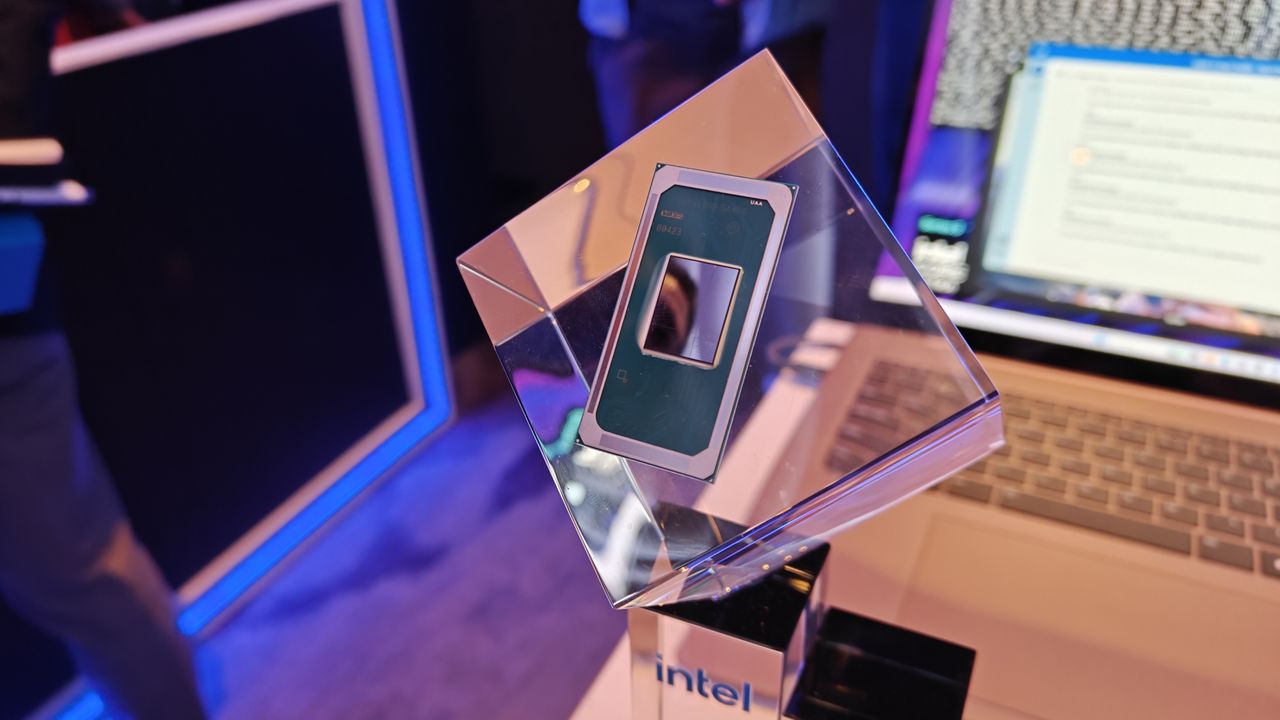
Intel 18A-P: Enhanced Process Promises Performance Boost and Thermal Efficiency
Intel has announced a significant step in the development of its semiconductor manufacturing technology: the 18A-P process has officially entered "risk production." This phase represents a crucial moment, indicating that the technology is mature enough to be integrated into initial products, although it is not yet in full mass production. The introduction of 18A-P is positioned as a direct and enhanced evolution of the 18A node, promising substantial improvements that could profoundly impact the efficiency and capabilities of future chips.
For companies investing in AI infrastructure, the choice of silicon is fundamental. Every advancement in manufacturing processes translates into potential gains in performance, energy efficiency, and thermal management—critical aspects for deploying Large Language Models (LLM) and other computationally intensive workloads.
Technical Details and 18A-P Advantages
The core of the 18A-P process innovation lies in its performance and thermal benefits. Intel claims a 9% performance improvement at iso-power. This means that chips produced with 18A-P will be able to execute more operations per second while maintaining the same power consumption level as their 18A-based predecessors, or achieve the same performance with lower power draw. Such efficiency is crucial for reducing operational expenditures (OpEx) in data centers.
Another key aspect is the 40% reduction in thermal resistance. Lower thermal resistance facilitates the dissipation of heat generated by the chip, allowing processors to operate at higher frequencies for longer periods without overheating. This translates into sustained performance and greater reliability, indispensable factors for AI workloads that demand continuous and intensive execution. As a "drop-in upgrade" for 18A, the 18A-P offers designers the ability to easily integrate these improvements into existing designs, accelerating adoption.
Implications for On-Premise AI and TCO
For CTOs, DevOps leads, and infrastructure architects evaluating self-hosted AI solutions, advancements in silicon like 18A-P are of paramount importance. Increased energy efficiency and improved thermal management directly translate into a more favorable Total Cost of Ownership (TCO) for on-premise deployments. Lower energy consumption reduces electricity bills, while better heat dissipation can decrease the need for complex and expensive cooling systems, or allow for higher computing density within the same physical footprint.
The ability to maintain high performance sustainably is vital for large-scale LLM inference and training. In environments where data sovereignty and regulatory compliance require air-gapped or strictly controlled solutions, efficient and high-performing hardware becomes a fundamental pillar. The 18A-P promises to provide a more robust foundation for building local AI infrastructures, offering a balance between computing power and operational sustainability.
Future Outlook and Market Context
The entry of 18A-P into "risk production" indicates that Intel is well on its way to bringing this technology to market. While not yet available for mass production, this phase allows Intel's partners and internal teams to begin integrating the process into their designs, paving the way for future products. This positions Intel in fierce competition with other foundry giants like TSMC and Samsung, all striving to push the limits of semiconductor miniaturization and efficiency.
For organizations aiming to build or expand their on-premise AI capabilities, monitoring these developments is crucial. The availability of more performant and efficient silicon will directly influence hardware purchasing decisions and infrastructure planning. AI-RADAR continues to explore these trade-offs, providing analysis to support decision-makers in evaluating the best deployment strategies for their AI workloads.




💬 Comments (0)
🔒 Log in or register to comment on articles.
No comments yet. Be the first to comment!