
Intel and Advanced Packaging: A Multi-Billion Dollar Bet for the AI Era
The technological landscape of artificial intelligence is constantly evolving, and at its core, increasingly evident, lies hardware innovation. In this context, advanced chip packaging has suddenly emerged as a crucial element to sustain the AI boom. Intel, one of the industry giants, has recognized this trend and is investing significantly in this technology, a move that could generate billions of dollars and redefine its role in the semiconductor market for AI.
This strategic bet is not just about producing more powerful chips, but about the ability to integrate them more efficiently, overcoming the physical limitations of traditional architectures. For companies evaluating on-premise deployments of Large Language Models (LLMs), understanding these innovations is fundamental, as they directly influence performance, TCO, and the feasibility of self-hosted and air-gapped solutions.
The Critical Role of Advanced Packaging for AI
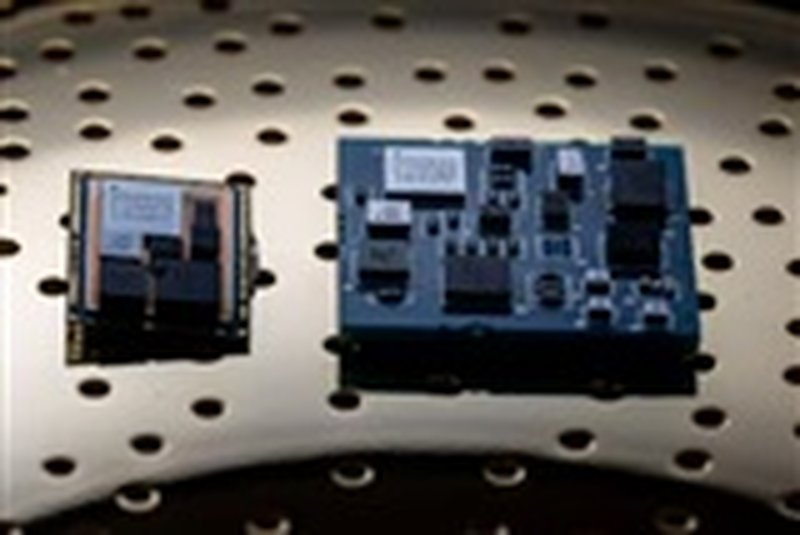
Advanced packaging refers to a series of techniques that allow multiple chips or "chiplets" to be integrated within a single package, overcoming the traditional limits of a single monolithic die. Technologies such as 2.5D and 3D stacking enable different components – such as compute units (CPUs, GPUs), High Bandwidth Memory (HBM), and interconnects – to be placed much closer to each other. This approach is vital for AI workloads, particularly for LLMs, which require enormous memory bandwidth (VRAM) and low latency to process large amounts of data and tokens.
The tight integration offered by advanced packaging drastically reduces the distances signals must travel, improving communication speed between various components. This translates into higher throughput and lower latency, essential factors for the inference and training of complex AI models. For CTOs and infrastructure architects, this innovation means being able to rely on more performant and efficient systems, capable of handling increasingly larger and more complex models directly in their own data centers.
Implications for On-Premise Deployments and TCO
Intel's investment in advanced packaging has direct implications for on-premise deployment strategies. Self-hosted AI solutions benefit enormously from optimized hardware that maximizes performance per watt and per unit of space. More efficient packaging can lead to higher compute density per server, reducing physical footprint and, potentially, operational costs related to energy and cooling, key elements in TCO calculation.
Furthermore, for organizations with stringent data sovereignty and compliance requirements, the ability to run critical AI workloads in air-gapped or locally controlled environments is indispensable. Advanced packaging helps make these on-premise solutions not only possible but also competitive in terms of performance compared to cloud alternatives. The choice of hardware with optimized packaging thus becomes a strategic decision that balances initial CapEx with long-term OpEx, while ensuring data control.
Future Prospects and the Race for Innovation
Intel's bet on advanced packaging highlights a clear trend in the semiconductor industry: the battle for AI leadership is fought as much on chip architecture as on their physical integration. While other players like NVIDIA and AMD continue to innovate in their GPUs and interconnect technologies, the ability to assemble these components in increasingly efficient ways will be a distinguishing factor.
The future will likely see a further push towards heterogeneous integration, where CPUs, GPUs, AI-specific accelerators, and memories will be combined into increasingly complex and performant packages. This evolution will not only push the limits of computing capabilities but also offer new opportunities to optimize LLM deployments, making them more accessible and efficient for a wide range of enterprise applications. For those evaluating on-premise deployments, AI-RADAR offers analytical frameworks on /llm-onpremise to assess these trade-offs, providing the tools to make informed decisions.






💬 Comments (0)
🔒 Log in or register to comment on articles.
No comments yet. Be the first to comment!