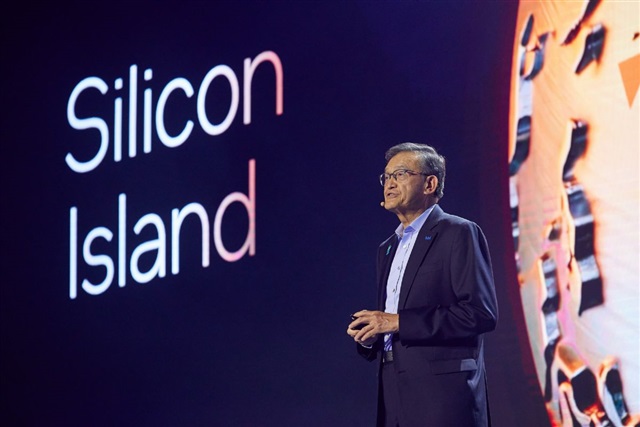
The Santa Clara giant is broadening its footprint in the Taiwanese supply chain. According to DIGITIMES, Intel is expanding orders with key partners on the island, with growing discussions pointing to October 2026 as the window for significant production volumes. A signal that the company led by Pat Gelsinger intends to accelerate advanced packaging and chiplet technologies, crucial for artificial intelligence workloads.
What’s brewing
Sources do not specify which technologies are at the center of the talks, but it is known that Intel already uses Taiwanese suppliers for 2.5D and 3D packaging – EMIB and Foveros, in particular – as well as for substrates and interposers. The reference to October 2026 suggests alignment with product roadmaps that require substantial volumes: they could be the future high-performance computing accelerators or components for the next-generation inference and training platform. The local chain, dominated by TSMC and back-end specialists, is the only one capable of offering the scale and process maturity that Intel requires.
Why it matters for on-premise deployments
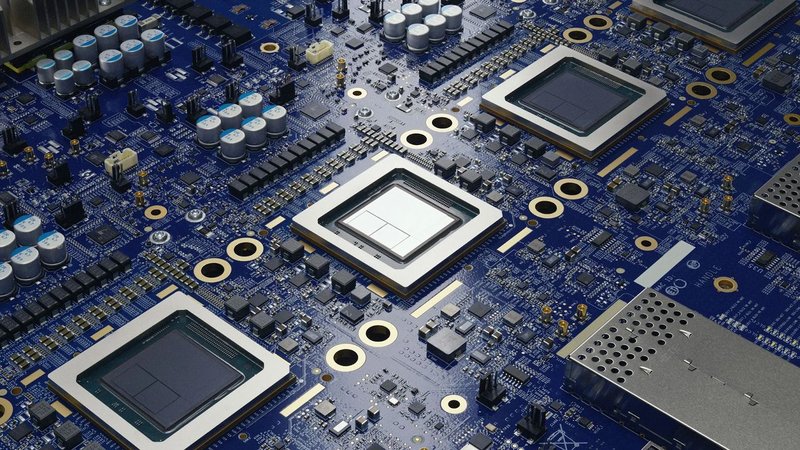
The availability of hardware for self-hosted LLMs depends heavily on supply chain fluidity. Intel’s GPUs and AI accelerators, such as the Ponte Vecchio series and its successors, integrate HBM memory and require dense interconnections that leverage the very Taiwanese packaging technologies. Any delay or supply constraint translates into longer procurement windows and a direct impact on TCO for those designing on-premise clusters. Scalability – moving from a few nodes to dozens of machines – is tied to the certainty of receiving the ordered volumes when needed.
The geopolitical knot and sovereignty choices
Concentrating more production in Taiwan reignites discussions about supply chain resilience. For organizations evaluating private deployments, reliance on a single region introduces price and availability risks that clash with data sovereignty requirements. Intel itself is investing in fabs in the United States and Europe, but for advanced packaging the Taiwanese ecosystem remains irreplaceable in the short term. Companies planning on-premise AI architectures will need to factor these elements into their risk models and supply contracts.
The AI-RADAR lens
Intel’s expanded orders to Taiwan are not just market news: they are a leading indicator of the direction LLM hardware will take over the next two years. As talks proceed, those making infrastructure decisions would do well to monitor delivery lead times and potential congestion. For those considering on-premise deployment, trade-offs exist between accelerator availability and technological autonomy: AI-RADAR will continue to offer analytical frameworks at /llm-onpremise to navigate these complexities.
Intel’s move shows that the microelectronics game for AI is also played at the supply chain table. October 2026 is a red-circled date: from it will depend the ability to realize private computing ambitions.





💬 Comments (0)
🔒 Log in or register to comment on articles.
No comments yet. Be the first to comment!