
Iranian Threat to OpenAI's $30 Billion AI Data Center in Abu Dhabi
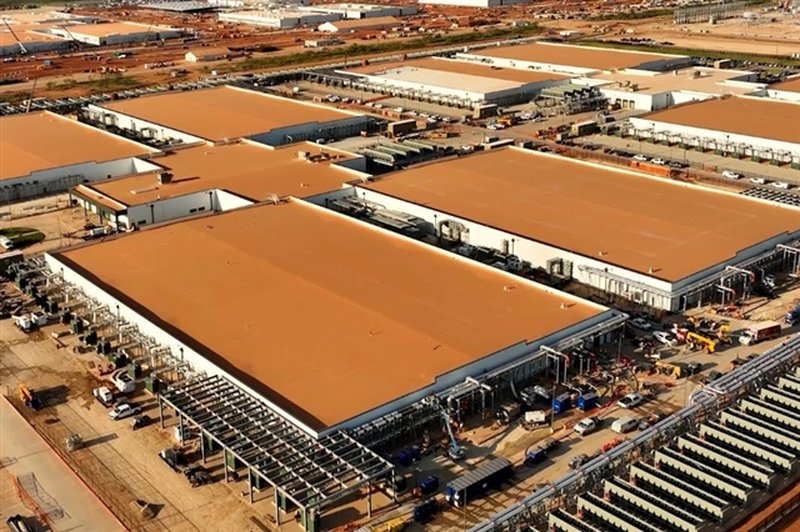
The Iranian regime has recently issued explicit threats against OpenAI's "Stargate" AI data center, a strategic facility located in Abu Dhabi. The threat, accompanied by the dissemination of a video showing satellite imagery of the site, underscores the escalating geopolitical tensions surrounding critical artificial intelligence infrastructure. This data center, valued at approximately $30 billion and boasting a 1 GW power capacity, represents a colossal investment in the future of AI and a focal point for the operations of OpenAI, the company behind Large Language Models like ChatGPT.
The incident highlights the vulnerability of cutting-edge technological infrastructure in an increasingly polarized global context. The choice of Abu Dhabi as the location for such a large-scale project reflects both the region's ambition to become a technology hub and the complex security dynamics that arise from it. For companies and nations investing heavily in AI development, protecting these assets becomes an absolute priority, not only from a cybersecurity perspective but also in terms of physical security.
The Scale of AI Infrastructure: A 1 GW Data Center
The Stargate data center, with its 1 GW capacity, is a striking example of the infrastructural scale required for training and Inference of state-of-the-art Large Language Models. Such an energy consumption implies the presence of thousands of latest-generation GPUs, such as NVIDIA H100s or equivalents, each requiring sophisticated power supply and cooling systems. Managing such complex infrastructure involves significant challenges in terms of TCO, which includes not only hardware acquisition costs but also operational expenses related to energy, maintenance, and security.
These mega data centers are the beating heart of AI development, enabling the processing of immense datasets and the execution of training cycles lasting weeks or months. Their design must account for factors such as latency, Throughput, and resilience, which are crucial for ensuring optimal performance and operational continuity. The Iranian threat, therefore, does not merely target a building but the entire research and development pipeline of one of the most influential players in the global artificial intelligence landscape.
Implications for Data Sovereignty and Physical Security
This episode raises fundamental questions regarding data sovereignty and the physical security of AI infrastructure. For organizations considering the Deployment of LLMs on-premise or in self-hosted environments, the protection of hardware and data becomes a direct responsibility. Unlike cloud services, where physical security is delegated to the provider, dedicated infrastructure requires meticulous attention to all aspects of protection, including geopolitical risks.
The geographical location of a data center is never neutral. Deployment decisions in regions with high political tensions can expose assets to greater risks, impacting operational continuity and regulatory compliance. This scenario strengthens the argument for air-gapped architectures or distributed Deployment strategies, which can mitigate the risk of a single point of failure or targeted attacks. The need to protect sensitive data and proprietary models drives many companies to evaluate solutions that ensure maximum control over both the physical and logical environment.
Future Outlook and Risk Assessment
The Abu Dhabi incident serves as a warning for the entire technology sector. As the race for AI accelerates, the protection of the infrastructure supporting it will become increasingly critical. Companies will need to integrate geopolitical risk analysis into their Deployment strategies, balancing the benefits of closer proximity to emerging markets with potential vulnerabilities. The TCO assessment for AI infrastructure can no longer overlook a careful analysis of security costs and the implications of operational disruption due to external factors.
For those evaluating on-premise Deployment, there are significant trade-offs to consider. The choice between a centralized cloud environment and a self-hosted solution, or a hybrid approach, will increasingly depend on the ability to mitigate complex risks, ranging from cybersecurity to physical security, and even international tensions. Resilience and security will become the pillars upon which the future of AI infrastructure is built.







💬 Comments (0)
🔒 Log in or register to comment on articles.
No comments yet. Be the first to comment!