
JCET Opens 3D Packaging Plant, Targeting AI Modules and CPO Demand
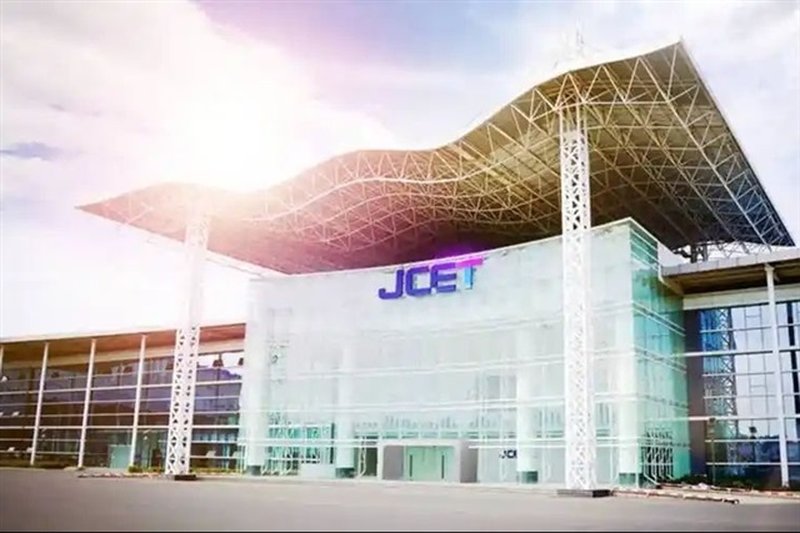
JCET, a leading provider of semiconductor packaging and testing services, has announced the opening of a new production facility in South Korea. This new structure is specifically dedicated to advanced 3D packaging technologies, with a strategic focus on AI power modules and the growing demand for Co-Packaged Optics (CPO). JCET's investment reflects the rapid evolution of the semiconductor industry, driven by the increasingly stringent requirements of AI workloads.
The expansion of production capacity in South Korea positions JCET to support the hardware innovation necessary for Large Language Models (LLM) and other artificial intelligence applications, where power efficiency and integration density are critical parameters. For companies evaluating the deployment of on-premise AI infrastructures, the availability of advanced components is fundamental to optimizing the Total Cost of Ownership (TCO) and ensuring data sovereignty.
The Role of 3D Packaging in the AI Era
3D packaging represents a crucial technological frontier for the semiconductor industry, especially in a context dominated by AI. This technique allows for the vertical stacking of various chips, such as processors, memory (VRAM), and other components, within a single package. The advantages are numerous: greater integration density is achieved, interconnection distances are reduced, and consequently, significant improvements in performance and power efficiency are realized. For AI power modules, this translates into higher processing capability and increased throughput, essential for the inference and training of complex LLMs.
Concurrently, the demand for Co-Packaged Optics (CPO) is growing exponentially. CPO solutions integrate optical components directly into the chip package, reducing latency and increasing bandwidth for inter-chip communications. This is vital for AI architectures that require extremely high-speed data transfers between GPUs and memory units, especially in multi-GPU configurations or AI-dedicated server clusters. JCET's ability to produce these advanced components is an indicator of the technological maturity needed to sustain the current AI boom.
Market Context and Implications for On-Premise Deployment
The opening of a plant dedicated to 3D packaging and CPO solutions by JCET highlights a clear market trend: the need for increasingly high-performance and integrated hardware for AI. For organizations choosing on-premise or hybrid deployment strategies, the availability of these advanced components is directly related to the feasibility and efficiency of their infrastructures. Better packaging means not only superior performance but also more effective thermal management and optimized power consumption, factors that heavily impact the TCO of an AI data center.
Local production capacity (or at least in strategic regions like South Korea) for these critical elements also helps mitigate supply chain risks, an increasingly relevant aspect for security and operational continuity. For those evaluating on-premise deployments, access to state-of-the-art hardware with advanced integration is an enabling factor for maintaining control over their data and operations, meeting compliance and data sovereignty requirements. AI-RADAR offers analytical frameworks on /llm-onpremise to evaluate the trade-offs between different hardware architectures and deployment strategies, specifically considering the impact of such innovations.
Future Prospects for AI Infrastructure
JCET's investment in 3D packaging and CPO technologies is a clear signal of the direction the semiconductor industry is taking to support AI. As Large Language Models become larger and more complex, the demand for computing power and energy efficiency will continue to grow. Innovations in packaging are as important as those in chip design itself for unlocking new capabilities and reducing operational costs.
This development not only strengthens JCET's position in the global market but also provides a significant boost to the entire AI ecosystem, offering technical decision-makers the necessary hardware tools to build robust, scalable, and sustainable AI infrastructures, both in cloud environments and, increasingly relevantly, on-premise. The ability to integrate more functionalities into smaller spaces with greater efficiency will be a key factor for the success of future AI projects.





💬 Comments (0)
🔒 Log in or register to comment on articles.
No comments yet. Be the first to comment!