
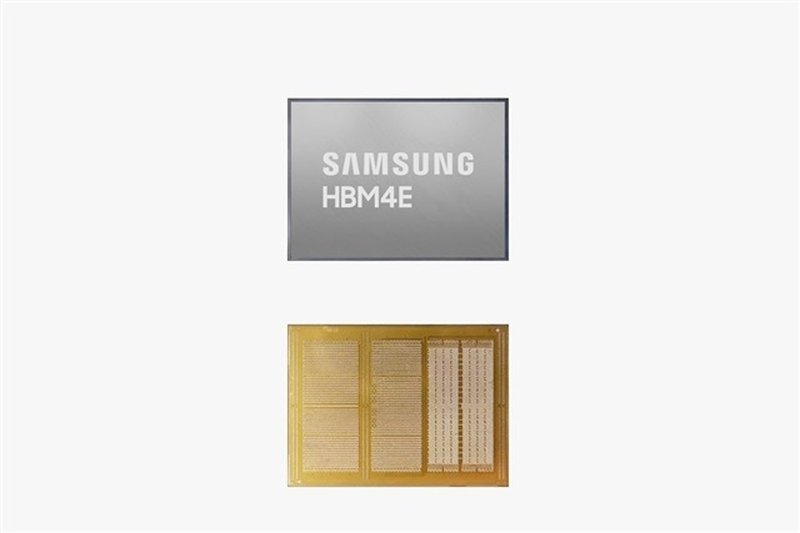
The AI hardware race has a well-known Achilles’ heel: memory cost. JEDEC has just released the SPHBM4 standard, a High Bandwidth Memory variant explicitly designed to slash that expense. The idea is as simple as it is disruptive: narrow the bus to 512 bits – a slimmer interface than traditional HBM – to ditch expensive silicon interposers in favor of organic substrates, which are far cheaper to manufacture.
For those less familiar with semiconductor packaging, the interposer is the slice of active or passive silicon on which HBM stacks sit next to a GPU or accelerator. It provides ultra-high-density connections but comes with steep manufacturing costs that inflate the final board price. SPHBM4 sacrifices some overall bandwidth – still in the hundreds of GB/s – to eliminate that critical component, using a narrower interface that remains adequate for many AI workloads, especially inference.
The move signals a structural shift. Until now, the dominant narrative was “bandwidth at any cost,” essential for training ever-larger models. Today, with the explosion of open-weight models and on-premise fine-tuning, attention is turning to total cost of ownership (TCO) and the ability to run LLMs locally without breaking the bank. SPHBM4 could be a key enabler: it makes accelerators with dozens of gigabytes of VRAM more plausible at lower prices, lowering the barrier for organizations that want to keep data under their control rather than routing it through the cloud.
The real winners are system integrators and hardware vendors building self-hosted solutions. A PCB with an organic substrate costs less, can be produced on standard lines, and reduces reliance on specialized interposer suppliers. For end users, that means lighter CapEx and potentially a broader choice of high-memory machines. The losers? Traditional interposer manufacturers and those who bet on architectures where maximum bandwidth is non-negotiable. But it’s a calculated trade-off: for inference and many fine-tuning scenarios, the real bottleneck is memory capacity, not raw speed.
There’s a second-order implication tied to data sovereignty. If accelerator costs fall, public agencies, SMEs, and regulated industries find it more feasible to set up air-gapped environments where LLMs can run without sensitive data leaving the corporate perimeter. It’s hardly a coincidence that JEDEC – historically sensitive to enterprise and industrial needs – pushed a standard that emphasizes savings. It’s a recognition that AI is no longer just a hyperscaler play; it’s becoming a ubiquitous workload that must fit into realistic IT budgets.
SPHBM4, in short, isn’t just another datasheet acronym. It’s a piece of a larger puzzle where AI hardware adapts to an ecosystem no longer monopolized by training colossal models, but increasingly geared toward local execution and customization. For anyone evaluating on-premise deployment, it’s a signal worth watching closely.






💬 Comments (0)
🔒 Log in or register to comment on articles.
No comments yet. Be the first to comment!