
John Ternus at Apple's Helm: The AI Challenge
Effective September 1st, John Ternus will assume the role of Apple's CEO, bringing with him two decades of experience in the company's hardware sector. A 50-year-old mechanical engineer, Ternus has played a crucial role in key moments for Apple, helping to reverse a period of declining product quality and actively advocating for the creation of iPadOS. His leadership was also fundamental to the Apple Silicio transition, an initiative that redefined the performance capabilities and energy efficiency of the Cupertino giant's devices.
With control over product lines generating approximately 80% of Apple's total revenue, Ternus now faces one of the most significant challenges in the current technological landscape: artificial intelligence. His ability to solve problems systematically, rather than assigning blame, will be tested in a rapidly evolving sector where AI integration is not just a software issue, but requires deep understanding and innovation at the hardware level.
The Apple Silicio Legacy and AI Implications
The Apple Silicio transition demonstrated Apple's ability to design and optimize its own silicio for specific needs, a model that could prove crucial in the AI era. The development of Large Language Models (LLM) and other artificial intelligence workloads places stringent demands on hardware, particularly concerning VRAM, compute power for inference, and throughput. Silicio optimization for these operations is fundamental to ensuring high performance and low power consumption, critical aspects for both edge devices and data center infrastructures.
For companies evaluating LLM deployment, the choice between cloud and on-premise solutions is often dictated by hardware specifications. An on-premise infrastructure, for example, requires careful planning of GPUs, dedicated memory (such as the VRAM of NVIDIA A100 or H100 cards), and networking capabilities. Apple's ability to control the entire hardware-software stack could offer a competitive advantage in AI integration, but the challenges related to model scalability and efficiency remain complex.
Data Sovereignty and On-Premise Control in the AI Era
Managing AI, especially with LLMs, raises important questions regarding data sovereignty and regulatory compliance. Many organizations, particularly in regulated sectors, prefer to maintain complete control over their data and models, opting for self-hosted or air-gapped deployments. This choice implies the need to invest in robust bare metal infrastructures capable of supporting intensive AI training and inference workloads.
The Total Cost of Ownership (TCO) of an on-premise AI deployment is a key factor. While the initial hardware investment can be significant, long-term operational costs, including energy and licensing, can vary considerably compared to cloud-based solutions. For those evaluating on-premise deployments, AI-RADAR offers analytical frameworks on /llm-onpremise to assess the trade-offs between costs, performance, and security requirements, providing tools for informed decisions without direct recommendations.
Future Prospects for AI and Hardware Innovation
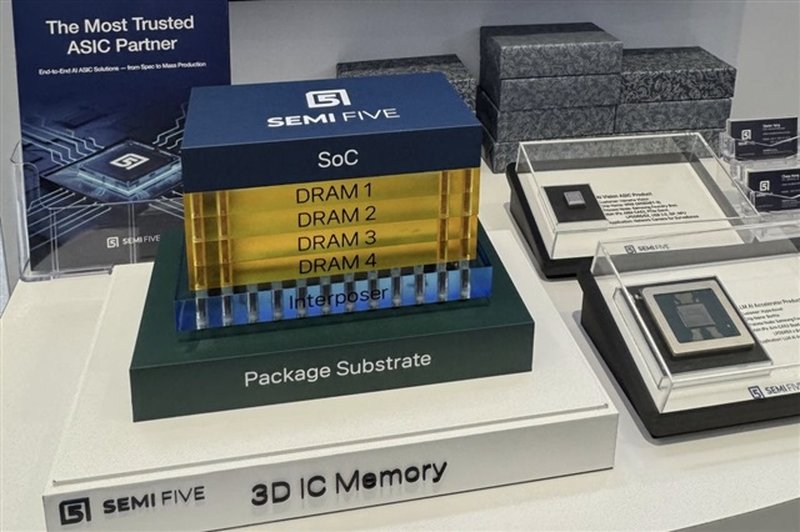
The challenge of "figuring out AI" for a leader like John Ternus is not just about integrating smart features into existing products, but also about defining the next generation of AI-optimized hardware. This could mean further innovations in silicio design, with a focus on dedicated AI accelerators and more efficient memory architectures to handle increasingly larger and more complex models. Apple's ability to innovate at the chip level, as already demonstrated with Apple Silicio, will be a decisive factor in its positioning within the AI landscape.
The industry as a whole is grappling with the need to balance compute power, energy efficiency, and costs to make AI accessible and scalable. The strategic decisions of companies like Apple in this area will have a significant impact not only on their products but also on the entire technological ecosystem, influencing the development of new hardware and software standards for on-premise and distributed AI.







💬 Comments (0)
🔒 Log in or register to comment on articles.
No comments yet. Be the first to comment!