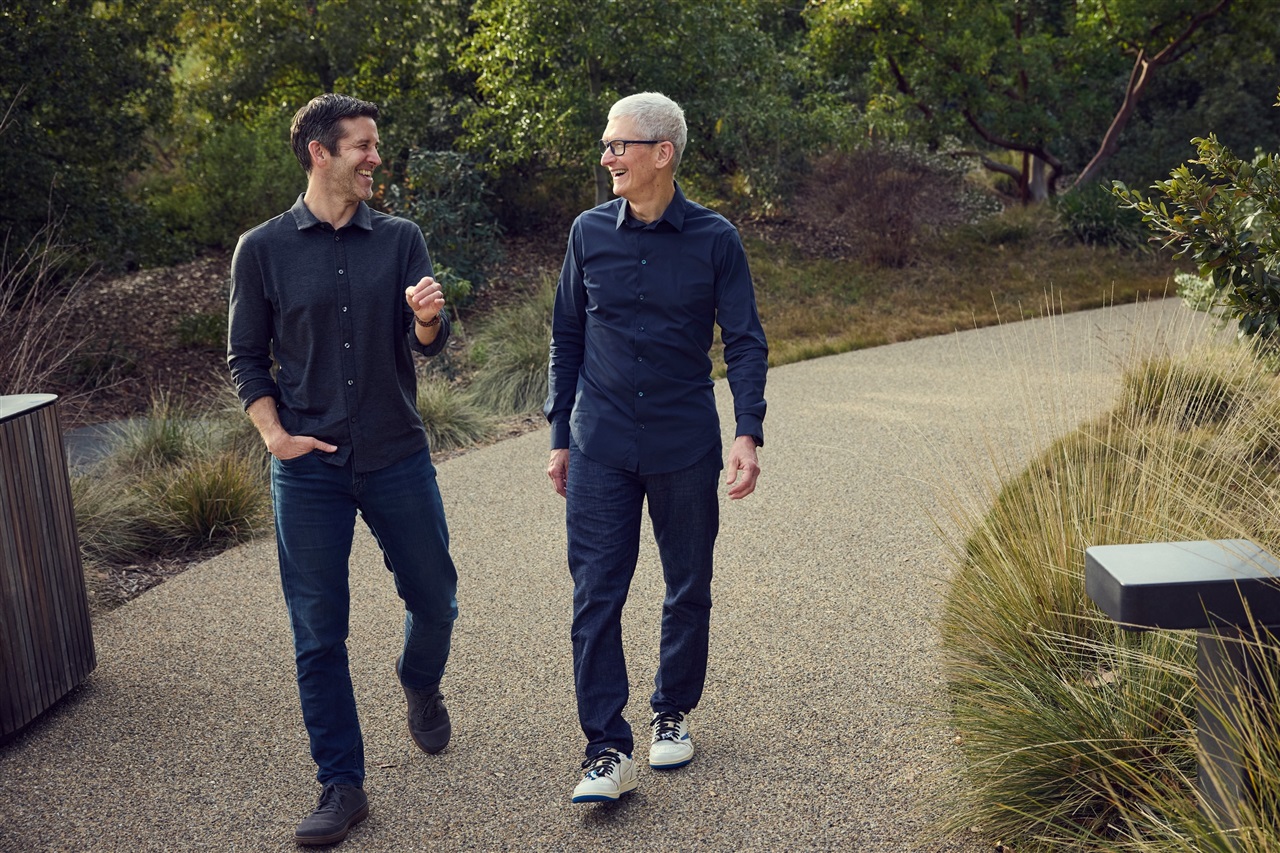
A Change of Guard at Apple's Helm
Apple has communicated a significant transition in its executive leadership. John Ternus, a prominent figure within the company, has been appointed as the new Chief Executive Officer. Concurrently, Tim Cook, who has led Apple for years, will assume the position of executive chairman. This announcement marks a transitional period for the Cupertino giant, propelling it towards new challenges and opportunities in a constantly changing technology market.
The succession at the helm of one of the world's most influential companies is an event that garners global attention, not only for internal dynamics but also for potential implications on future strategic directions. While the official communication focuses on leadership roles, it is inevitable to consider how such decisions might intersect with the major technological trends reshaping the industry.
The Strategic Imperative of AI and Infrastructure
In an era dominated by the rapid advancement of artificial intelligence, and particularly Large Language Models (LLM), strategic leadership choices often reflect investment priorities in research and development. For companies of this scale, the ability to innovate and integrate AI into their products and services heavily depends on robust and scalable IT infrastructure. Managing LLM Inference and training requires significant computational resources, such as GPUs with high VRAM and Throughput, and an efficient Deployment Pipeline.
Decisions regarding hardware architecture, Framework selection, and Quantization strategies are crucial for optimizing performance and controlling costs. For instance, managing complex models may necessitate multi-GPU configurations with high-speed interconnects, or the exploration of edge computing solutions to reduce latency. These technical aspects, though not mentioned in the leadership announcement, form the substrate upon which every successful technological strategy is built in the current landscape.
On-premise vs. Cloud: An Ongoing Debate
The leadership transition at a major company like Apple occurs within a broader context where AI infrastructure decisions are strategic. Many enterprises are carefully evaluating the trade-offs between adopting cloud solutions and deploying Self-hosted or Bare metal infrastructures. Factors such as data sovereignty, regulatory compliance (e.g., GDPR), security in Air-gapped environments, and Total Cost of Ownership (TCO) play a decisive role in this choice.
Direct control over hardware and software, typical of on-premise environments, can offer advantages in terms of customization, performance optimization, and security management—critical aspects for sensitive or proprietary workloads. On the other hand, cloud solutions provide immediate flexibility and scalability. For those evaluating on-premise Deployment, AI-RADAR offers analytical Frameworks on /llm-onpremise to assess these trade-offs, highlighting how the choice depends on a careful analysis of specific requirements and long-term objectives.
Future Prospects in the AI Era
The announcement of a new CEO and executive chairman for Apple, while a governance event, underscores the importance of a clear strategic vision for the future. In an industry where AI is rapidly becoming an enabler for innovation, leadership must navigate the opportunities offered by new technologies and the complexities associated with their implementation. The ability to develop, Deploy, and manage LLMs efficiently and securely will be a key differentiator.
Regardless of the names at the top, the imperative for technology companies remains to invest in infrastructures that support AI ambitions, while ensuring control, efficiency, and compliance. The discussion around Deployment models, from silicio selection to optimizing Inference Pipelines, will continue to be central for decision-makers aiming to maintain a competitive edge in the artificial intelligence era.



💬 Comments (0)
🔒 Log in or register to comment on articles.
No comments yet. Be the first to comment!