
The Advent of Embodied Artificial Intelligence
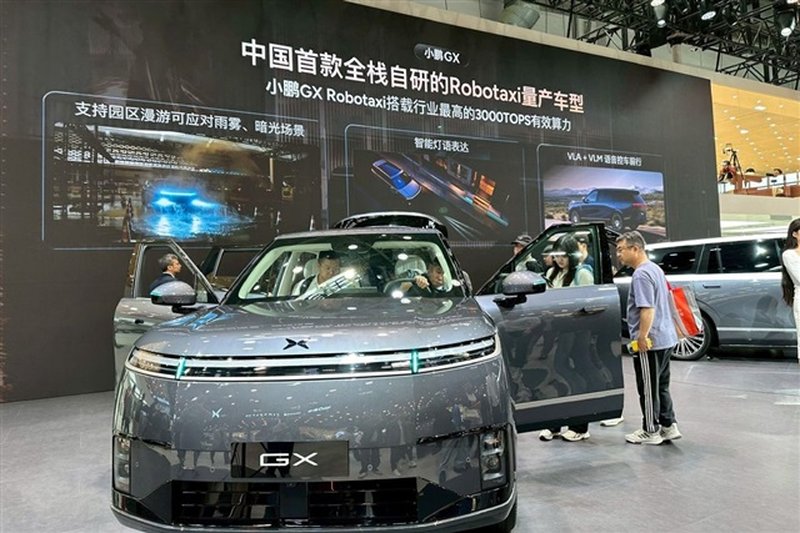
Embodied Artificial Intelligence (Embodied AI) is rapidly gaining traction as one of the most promising and transformative fields in the current technological landscape. This discipline focuses on developing AI systems that not only process information but actively interact with the physical world through a body, be it a robot, an autonomous vehicle, or an advanced IoT device. The goal is to equip these entities with perception, reasoning, and action capabilities that make them autonomous and adaptable in complex, dynamic environments.
Industry analysts, as reported by AFP, compare the current phase of Embodied AI development to the "ChatGPT moment" for robots. This analogy highlights a turning point, an acceleration in capabilities that could radically redefine real-world automation. If ChatGPT democratized access to advanced language models, Embodied AI aims to do the same for intelligent physical interaction, bringing artificial intelligence out of servers and into everyday operational contexts.
Implications for Real-World Automation
The promise of Embodied AI is to overcome the limitations of traditional automation, which often relies on predefined rules and controlled environments. Embodied AI systems, instead, are designed to learn and adapt in real-time, managing the inherent uncertainty and variability of the physical world. This translates into robots capable of dexterously manipulating objects, navigating unstructured spaces, collaborating with humans, and even performing complex tasks in sectors such as logistics, manufacturing, healthcare, and exploration.
The ability of these systems to learn from experience and generalize acquired knowledge opens up unprecedented scenarios. Imagine warehouse robots autonomously optimizing routes based on real-time traffic, or robotic assistants in healthcare settings adapting to the specific needs of each patient. This evolution requires not only sophisticated algorithms but also a deep integration between software and hardware, where sensory perception and motor action are intrinsically linked to advanced decision models, often based on Large Language Models (LLM) or multimodal models.
Deployment Challenges and Infrastructure Requirements
Deploying Embodied AI systems presents unique challenges, especially for organizations evaluating self-hosted or edge solutions. The need for low-latency processing is crucial for real-time interaction: a robot operating in a dynamic environment cannot afford significant delays between perception and action. This drives the need for edge processing, where computations occur as close as possible to the data collection point, reducing reliance on cloud connectivity and improving responsiveness.
On-premise infrastructure thus becomes fundamental for supporting the development, fine-tuning, and deployment of these models. Companies must consider high-performance GPU servers with ample VRAM for local inference, while also ensuring data sovereignty and regulatory compliance, especially in sensitive sectors. Managing the Total Cost of Ownership (TCO) is another key factor, balancing initial hardware investment with long-term operational costs, including energy and maintenance. For those evaluating on-premise deployment, AI-RADAR offers analytical frameworks on /llm-onpremise to assess trade-offs between performance, cost, and control.
Future Prospects and Strategic Considerations
Embodied Artificial Intelligence is set to transform not only automation but also how we conceive the interaction between machines and the environment. Organizations looking to fully leverage the potential of this technology will need to adopt a strategic approach to deployment, carefully considering computing requirements, data management, and security implications. The ability to maintain control over their data and AI models, through air-gapped or self-hosted solutions, will become a crucial competitive differentiator.
The future will likely see further convergence between LLMs, vision models, and motor control, leading to increasingly autonomous and versatile robots. The choice between cloud-centric architectures and on-premise/edge solutions will depend on specific application needs, latency constraints, and data governance policies. Understanding these trade-offs will be essential for CTOs, DevOps leads, and infrastructure architects preparing to integrate Embodied AI into their operations.




💬 Comments (0)
🔒 Log in or register to comment on articles.
No comments yet. Be the first to comment!