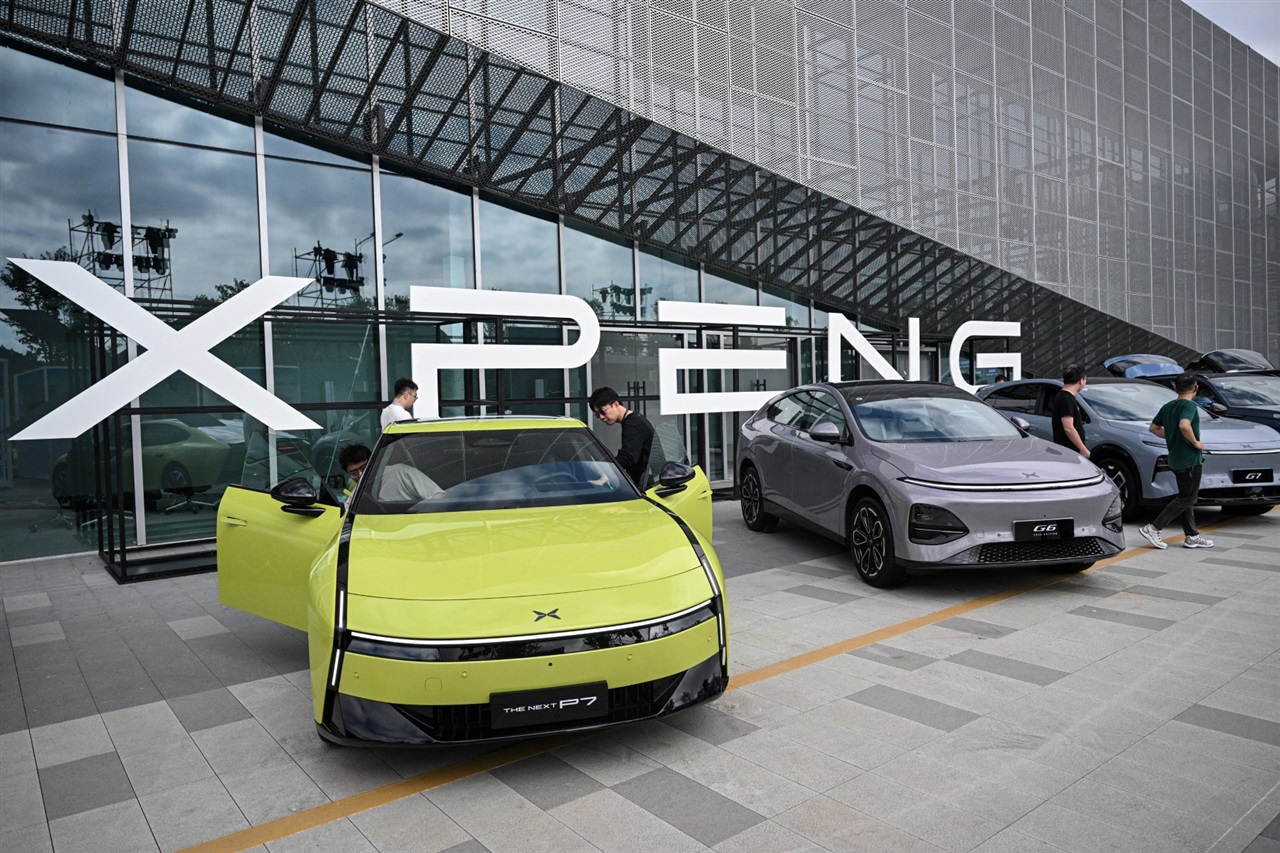
XPeng and the Advancement of On-Device AI in Robotaxis
XPeng, a leading Chinese intelligent electric vehicle company, has announced the launch of a Robotaxi designed for mass production. A distinctive feature of this vehicle is the integration of AI chips developed entirely in-house. This strategy reflects an increasingly pronounced trend in the automotive and technology industries: direct control over AI hardware to optimize the performance and efficiency of autonomous driving systems.
Adopting proprietary silicon for AI represents a significant step towards technological autonomy. It allows companies to customize chip architecture to meet the specific needs of their algorithms, ensuring deeper integration between hardware and software. This approach is crucial for applications requiring low latency and high reliability, such as autonomous vehicles, where every millisecond and every decision is fundamental for safety.
The Strategic Value of Proprietary AI Chips
Investing in in-house AI chip development offers XPeng several strategic advantages. Firstly, it enables unprecedented optimization for the inference workloads required by autonomous driving, which include environmental perception, path planning, and vehicle control. Custom chips can be designed to maximize token throughput and minimize power consumption, vital aspects for vehicles operating in real-world contexts with battery constraints.
Furthermore, proprietary development ensures greater control over the supply chain and system security. This is particularly relevant for companies operating in sectors with stringent compliance and data sovereignty requirements, where on-device processing reduces reliance on external cloud infrastructures. For those evaluating on-premise or edge deployments, the ability to manage the entire hardware-software stack offers granular control and potential benefits in terms of long-term Total Cost of Ownership (TCO), albeit with higher initial CapEx.
Deployment Implications and TCO in Edge AI
XPeng's choice to use proprietary AI chips for a mass-produced Robotaxi highlights a clear direction towards edge AI. Autonomous driving systems require robust and reliable processing capabilities directly on the vehicle, reducing the need for constant, high-bandwidth connections to the cloud. This not only improves responsiveness and safety but also addresses challenges related to latency and network availability in various geographical areas.
From a TCO perspective, while proprietary chip development involves a significant initial investment, it can lead to lower operational costs over time. The energy efficiency of optimized chips reduces battery consumption and cooling costs, while greater reliability and less reliance on the cloud can decrease maintenance and connectivity expenses. For companies considering deploying LLMs or other AI workloads in on-premise or edge environments, analyzing the trade-offs between initial costs and long-term benefits is crucial. AI-RADAR provides analytical frameworks on /llm-onpremise to evaluate these trade-offs in detail.
Future Prospects and Challenges of On-Device AI
XPeng's initiative is part of a broader landscape of innovation in on-device AI, where chip miniaturization and efficiency are critical factors. The ability to run complex models, including Large Language Models (LLM) or advanced vision models, directly on vehicle hardware opens up new possibilities for more sophisticated and personalized functionalities. However, this path also presents challenges, such as the need for continuous software and firmware updates, managing heat dissipation, and ensuring scalability for different vehicle configurations.
The success of solutions like XPeng's Robotaxi will depend not only on the computing power of the chips but also on the robustness of the software framework and the ability to perform secure and efficient over-the-air fine-tuning and updates. The evolution of on-device AI in autonomous vehicles will continue to push the boundaries of hardware and software engineering, setting new standards for reliability and performance in critical environments.









💬 Comments (0)
🔒 Log in or register to comment on articles.
No comments yet. Be the first to comment!