The Component Race: MLCCs in Focus for AI Servers
The artificial intelligence market continues its rapid expansion, driving increasing demand not only for the latest-generation GPUs but also for the entire supporting infrastructure. A key indicator of this trend comes from observations by Prosperity Dielectrics, a player in the electronic components sector. The company has noted how customers involved in building AI servers are actively seeking supplies of MLCCs (Multi-Layer Ceramic Capacitors), essential power components.
This intensive search for MLCCs suggests significant pressure on the supply chain, reflecting the rapid growth of AI system deployments. For companies aiming to build or expand their computing capabilities for Large Language Models (LLMs) and other AI workloads, the availability and cost of these components become critical factors in project planning and execution.
The Crucial Role of MLCCs in AI Infrastructure
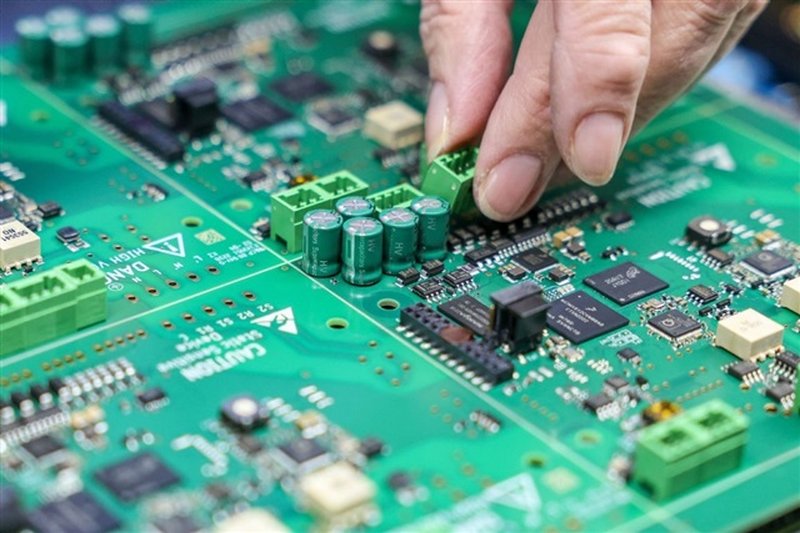
Multi-Layer Ceramic Capacitors (MLCCs) are small yet fundamental for the stable and reliable operation of AI servers. These capacitors are used to filter electrical noise and stabilize power supply voltages, ensuring that high-power components like GPUs and CPUs receive a clean and constant flow of energy. In an environment where GPUs can draw hundreds of watts and require rapid current peaks, the ability of MLCCs to manage these fluctuations is indispensable.
Without adequate stabilization provided by MLCCs, critical components could experience instability, errors, or even damage, compromising the performance and reliability of the entire system. Their importance is amplified in AI servers, where power efficiency and stability are directly correlated with the ability to sustain intensive workloads for inference and training of complex models.
Implications for On-Premise Deployment and the Supply Chain
The strong demand for MLCCs has direct implications for organizations choosing a self-hosted or on-premise approach for their AI infrastructures. Limited availability or rising prices of these components can significantly impact the Total Cost of Ownership (TCO) and deployment timelines. CTOs and infrastructure architects must consider these factors in their procurement strategy, evaluating the impact on initial CapEx and future scalability.
For those evaluating on-premise deployments, managing the supply chain for critical components like MLCCs is an aspect not to be underestimated. Hardware procurement decisions can affect not only costs but also the ability to ensure data sovereignty and meet compliance requirements, central aspects for many businesses. AI-RADAR offers analytical frameworks on /llm-onpremise to evaluate the trade-offs between different deployment strategies, including hardware component management.
Future Outlook and Strategic Considerations
The current market situation for MLCCs in AI servers is a microcosm of the broader challenges the industry faces in building the necessary infrastructure to support the explosion of artificial intelligence. Reliance on a global supply chain and the volatility of component prices require strategic planning and proactive risk management.
Companies planning to invest in on-premise AI capabilities will need to closely monitor component market dynamics, exploring options to diversify suppliers or design systems with greater flexibility. The ability to anticipate and mitigate supply chain disruptions will be a key factor for successful deployment of robust and scalable AI solutions.








💬 Comments (0)
🔒 Log in or register to comment on articles.
No comments yet. Be the first to comment!