
The Wave of Opposition to Data Centers
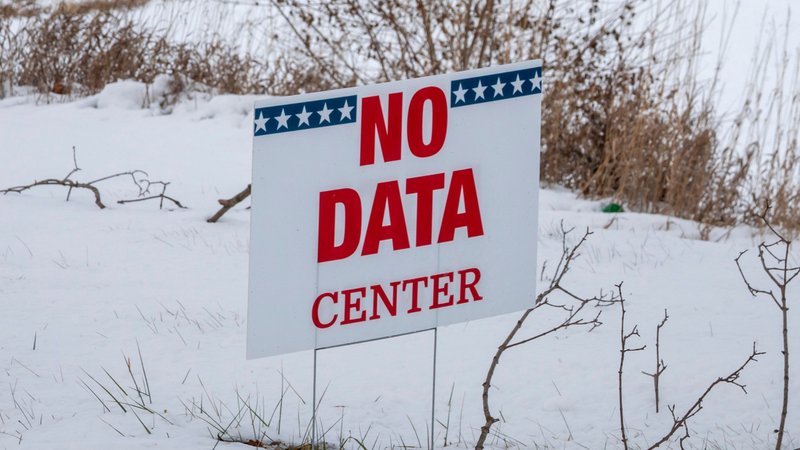
The massive expansion of data centers, fundamental infrastructures for powering artificial intelligence workloads, is generating growing and cross-party opposition in the United States. This phenomenon, spanning both political and geographical divides, manifests with an increasing number of local communities and states adopting moratoriums or outright bans on the construction of these facilities. The reasons are multiple and often interconnected: high energy and water consumption, noise impact, and environmental concerns are among the primary factors fueling dissent.
This trend is not just an isolated phenomenon but a movement shaping American political discourse. From small towns to state legislatures, the pressure to regulate or block data center expansion is palpable, with direct consequences for companies planning large-scale Large Language Models (LLM) deployments and other AI applications. The need to balance computational capacity demand with local sustainability and data sovereignty becomes a crucial issue.
Case Studies: Local Community Reactions
The manifestations of this opposition are evident in several emblematic cases. In Ypsilanti Township, Michigan, the local utility authority paused water deliveries for new data center projects for six months. This decision directly impacted a $1.2 billion initiative involving collaboration between the University of Michigan and scientists engaged in nuclear weapons projects, with the University calling the move "unlawfully discriminatory."
Similarly, in Colleton County, South Carolina, a six-month moratorium on data center construction was approved, with the possibility of extension. This measure was adopted in anticipation of an 800-acre project in the ACE Basin Estuary, which would have compromised 200 acres of untouched wetlands. The project had already faced strong opposition in Georgia the previous year, leading to its failure in that location. Also in Washington Township, Michigan, logistics company Prologis withdrew its application for a 312-acre data center following local protests, prompting the community to consider a temporary moratorium. Finally, Microsoft canceled a 244-acre data center in Caledonia, Wisconsin, after 2,000 residents signed a petition against rezoning the land. These examples highlight how the voice of local communities can directly influence the deployment decisions of large infrastructures.
State Legislative Initiatives and Implications for AI Infrastructure
The wave of opposition is not limited to municipal decisions but extends to the state level with significant legislative proposals. Georgia is considering a bill that would prevent cities from issuing permits for data centers until 2027. Maryland has a bill referred to committee that proposes a pause in data center construction until the legislature determines how to provide them with the necessary power. Oklahoma is considering a law that would suspend data centers until 2029, pending studies on water and utility rate impacts. Even Virginia, a state with a very high concentration of data centers, is examining a proposal to halt new construction until specific energy needs are met.
These legislative initiatives highlight a growing awareness of the infrastructural and environmental constraints associated with data center expansion. For CTOs and infrastructure architects evaluating the deployment of LLMs and AI workloads, this scenario necessitates more careful planning. The availability of energy, water, and land, combined with the need for regulatory compliance and managing relationships with local communities, becomes a critical factor in choosing between self-hosted and cloud solutions. AI-RADAR offers analytical frameworks on /llm-onpremise to evaluate the trade-offs and specific requirements of such deployments.
Future Prospects and On-Premise Deployment Trade-offs
While the fight against uncontrolled data center expansion records important victories, there are also setbacks. In Maine, for example, a statewide moratorium on new data center construction, the first of its kind in the United States, was vetoed by Governor Janet Mills. The governor expressed her support for the principle of the ban but requested an exception for a data center already under construction in the southern part of the state. This episode demonstrates the complexity and nuances of the political decisions at play.
Despite the setbacks, the coalition against data centers is strengthening, uniting people from different political affiliations in local civic engagement not seen in decades. For companies considering the deployment of LLMs and other AI technologies, this evolving landscape means that choosing an on-premise or hybrid infrastructure is not just a matter of TCO or hardware specifications like GPU VRAM, but also includes the ability to navigate an increasingly stringent regulatory and social context. Data sovereignty and the ability to operate in air-gapped environments become even more valuable when the physical infrastructure itself is subject to such external constraints.








💬 Comments (0)
🔒 Log in or register to comment on articles.
No comments yet. Be the first to comment!