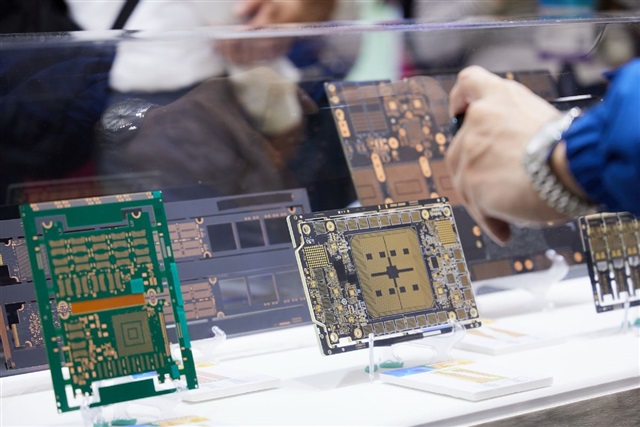
The Impact of AI Growth on Hardware
The rapid expansion of artificial intelligence, particularly Large Language Models (LLM), is generating unprecedented demand for specialized hardware. This exponential growth is not limited to the latest generation of GPUs but extends to all fundamental components that constitute computing infrastructure. Among these, Printed Circuit Boards (PCBs) are emerging as a critical bottleneck, with supply chains struggling to keep pace with market demands.
As reported by DIGITIMES, the pressure on PCB production is such that lead times have significantly lengthened, in many cases exceeding 20 weeks. This scenario creates uncertainty and delays for companies looking to expand or build new AI computing capabilities, directly impacting their ability to deploy innovative solutions quickly.
The Strategic Role of PCBs in AI Infrastructure
PCBs are the backbone of any electronic device, and their importance is amplified in the realm of AI hardware. Motherboards, GPU expansion cards, accelerators, and high-speed memory modules all rely on complex and highly specialized PCBs. These circuits must support extreme data transfer speeds, manage high power densities, and effectively dissipate heat, requirements that translate into sophisticated production processes and advanced materials.
The complexity of PCBs for AI includes a high number of layers, the use of low-loss materials for signal integrity, and precision manufacturing techniques to ensure reliability in high-performance environments. Every GPU, every VRAM module, and every high-speed interconnection like NVLink or PCIe requires a custom-designed PCB to maximize throughput and minimize latency. Shortages or delays in the production of these components therefore affect the entire supply chain, slowing down the availability of complete AI servers and systems.
Challenges for On-Premise Deployments
For organizations prioritizing control, data sovereignty, and Total Cost of Ownership (TCO) optimization through on-premise or self-hosted deployments, the extended PCB lead times represent a significant challenge. Planning AI infrastructure requires a long-term vision and the ability to reliably procure necessary hardware. Delays of over 20 weeks can compromise project timelines, impact CapEx budgets, and postpone the implementation of new LLM training or inference capabilities.
The difficulty in obtaining critical components may push companies to reconsider their procurement strategies, seeking alternative suppliers or exploring hybrid solutions. However, for air-gapped environments or those with stringent compliance requirements, the reliance on specific hardware and the need for complete control over the supply chain make these disruptions particularly problematic. The ability to scale an on-premise AI infrastructure is directly linked to the availability of underlying hardware components.
Mitigation Strategies and Future Outlook
Facing these supply chain pressures, companies must adopt proactive strategies. Diversifying PCB suppliers and establishing long-term partnerships can help mitigate risks. Furthermore, more accurate and advanced planning of hardware purchases becomes essential to avoid disruptions. For those evaluating on-premise deployments, AI-RADAR offers analytical frameworks on /llm-onpremise to assess the trade-offs between costs, performance, and procurement times.
The semiconductor and PCB industries are known for their supply and demand cycles. While current tensions are significant, the industry is investing in new production capacities. However, building new factories and expanding existing lines takes time. In the meantime, companies will need to navigate a complex procurement environment, balancing the need for innovation with the reality of global supply chain constraints.







💬 Comments (0)
🔒 Log in or register to comment on articles.
No comments yet. Be the first to comment!