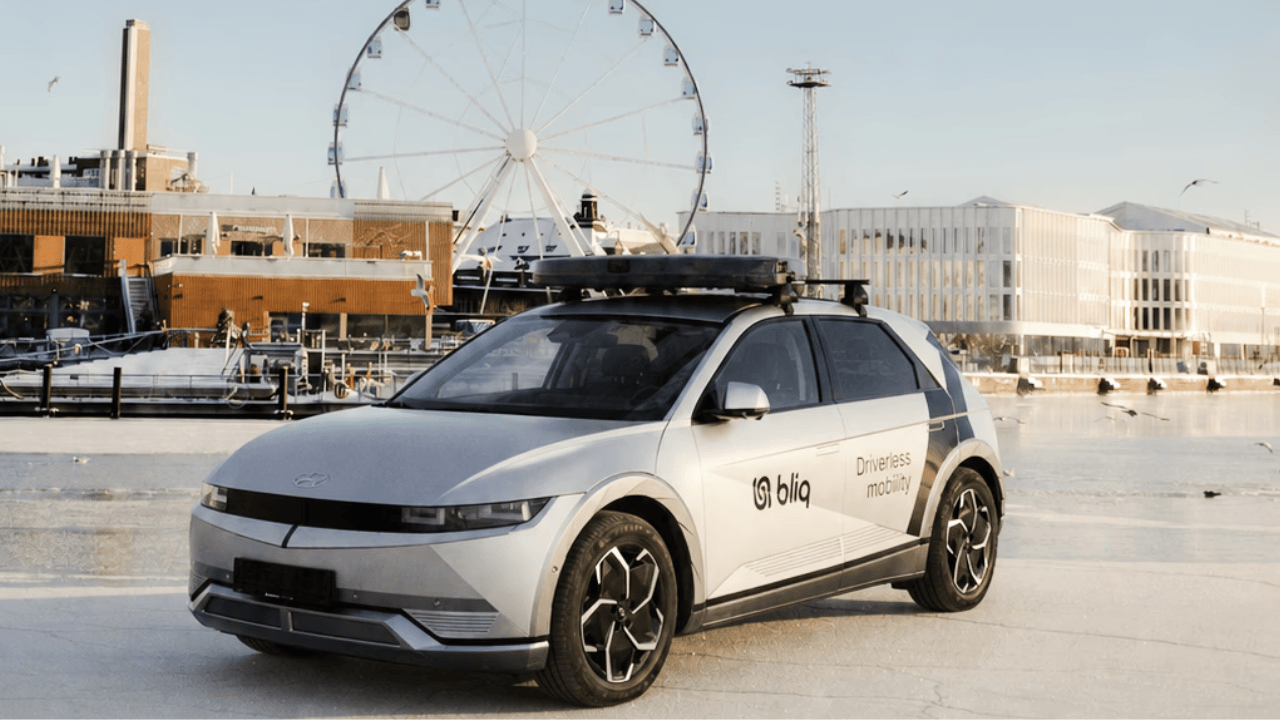
Finland's move isn't just a regulatory green light: it's a deliberately chosen proving ground to push the edge computing stack that Bliq.ai installs in existing vehicles to its limits. The immediate approval announced today allows the company to begin testing in the Helsinki region, with the stated goal of tackling its first winter operations and validating the system in one of Europe's most demanding environments.
Rather than building dedicated robotaxis, Bliq takes a modular approach: sensors and an onboard compute module turn already software-defined cars into Level 2 autonomous vehicles, remotely supervised by human operators. The formula cuts time-to-market and entry costs, but shifts immense pressure onto the hardware – and its ability to perform real-time inference – pressure that ice, snow, and low visibility amplify dramatically.
The architecture Bliq chose isn't a sealed black box: the upgrade targets vehicles already operating in private or corporate fleets, making autonomous driving a retrofit more akin to installing an aftermarket system than swapping platforms. If the Finnish trial bears fruit, this strategy could reshape hierarchies among autonomous technology suppliers, shifting value from dedicated vehicle manufacturing to those who can integrate certifiable, over-the-air-updatable edge AI stacks.
Helsinki is no random choice. Extreme weather tests not only perception algorithms but also thermal resilience and component reliability – crucial parameters for any deployment that aims to remove the safety driver. The fact that the first phase explicitly includes an operator on board shows the testing is designed to gather real-world data without skipping steps: sensor feeds will feed the model improvement loop, likely through centralized training, while local compute keeps latency low for split-second decisions.
The Finnish operation arrives in a European landscape showing uneven acceleration. In April, startup Verne launched the continent's first commercial robotaxi service in Zagreb, powered by Pony.ai and bookable via app. But the models diverge: Verne offers a fully autonomous mobility service in geo-fenced areas; Bliq aims to deliver private and business cars that can drive anywhere. The difference implies two opposing philosophies on who controls onboard hardware and the data generated.
For those tracking AI in the field, validation in Finland signals a structural shift: on-vehicle inference moves out of the prototype domain and begins to engage with concrete regulatory iterations. Automotive edge computing demands specialized silicon – compute units balancing power, dissipation, and throughput – and its expansion paves the way for an ecosystem where hardware upgrades become a recurring service. In this scenario, operational sovereignty over models and training data residency can become as competitive a lever as sensor pricing.
Finland, for its part, offers an open-air lab and streamlined regulation that have already made it a testbed for autonomous driving. With deployment led by Erik Safonov, who already coordinates Bliq's Baltic activities from Tallinn, the northern Baltic shore is positioning itself as a key testing axis for European vehicle autonomy. The next phase – the one without a safety driver – will be the real watershed, and the sub-zero temperatures of the coming season will determine whether Bliq's compute can earn the trust of those ready to take their hands off the wheel.










💬 Comments (0)
🔒 Log in or register to comment on articles.
No comments yet. Be the first to comment!