
The profit squeeze in Q3 2026
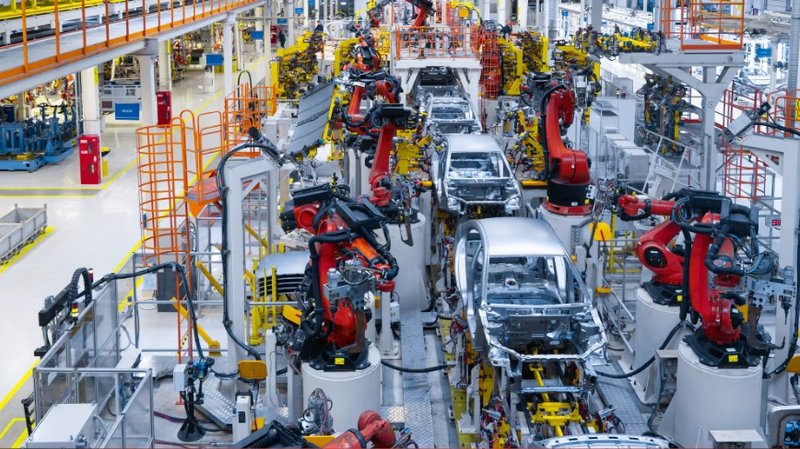
The global automotive supply chain is bracing for an even fiercer battle over profitability. Analyst chatter points to the third quarter of 2026 as a watershed moment: margin pressure will force suppliers and sub‑suppliers to scrutinize every cost line. In an industry already rattled by geopolitical shocks and the electric transition, the fight for profit becomes a powerful catalyst for digital transformation.
Efficiency runs on data – and its control
For component makers, just‑in‑time logistics operators, and global production planners, optimization can no longer ignore intelligent use of data. Large Language Models (LLMs) and generative AI are beginning to play a role in demand forecasting, predictive maintenance, and decision‑making automation. But the datasets involved – from order volumes to trade secrets about upcoming models – are among the most sensitive. Handing them to external cloud infrastructures can clash with compliance policies and, in Europe, with GDPR.
The on‑premise trade‑off
This is the angle AI‑RADAR keeps under observation. Suppliers caught in the profit crunch may find that on‑premise deployment strikes a balance between upfront investment and long‑term gains. Running servers with GPUs that carry enough VRAM and orchestrating inference pipelines internally – perhaps via frameworks like vLLM or TGI – means production data and predictive models always stay under the owner’s control. Calculated over a multi‑year horizon, the Total Cost of Ownership (TCO) can undercut cloud solutions burdened by variable expenses and egress fees. The path is not obstacle‑free, of course: managing an on‑premise cluster demands infrastructure‑as‑code skills, low‑latency networking for inference, and, at scale, careful attention to energy consumption and cooling.
Looking ahead to 2026 and beyond
The profit battle expected in Q3 2026 may therefore become a proving ground for deployment strategies. Organizations currently evaluating a shift to self‑hosted infrastructure might accelerate their decision, driven by the need to cut operational costs without sacrificing data sovereignty. It is not a race for the newest technology but an architectural choice that links hardware, compute capacity, and data governance. In this landscape, AI‑RADAR will keep tracking concrete market moves, delivering independent analysis on the trade‑offs between cloud, edge, and on‑premise.








💬 Comments (0)
🔒 Log in or register to comment on articles.
No comments yet. Be the first to comment!