
At Kuala Lumpur’s airport, inside the free trade zone, a shipment was waiting for transit to an undeclared destination. The paperwork listed ordinary computer components. Yet hidden within the 72 server units was a secret: advanced artificial-intelligence chips worth 52.9 million ringgit, about $13 million.
Malaysia’s customs department announced the seizure, the latest twist in a silent battle fought at ports and airports worldwide over the most strategic semiconductors.
The customs ambush: what happened
Authorities intercepted the consignment as it moved through the free trade zone—a duty-exempt area where goods can sit awaiting re-export. On the surface, the cover was generic computer parts, but once the servers were opened, the real cargo emerged.
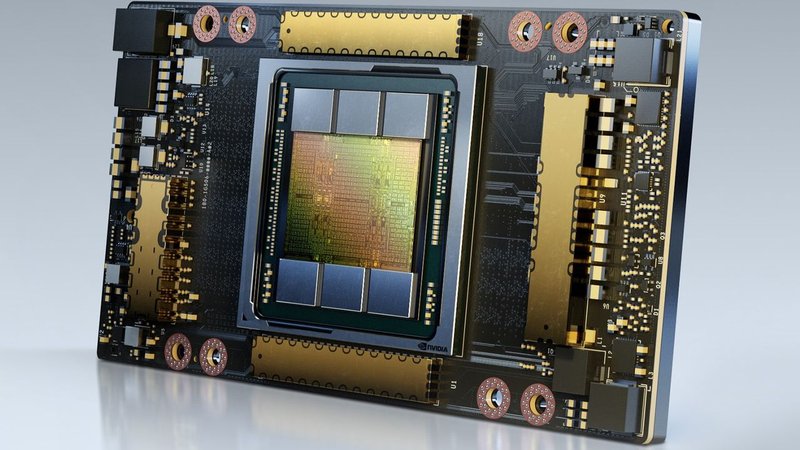
No brand or model details were released, but the description—advanced AI chips—and the unit value strongly suggest high-power parallel processing units of the kind used to train and serve Large Language Models. Such accelerators pack dozens of gigabytes of VRAM and teraflop-scale compute, goods made increasingly scarce by export restrictions enforced by the U.S. and the Netherlands.
A global chess game played across Asian transit hubs
This seizure is not an isolated incident. Over the past two years, Southeast Asia has become a crossroads for suspicious shipments: from servers rerouted to China to the gray market feeding research labs and tech giants hunting hardware for on-premise training and inference. Kuala Lumpur, Singapore, and Hong Kong serve as natural nodes, and free trade zones offer a curtain of opacity.
For anyone planning self-hosted AI infrastructure, the origin of the hardware is not just a cost question. Component authenticity, regulatory compliance, and chain of custody are decisive: a chip bought outside official channels can breach embargoes and, once integrated into an on-prem cluster, expose the organization to legal and reputational risks.
Why this matters for on-premise deployment
The demand for AI accelerators in private data centers, edge environments, and air-gapped installations has exploded with the spread of open models. Many companies evaluate the Total Cost of Ownership of a local cluster to escape recurring cloud fees or to keep data sovereignty intact. But the supply-chain bottleneck is fueling a parallel market where certification guarantees vanish.
The Malaysian case shows that even a seemingly legitimate transit can conceal dangerous triangulations. Today, anyone investing in AI hardware must ask not only “how many GPUs do I need for tokens/sec” but also “where do they come from and through whose hands have they passed?” Supply-chain transparency has become a security requirement as critical as the firewall.
The bigger picture: restrictions that don’t stop but distort the market
Washington’s curbs on AI chip exports to China have produced a market segmentation: top-tier models stay restricted, while solutions with reduced capabilities find detours. The servers seized in Malaysia may represent exactly the link between authorized suppliers and end-users subject to limitations.
For European industry, which is pushing hard on local AI infrastructure also for GDPR compliance reasons, the news is a wake-up call. Deploying an on-premise cluster with hardware of dubious origin risks exposing the project to sudden shutdowns or litigation. AI-RADAR has repeatedly analyzed the metrics for gauging the real cost of local deployment: to that list we must now add a sourcing risk factor that no spec sheet can measure.








💬 Comments (0)
🔒 Log in or register to comment on articles.
No comments yet. Be the first to comment!